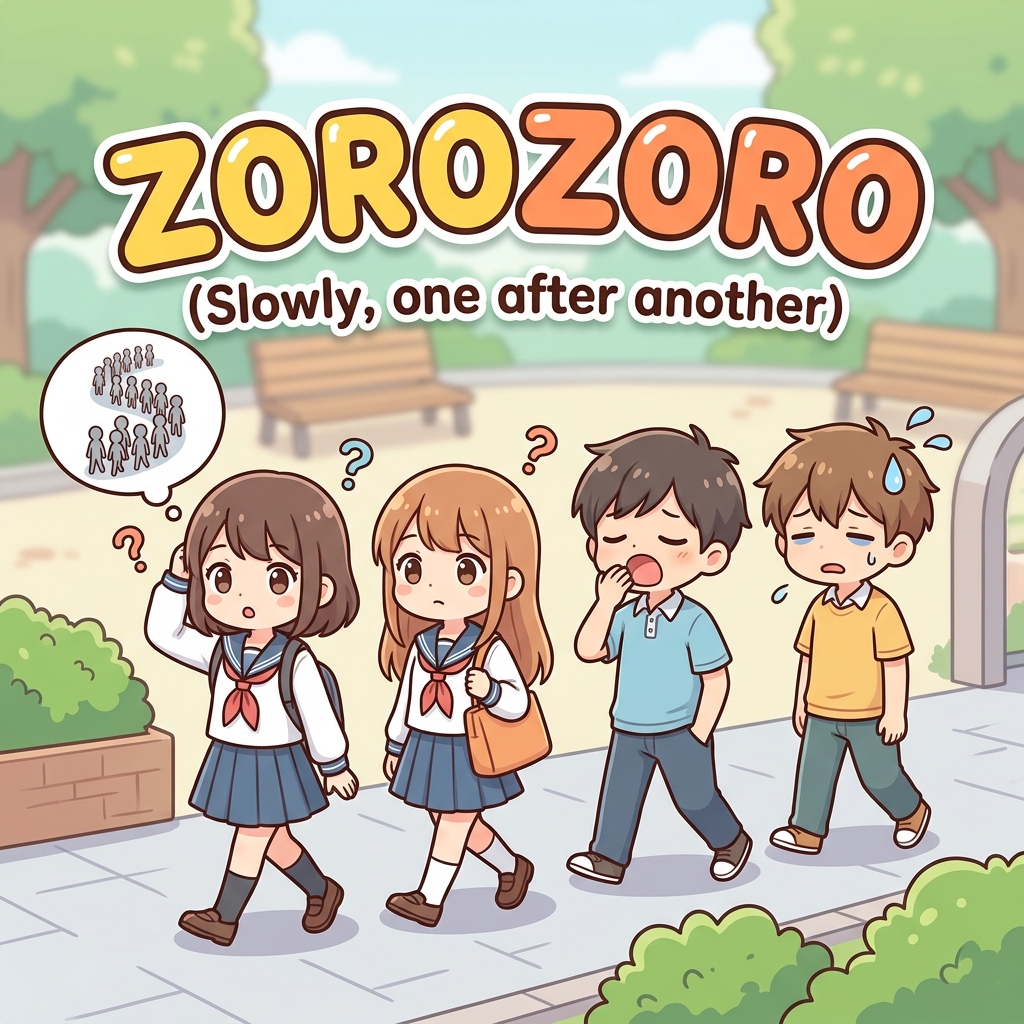
Have you ever tried to describe a group of people moving together in Japanese, but felt that “many people walked” was not vivid enough? The Japanese onomatopoeia ぞろぞろ (zorozoro) is useful when many people, animals, insects, or things move one after another in a continuous flow. It is often used for crowds leaving a place, tourists entering a building, students coming out of a classroom, or ants moving in a line.
To use ぞろぞろ naturally, the key is not just “many.” The movement should feel continuous, as if people or things are coming or going one after another. It often sounds like a stream, line, or procession rather than a small group moving quickly.
What This Word Really Feels Like
At its core, ぞろぞろ (zorozoro) describes many people or things moving continuously, often in a line or loose group. It gives the image of one person or thing after another appearing, entering, leaving, or moving along.
The movement is usually not sudden or sharp. It often feels steady, drawn out, or somewhat unhurried. However, the most important point is the continuous flow of many individuals, not necessarily that they are always extremely slow. ぞろぞろ is about the manner of movement: many people or things moving one after another.
How It Works in Context
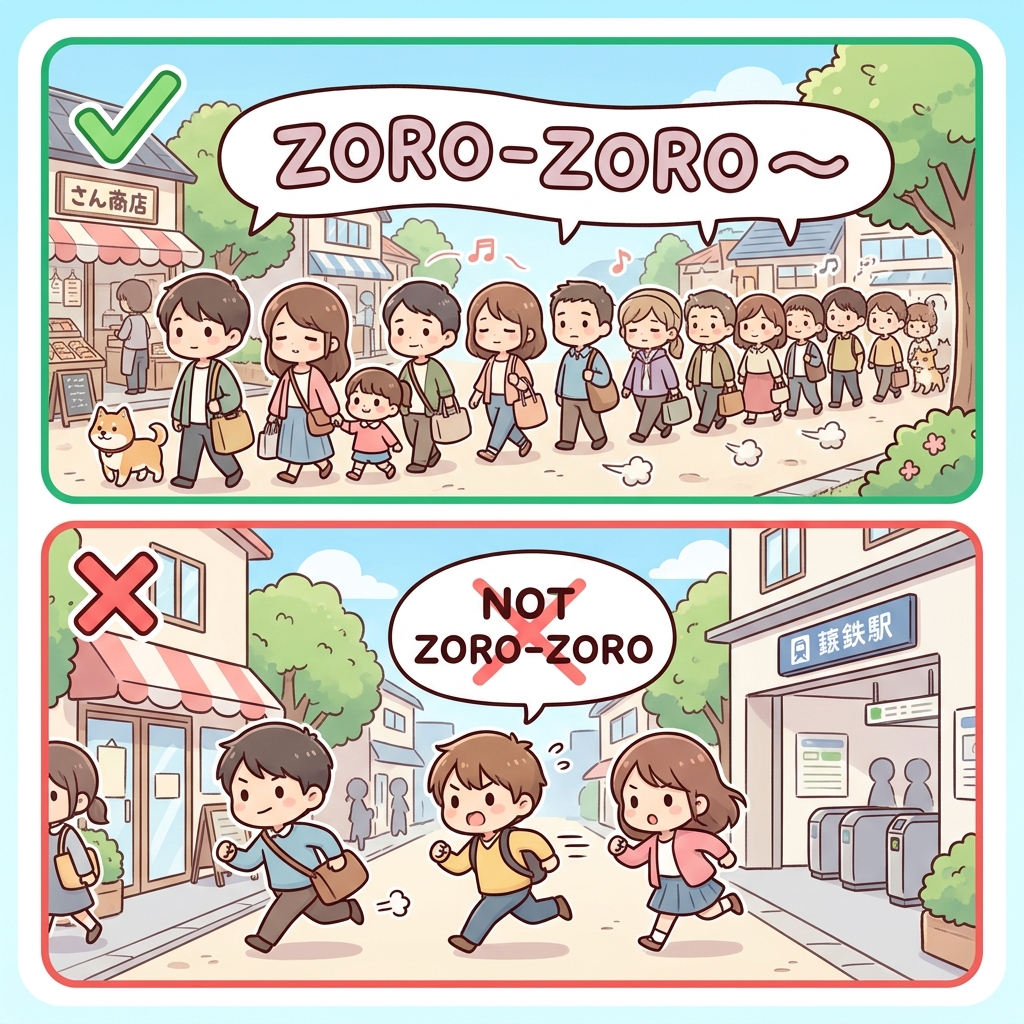
The key conditions for ぞろぞろ (zorozoro) are many individuals and continuous movement. If you are describing only two or three people, ぞろぞろ will usually sound too big. If people are moving quickly, separately, or with a clear quick action, another expression may sound more natural.
For example, if three friends quickly enter a cafe, using ぞろぞろ would sound strange. Three people are not enough to create the feeling of a stream or procession. In that case, you can simply say they entered, or use another expression depending on the speed or mood. But if a large crowd enters a store after it opens, ぞろぞろ fits very well.
A Common Learner Mistake
Common Learner Mistake: Using ぞろぞろ (zorozoro) for small groups or quick, simple movement. Remember, it usually implies many people or things moving continuously, often one after another. If it is just a few people, or if the movement is brief and brisk, ぞろぞろ may sound unnatural.
Many learners apply ぞろぞろ (zorozoro) to any situation involving multiple people moving. However, the word carries a stronger image of a stream, line, or procession. If the movement is quick, scattered, or limited to only a few people, other expressions are usually better.
For example, if a few friends quickly enter a cafe, you might simply say 友達がカフェに入った, or use さっと if you want to emphasize quickness. ぞろぞろ would make it sound as if many people were filing in one after another.
Natural Usage Scenes
So, when is ぞろぞろ (zorozoro) the right choice? It works well when you want to describe many people or things moving continuously:
- Tourists at a popular attraction: 大勢の観光客がぞろぞろと寺院に入っていった。 (A large number of tourists streamed into the temple.)
- Students leaving school: 授業が終わると、生徒たちがぞろぞろと校門を出て行った。 (When class ended, students filed out of the school gate one after another.)
- People exiting a train: 電車が駅に着くと、乗客がぞろぞろと降りてきた。 (When the train arrived at the station, passengers came out one after another.)
- Ants moving: アリが餌を運んでぞろぞろと巣に戻っていく。 (Ants carried food and streamed back to their nest.)
In these examples, there is a clear sense of many individuals moving together or one after another in a continuous flow.
How to Remember It
To remember ぞろぞろ (zorozoro), picture a long line of people leaving a building, students coming out of a classroom, or ants moving along the ground. The important image is not one person moving, but many individuals appearing or moving one after another.
The repeated sound of ぞろぞろ can help you imagine the continuous flow: not one quick action, but a stream of movement that continues for a while.
Usage Tip: ぞろぞろ (zorozoro) often gives the image of a crowd, line, or stream of people or things moving continuously. It may feel somewhat unhurried or drawn out, but the most important nuance is “many, one after another.”
Listen to ぞろぞろ (zorozoro) in Real Sentences
Play the audio and listen to how the examples sound in Japanese.
Japanese: デパートの開店と同時に、大勢の客がぞろぞろと店内に入っていった。
English: As soon as the department store opened, a large number of customers streamed into the store, one after another.
Japanese: 授業が終わると、生徒たちがぞろぞろと教室から出てきた。
English: When the class ended, the students slowly filed out of the classroom.
Frequently Asked Questions
Can ぞろぞろ (zorozoro) be used for objects?
Yes. ぞろぞろ (zorozoro) can describe many objects appearing or moving one after another, as long as the scene feels continuous. For example, items being brought out one after another, luggage moving along in a line, or many things coming out continuously could fit depending on the context. It is also natural for insects or animals moving in a group, such as ants.
Does ぞろぞろ (zorozoro) have a negative connotation?
Not always. ぞろぞろ (zorozoro) is often neutral and mainly describes the manner of movement. However, depending on the situation, it can sound slightly negative, crowded, cumbersome, or ungraceful. For example, if people are coming out ぞろぞろ in a place where you did not expect so many people, it may suggest a slightly overwhelming feeling.
Mastering ぞろぞろ (zorozoro) means understanding its specific conditions: many people or things moving continuously, often one after another. Once you remember that image, you can describe crowds, lines, and streams of movement much more naturally in Japanese.