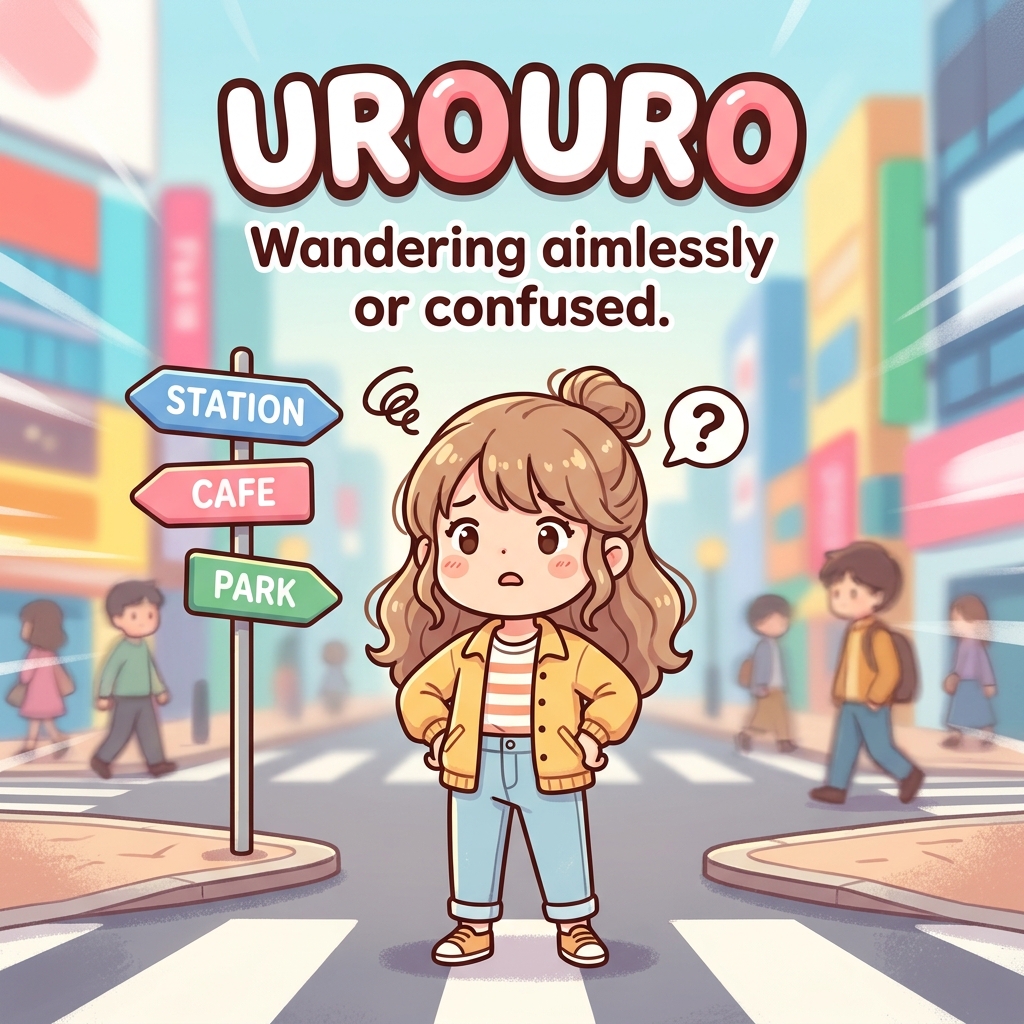
When you learn Japanese, you may first learn basic movement verbs like 歩く (aruku), meaning “to walk.” But Japanese often uses onomatopoeia to describe not only the action, but also the feeling behind it.
うろうろ (urouro) is a good example. It describes someone moving around without a clear direction or purpose. The person may be lost, nervous, unsure what to do, or simply unable to settle down.
Because of that, うろうろ is more specific than just “walking.” It adds the feeling of wandering, searching, hesitation, or restlessness.
What うろうろ Really Feels Like
うろうろ (urouro) gives the image of someone moving back and forth or walking around without a clear goal. Imagine a person at a large station who cannot find the right exit, or someone waiting nervously before an important event.
The movement itself is important, but the feeling behind the movement matters too. うろうろ often suggests uncertainty. The person is not calmly taking a walk. They are moving because they are lost, worried, waiting, or unsure what to do next.
This is why うろうろ is useful in everyday Japanese. It can describe both the physical action and the mood of the situation at the same time.
How It Works in Context
うろうろ is commonly used with する (suru), as in うろうろする (urouro suru). This means “to wander around,” “to walk around aimlessly,” or “to pace around restlessly,” depending on the context.
It can also describe the manner of movement directly: うろうろ歩く (urouro aruku) means “to walk around aimlessly,” while うろうろと歩く adds と before the movement verb. These forms are useful when you want to keep the walking action explicit while showing that it lacks a clear direction.
You can use it for people and animals. For example, a lost child can うろうろする, a nervous person can うろうろする, and a dog looking for its owner can also うろうろする.
The key point is that the movement does not feel organized or purposeful. If someone is simply walking to the store, 歩く (aruku) is enough. If someone is moving around because they are confused, anxious, or unsure where to go, うろうろ is much more natural.
Natural Usage Scenes
You will hear うろうろ in many everyday situations. It often appears when someone is visibly moving around but does not seem to have a clear destination.
- A lost tourist walking around a station and checking signs again and again
- A child separated from their parents in a shopping mall
- A student pacing before an exam or presentation
- Someone waiting nervously outside a room
- A person killing time by walking around without a clear plan
In all of these examples, うろうろ adds a feeling that a plain verb like 歩く cannot express by itself.
A Common Learner Mistake
A common mistake is to use 歩く (aruku) whenever someone is moving on foot. Grammatically, that may be correct, but it may miss the feeling of the scene.
For example, if you say 彼は駅を歩いていた (Kare wa eki o aruite ita), it simply means “He was walking at the station.” That sentence does not tell us whether he was calm, lost, nervous, or just passing through.
But if you say 彼は駅をうろうろしていた (Kare wa eki o urouro shite ita), the image changes. Now it sounds like he was wandering around the station, probably unsure where to go or what to do.
Avoid This Mistake!
Do not use 歩く (aruku) when you want to describe someone wandering around with uncertainty, nervousness, or confusion. 歩く only describes the action of walking. うろうろ (urouro) describes the movement and the unsettled feeling behind it.
How to Remember It
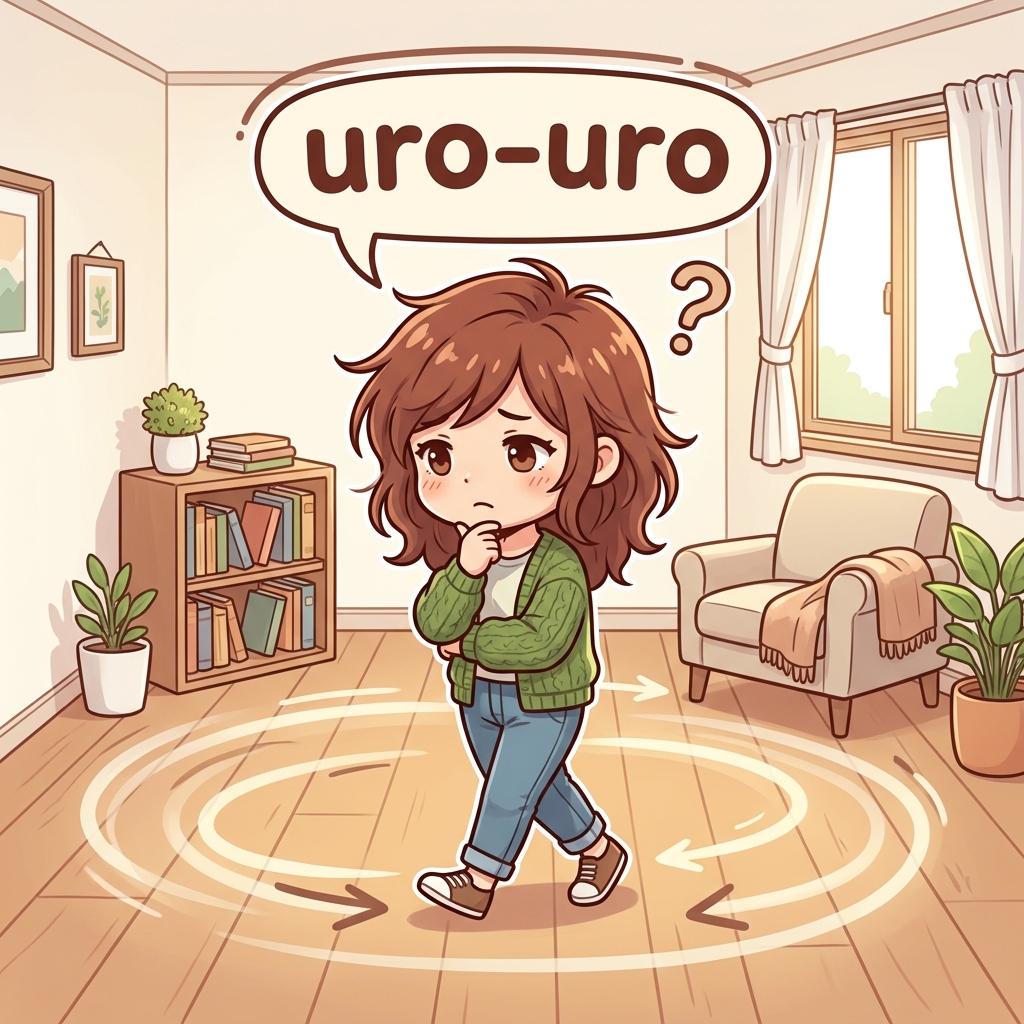
To remember うろうろ, imagine someone turning around, walking a little, stopping, looking around, and then walking again. The movement repeats, but it does not seem to go anywhere.
A simple memory image is: “U-turn, U-turn, still not sure where to go.” This matches the feeling of うろうろ: movement without a clear direction.
When you want to describe someone who is lost, restless, worried, or unable to settle down, うろうろ is often a natural choice.
Movement Without a Settled Direction
うろうろ (urouro) fits when the movement itself feels unsettled. It is not just “walking around.” It often suggests that the person does not know where to go, is waiting nervously, or cannot stay still.
Related Expressions
These words are close in meaning, but each one has a different feeling. Comparing them helps you choose the most natural expression.
| Japanese | Romaji | Meaning |
|---|---|---|
| ぶらぶら | burabura | To wander idly, stroll aimlessly; usually more relaxed than うろうろ |
| そわそわ | sowasowa | Restless or fidgety; more about inner nervousness than walking around |
| きょろきょろ | kyorokyoro | Looking around restlessly or nervously |
Practice うろうろ (urouro) with Audio
Play the audio and listen to how the examples sound in Japanese.
Japanese: 子供が迷子になって、駅の構内をうろうろしていた。
English: The child was lost and wandering around the station concourse.
Japanese: 発表会の前、彼は落ち着かない様子で部屋の中をうろうろしていた。
English: Before the presentation, he was restlessly pacing around the room.
Frequently Asked Questions
Can うろうろ (urouro) be used for animals?
Yes. You can use うろうろ (urouro) for animals too. For example, a lost dog walking around and looking for its owner, or a cat pacing around the house, can be described with うろうろ.
Is うろうろ (urouro) always negative?
Not always. It often suggests anxiety, confusion, or aimless movement, but the feeling depends on the situation. Sometimes it simply means someone is hanging around or walking around without a clear purpose.
What is the difference between うろうろ and ぶらぶら?
うろうろ usually feels more restless, nervous, or uncertain. ぶらぶら is more relaxed and casual, like strolling around without a strict plan.
Can I use うろうろ for waiting?
Yes. If someone is waiting nervously and pacing around, うろうろ works very well. It shows that the person cannot stay still.