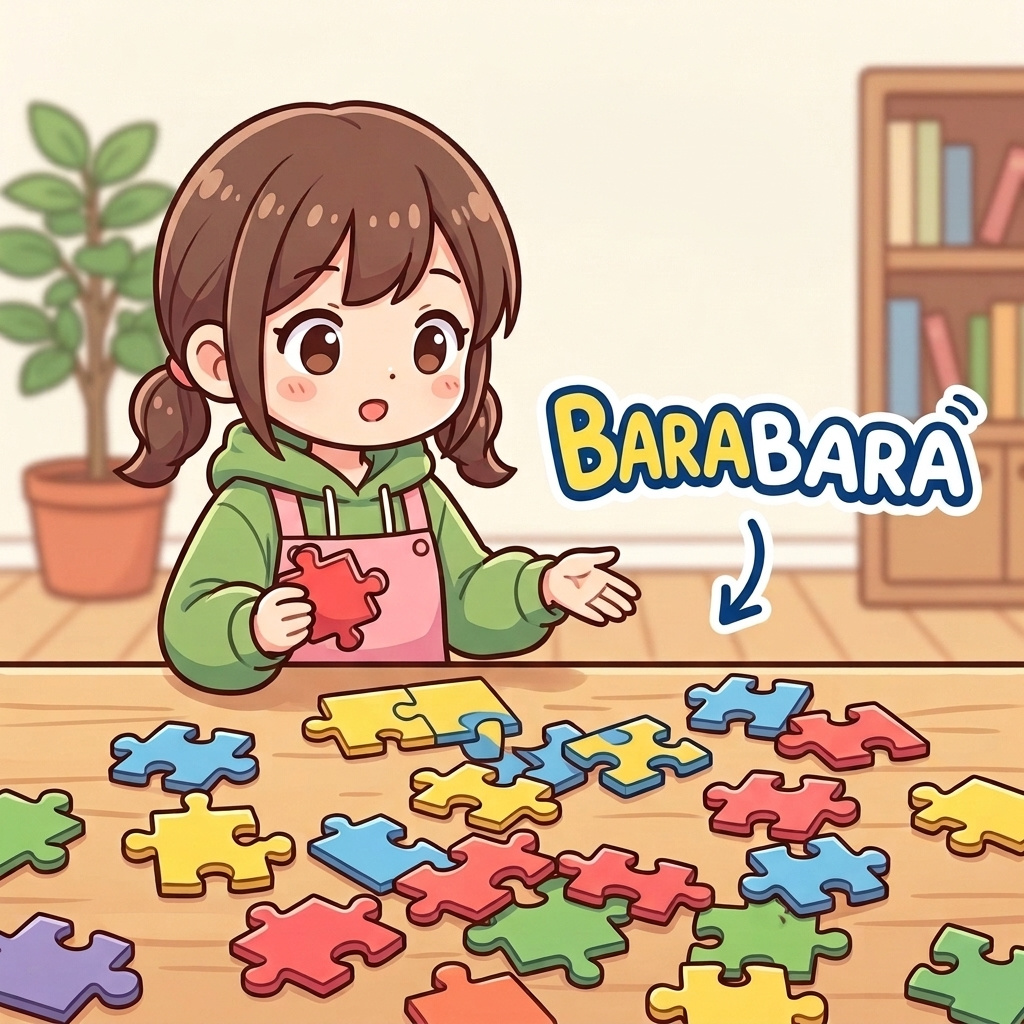
Have you ever tried to describe a chaotic scene in Japanese, where things aren't just scattered, but truly falling apart, losing all sense of order? Many learners struggle to capture this specific feeling, often resorting to simpler verbs that don't quite convey the disarray. This is where the powerful onomatopoeia ばらばら (barabara) comes in. It's not just about things scattering; it's about a profound sense of disorder, fragmentation, and a lack of cohesion. Mastering ばらばら (barabara) will allow you to add vividness and emotional depth to your Japanese communication, perfectly describing situations that feel truly messy and chaotic.
What This Word Really Feels Like
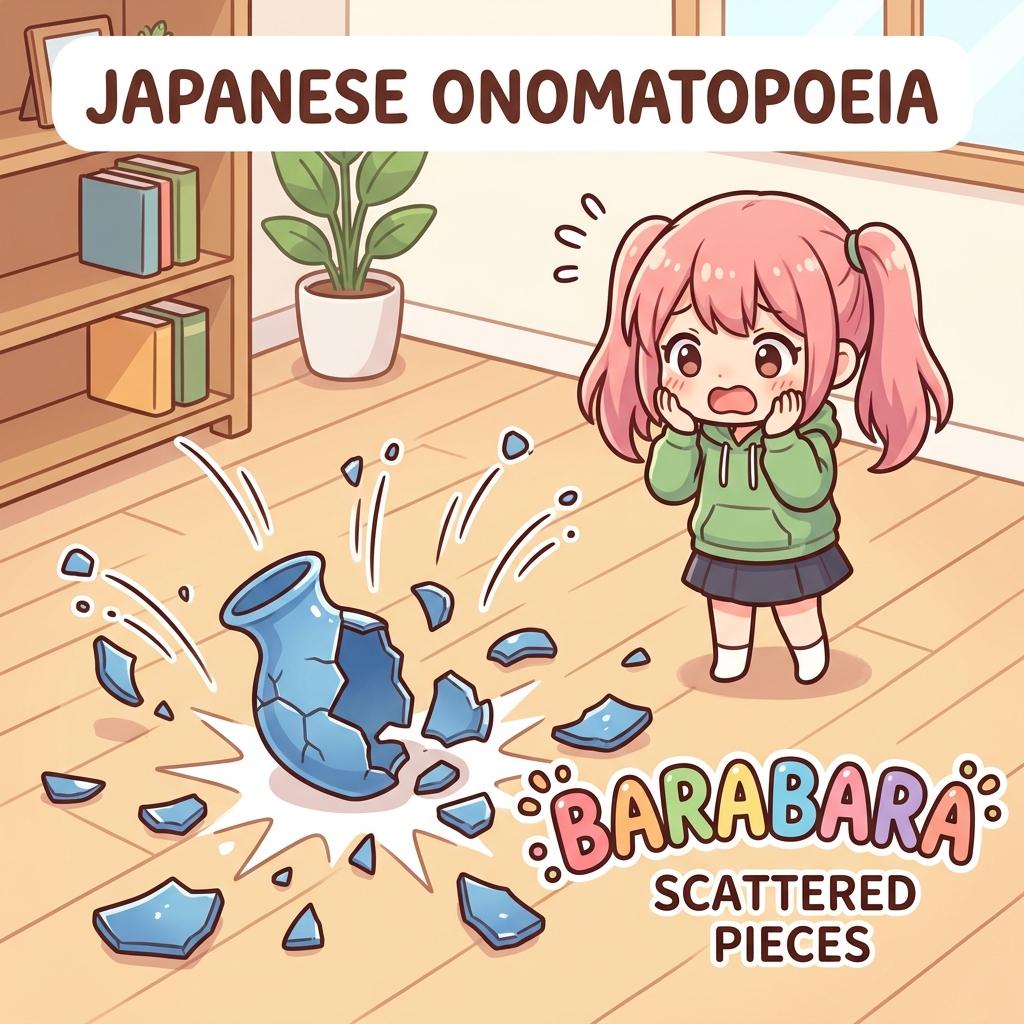
Imagine a delicate glass object shattering into countless pieces, or a pile of neatly stacked papers suddenly caught by a gust of wind, scattering everywhere. ばらばら (barabara) captures both the visual disarray and the auditory fragmentation of such events. It evokes the sound of small, individual items falling or scattering irregularly, like raindrops hitting a window pane or pebbles rolling down a slope. But beyond the sound, it paints a picture of things losing their unity, breaking apart, and spreading out in an uncontrolled, disorganized manner. It's a word that carries a strong sense of things being 'all over the place' or 'falling apart at the seams'.
How It Works in Context
The versatility of ばらばら (barabara) allows it to describe a wide range of disordered situations. Physically, it can refer to objects scattering, like puzzle pieces spread across a floor, or a necklace breaking and its beads rolling everywhere. When applied to groups of people, it describes them dispersing or breaking up, losing their formation or unity – think of a crowd scattering after an event, or a team whose members are working independently without coordination. More abstractly, ばらばら (barabara) can even describe concepts like plans or ideas falling apart, losing their structure and coherence. It emphasizes the lack of unity and the fragmented state of whatever it describes.
Natural Usage Scenes
You'll hear ばらばら (barabara) used in everyday Japanese to describe various scenarios. For instance, if a project team's members are not communicating and each doing their own thing, you might say チームの意見がばらばらだ (chiimu no iken ga barabara da - the team's opinions are all over the place). Or, if a book's pages are falling out, you could describe them as ばらばらになっている (barabara ni natte iru - becoming scattered/falling apart). It's the perfect word when you want to convey that something isn't just a little messy, but truly disorganized and fragmented.
Practice ばらばら (barabara) with Audio
Play the audio and listen to how the examples sound in Japanese.
Japanese: 大雨で、書類がばらばらと風に飛ばされてしまった。
English: In the heavy rain, the documents were scattered by the wind.
Japanese: 意見がばらばらで、会議はなかなかまとまらなかった。
English: Opinions were all over the place, and the meeting struggled to reach a conclusion.
A Common Learner Mistake
A frequent pitfall for learners is confusing ばらばら (barabara) with simpler verbs like 散る (chiru), which means 'to scatter' or 'to fall'. While 散る (chiru) describes a simple act of scattering, like cherry blossoms falling, ばらばら (barabara) adds a crucial layer of meaning: disorder, fragmentation, or a lack of cohesion. If you simply say 'the papers scattered' using 散る (chiru), it might not convey the messiness or the uncontrolled nature that ばらばら (barabara) inherently carries. Think of puzzle pieces scattered haphazardly versus neatly arranged. The former is ばらばら (barabara).
Avoid This Mistake!
Don't use ばらばら (barabara) when you simply mean 'scattered' without the connotation of disorder or fragmentation. For example, if leaves are falling neatly, 散る (chiru) is more appropriate. ばらばら (barabara) implies a more chaotic, uncontrolled scattering or breaking apart.
How to Remember It
To internalize ばらばら (barabara), try to associate it with the visual and auditory sensation of things breaking apart or scattering in a disorganized fashion. Imagine a 'bar' of chocolate that's been dropped and is now 'barabara' (all over the place) in little pieces. Or think of 'barriers' breaking 'apart' – 'barabara'. The repeated 'ba-ra' sound itself can evoke a sense of things separating and spreading out. Focus on the feeling of things losing their structure and becoming disunited. This word is your key to describing truly chaotic and fragmented situations with precision.
Scattered Pieces or Lost Cohesion?
While 散る (chiru) describes simple scattering, use ばらばら (barabara) when you want to emphasize the disorder, fragmentation, or lack of cohesion. Think of puzzle pieces scattered haphazardly versus neatly arranged. The former is ばらばら (barabara).
Related Expressions
| Japanese | Romaji | Meaning |
|---|---|---|
| ぐちゃぐちゃ | guchagucha | Messy, jumbled, soggy (emphasizes a state of disarray or wetness) |
| ごちゃごちゃ | gochagocha | Cluttered, messy, disorganized (often refers to many small things) |
| ばらける | barakeru | To come apart, to scatter (verb form of ばらばら's action) |
Frequently Asked Questions
Can ばらばら (barabara) be used for people?
Yes, ばらばら (barabara) can describe people dispersing or a group lacking unity. For example, if a team's opinions are not aligned, you can say 意見がばらばらだ (iken ga barabara da).
Is ばらばら (barabara) always negative?
While often used in contexts of disorder or fragmentation, which can be negative, it's not inherently negative. For instance, describing raindrops falling ばらばら (barabara) is simply descriptive. The nuance depends on the context.