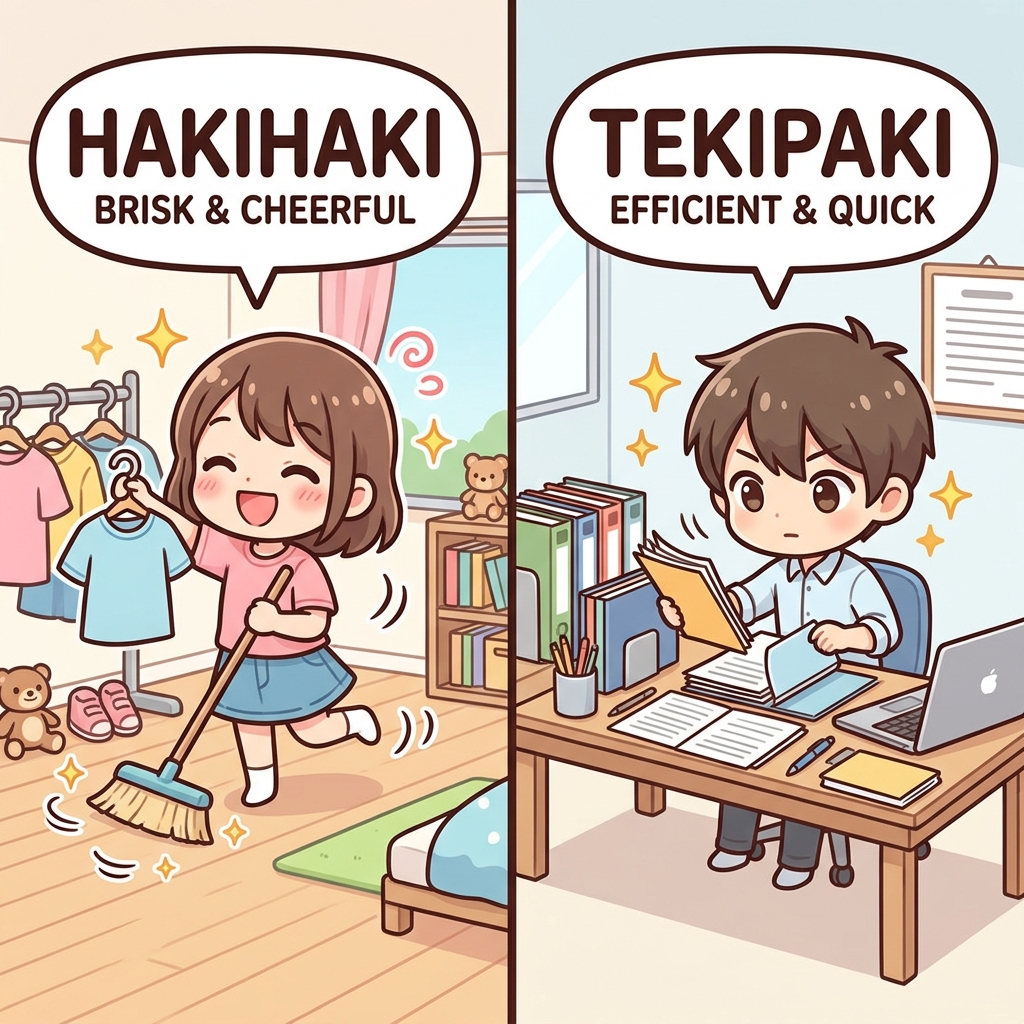
Tired of confusing はきはき (hakihaki) with tekipaki? These two Japanese onomatopoeia both describe brisk and energetic actions, but they carry distinct nuances that are crucial for sounding natural. This guide will clarify when to use each, helping you master the art of describing energetic and efficient actions in Japanese.
Two Similar Sounds, Different Impressions
While both はきはき (hakihaki) and tekipaki relate to energetic movement, they focus on different aspects of that energy. Understanding this core difference is your first step to using them correctly.
はきはき (hakihaki): Clarity, Spirit, and Liveliness
はきはき (hakihaki) describes movements and speech that are brisk, clear, and full of energy. It conveys a sense of alertness, determination, or liveliness. When someone acts はきはき (hakihaki) they do so without hesitation, with a crisp, definite manner. This term is often associated with a cheerful, proactive, and straightforward demeanor. Think of someone who speaks clearly and confidently, or moves with a lively, spirited bounce.
tekipaki: Efficiency, Speed, and Decisiveness
On the other hand, tekipaki (often written in katakana as テキパキ) primarily describes actions that are efficient, brisk, and quick, especially when completing tasks or work. It implies a decisive and organized approach, focusing on productivity and getting things done without wasted effort. Someone who is tekipaki is good at managing their time and completing their duties swiftly and neatly.
The Scene Behind Each Expression
To truly grasp the difference, let's imagine the typical scenarios where you'd encounter each expression.
Picture a vibrant kindergarten classroom. A child, full of boundless energy, answers their teacher's questions with a loud, clear voice and moves around with lively, definite steps. This child's demeanor and actions are perfectly described as はきはき (hakihaki). It’s about their overall spirited presence and the clarity of their communication and movement.
Now, shift to a bustling office environment. A colleague is at their desk, quickly sorting through documents, typing away at their computer, and making phone calls, all with remarkable speed and precision. They are efficiently clearing their workload before the end of the day. This colleague's focused, productive actions are a prime example of tekipaki. Here, the emphasis is on the effectiveness and swiftness of their task completion.
How Japanese Speakers Choose Between Them
The key distinction lies in what aspect of the "briskness" is being highlighted. The choice between はきはき (hakihaki) and tekipaki depends on whether the focus is a person's general demeanor and clarity or their efficiency in tasks.
はきはき (hakihaki) focuses on the spirit, clarity, and demeanor of a person's movements and communication. It describes someone who is bright, articulate, and moves with a certain vitality. For instance, a lively child's movements or a confident person's clear speech would be はきはき (hakihaki).
tekipaki, conversely, emphasizes the speed, efficiency, and decisiveness in completing tasks or work. It's about how effectively someone handles their responsibilities. An efficient coworker who quickly finishes their reports is tekipaki.
Practice the Difference with Audio
Play the audio and listen to how the examples sound in Japanese.
Japanese: 彼はいつもはきはきと返事をするので、とても気持ちがいい。
English: He always replies briskly and clearly, which feels very pleasant.
Japanese: 彼女はテキパキと仕事を片付け、定時で帰宅した。
English: She efficiently finished her work and went home on time.
Small Nuance, Big Difference
Demeanor or Task Efficiency?
While both はきはき (hakihaki) and tekipaki convey briskness, think of はきはき (hakihaki) for the spirit and clarity of a person's movements and demeanor (e.g., a cheerful, proactive person), and tekipaki for the speed and efficiency of tasks.
Understanding this subtle difference allows you to paint a more accurate picture with your Japanese. Using the wrong term might not cause a complete misunderstanding, but it can shift the description from demeanor to task performance, or vice versa.
Common Pitfall
Don't use はきはき (hakihaki) when you simply mean someone is quick at their job without implying their cheerful or clear demeanor. Similarly, tekipaki isn't typically used for someone's general lively personality or clear speech. Always consider the context: is it about personality/communication or task efficiency?
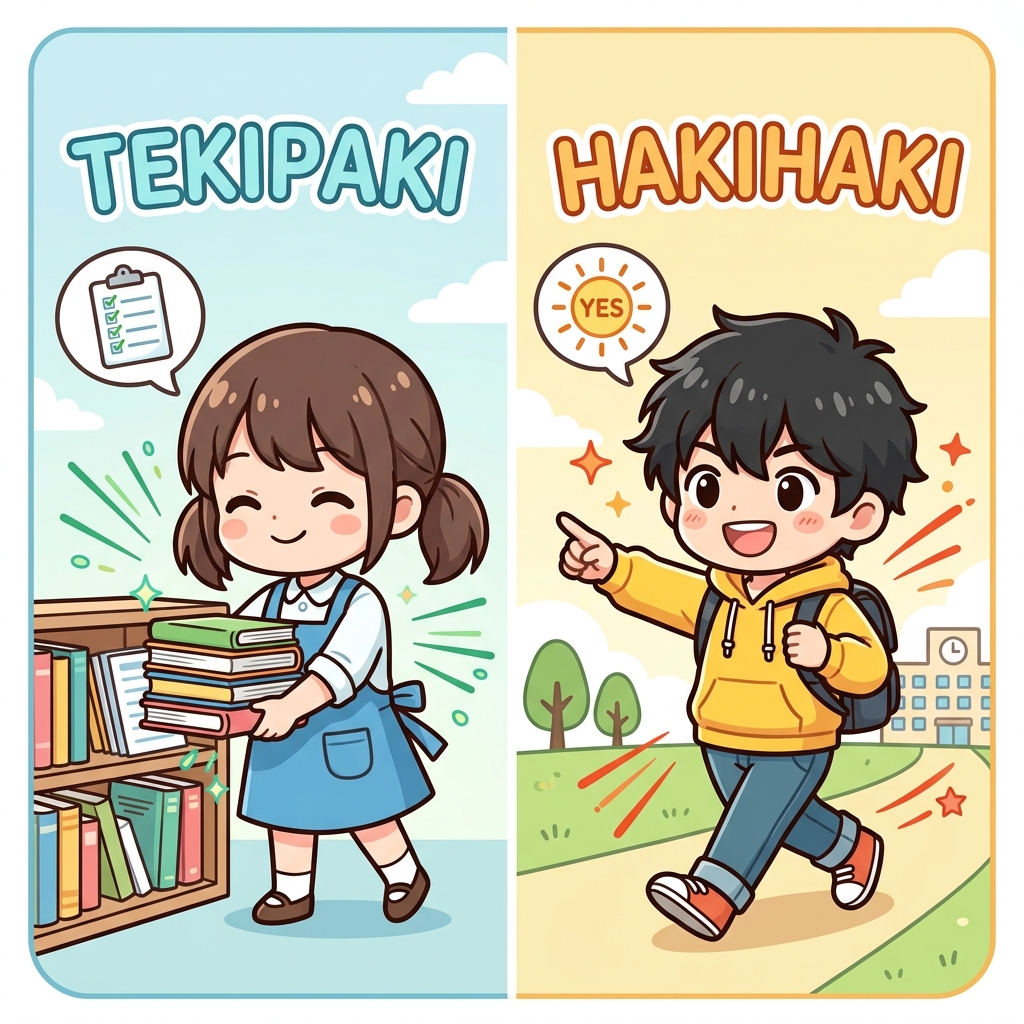
Consider the scenario from our story angle: a learner observes two colleagues. One speaks and moves with a clear, lively energy – that's はきはき (hakihaki). The other efficiently processes their workload, getting things done quickly and neatly – that's tekipaki. Both are "energetic" but in different ways.
Quick Practice with Real Context
Let's solidify your understanding with a few more quick scenarios:
- If you want to describe a salesperson who explains products clearly and engagingly, making eye contact and moving confidently, you'd use はきはき (hakihaki).
- If you're praising a chef who prepares multiple dishes quickly and without mistakes during a busy dinner rush, you'd use tekipaki.
- For a student who answers questions in class with a clear, confident voice, it's はきはき (hakihaki).
- For a cleaner who tidies up a room swiftly and thoroughly, it's tekipaki.
Related Expressions
To further enrich your vocabulary, here are a couple of related expressions:
| Expression | Nuance |
|---|---|
| きびきび (kibikibi) | Brisk, smart, energetic movements, often implying a sense of discipline or professionalism. Can overlap with both はきはき (hakihaki) (for movement) and tekipaki (for efficiency). |
| さっさと (sassato) | Quickly, promptly, without delay. Focuses purely on speed of action, less on the manner or spirit. |
Frequently Asked Questions
Can I use はきはき (hakihaki) for inanimate objects?
Generally no, はきはき (hakihaki) is typically used to describe the movements, speech, or demeanor of living beings, particularly people, conveying their spirit and clarity. It's not usually applied to objects.
Is tekipaki always positive?
Yes, tekipaki almost always carries a positive connotation. It implies competence, efficiency, and being well-organized, which are generally seen as desirable qualities, especially in a work or task-oriented context.