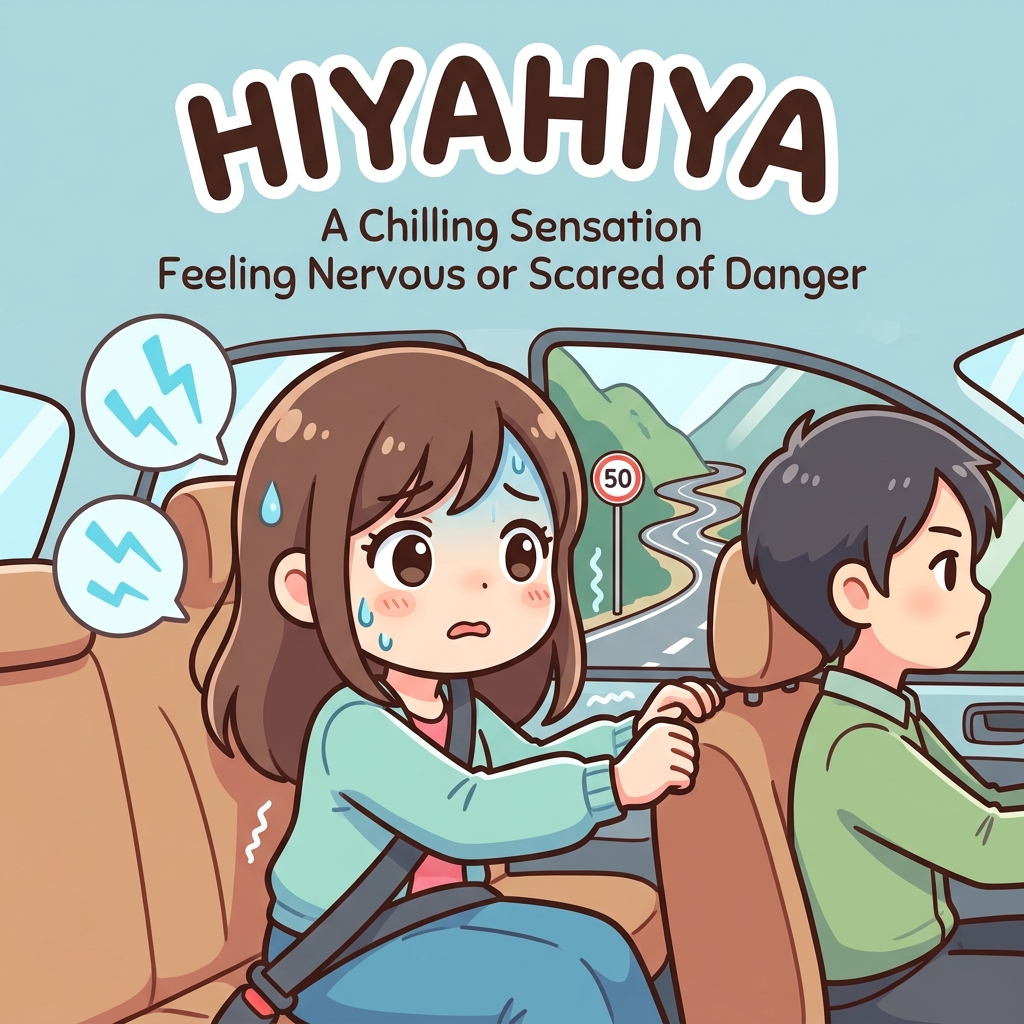
ひやひや (hiyahiya) is used when you feel nervous, tense, or scared that something bad might happen. It is the feeling you get during a close call, a risky moment, or a situation that makes you think, “That was dangerous.”
Many learners first connect ひやひや with coldness because it sounds related to 冷える (hieru), meaning “to get cold.” But in everyday Japanese, ひやひや is usually not about normal physical cold. It is more about the uncomfortable “cold” feeling that comes from fear, anxiety, or suspense.
For example, you might feel ひやひや when a child suddenly runs into the road, when someone almost drops something expensive, or when you are waiting for the result of something important.
The Feeling Behind ひやひや
ひやひや (hiyahiya) describes a tense feeling that makes your body react. It can feel like your heart suddenly tightens, your chest becomes cold, or you cannot relax because you are worried about what might happen next.
It is different from simply feeling cold because of the weather. If the room is cold, you would use 寒い (samui) or 冷たい (tsumetai), depending on the situation. ひやひや is used when the cold feeling comes from nervousness, danger, or suspense.
A good English image is “I was on edge,” “It gave me a scare,” or “I was nervous watching it happen.” The feeling is often connected to a close call or a moment where something could easily go wrong.
What This Expression Looks Like
You will often hear ひやひや in situations where someone is worried, watching something risky, or remembering a tense moment. It can describe your own feeling, or the feeling someone causes in other people.
Try Saying ひやひや (hiyahiya) Naturally
Play the audio and listen to how the examples sound in Japanese.
Japanese: 運転中に急に子供が飛び出してきて、ひやひやしたよ。
English: A child suddenly ran out into the road while I was driving, and it gave me a scare.
Japanese: 発表の順番が近づくにつれて、胸がひやひやしてきた。
English: As my turn to present drew closer, I started to feel nervous apprehension in my chest.
Here are common situations where ひやひや feels natural:
- Close calls: A child runs into the road, or a car almost hits something.
- Risky moments: Someone climbs too high, carries something fragile, or almost falls.
- Suspenseful scenes: You watch a sports game, movie, or performance where one mistake could change everything.
- Waiting nervously: You are waiting for exam results, interview feedback, or an important announcement.
- Watching someone else: Someone you care about is doing something risky, and you cannot relax.
Native Speaker Tip:
ひやひや (hiyahiya) is not just “cold.” It is the uneasy, tense feeling you get when something dangerous, embarrassing, or worrying might happen.
Where You See It in Real Japanese
In everyday conversation, ひやひや is often used when telling a story about something that almost went wrong. It helps the listener understand that the situation felt tense, risky, or emotionally uncomfortable.
For example, if someone almost caused an accident, you might say ひやひやした. If a child is running near the edge of a platform or stairs, a parent might feel ひやひや while watching. If a team barely wins at the end of a game, fans might say they were ひやひや until the final moment.
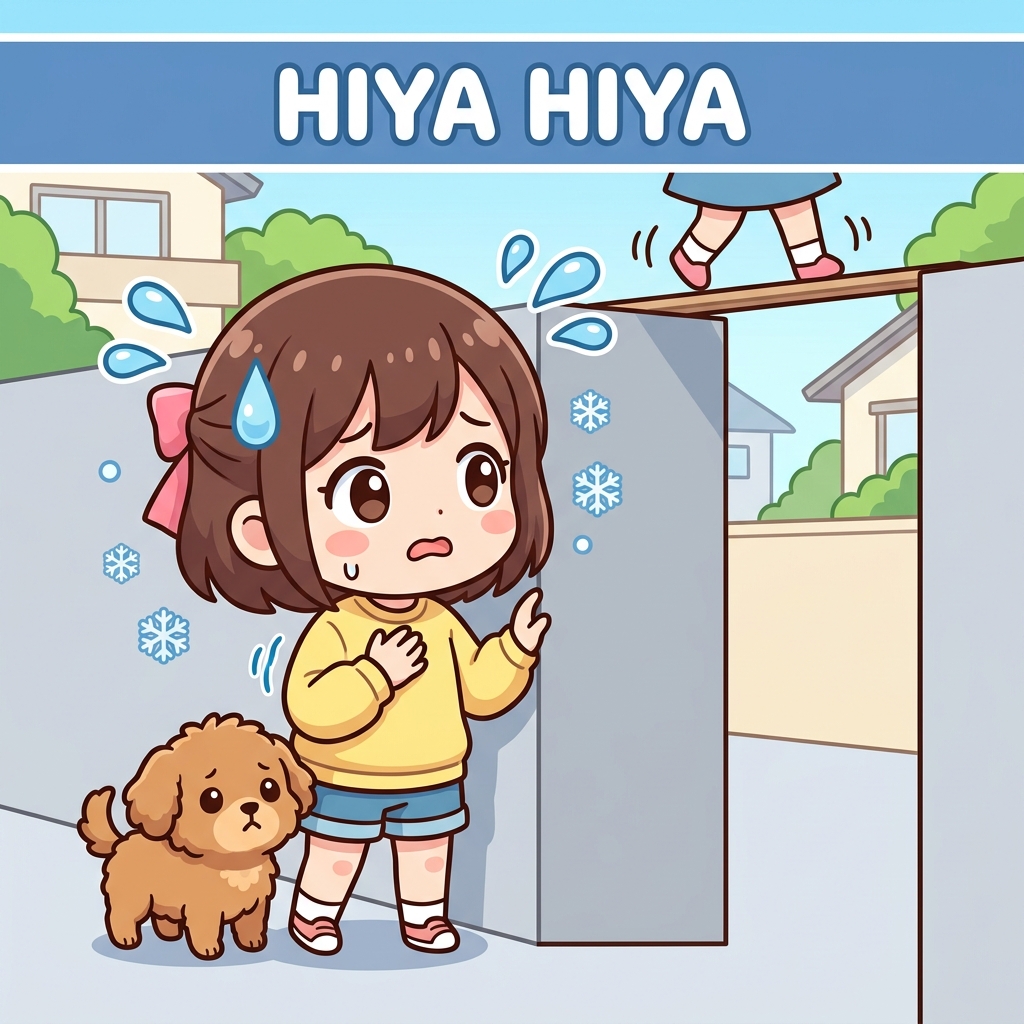
It is commonly used with する (suru), as in ひやひやする, meaning “to feel nervous,” “to feel tense,” or “to be on edge.” You may also see ひやひやさせる, which means “to make someone feel nervous or worried.”
When It Sounds Too Strong
ひやひや is useful, but it does not fit every kind of nervousness. It usually needs some sense of risk, danger, suspense, or possible trouble.
For example, if you are simply a little nervous before meeting a new person, どきどき (dokidoki) may be more natural. If you are watching something unfold and feel anxious about the result, はらはら (harahara) may fit. If the feeling includes a cold, tense fear that something may go wrong, ひやひや is a good choice.
Also, do not use ひやひや to describe normal cold weather. A sentence like “It is ひやひや outside today” would sound unnatural if you simply mean that the air is cold.
Common Mistake:
Do not use ひやひや (hiyahiya) for ordinary physical cold. Use it when the “cold” feeling comes from fear, suspense, nervousness, or a close call.
How to Remember the Mood
To remember ひやひや, imagine a moment when your body suddenly feels cold because something almost went wrong. Maybe a glass almost falls, a car stops just in time, or someone says something risky in an important meeting.
The situation is not only scary. It is tense because you are waiting to see whether things will be okay. That “please don’t let this go wrong” feeling is close to ひやひや.
A simple memory phrase is: “ひやっとする nervousness.” It is the kind of nervous feeling that gives you a small chill.
Related Expressions
These expressions are close to ひやひや, but each one has a different feeling.
| Expression | Meaning | Nuance |
|---|---|---|
| はらはら (harahara) | Suspense, anxiety | Often used when watching something happen and feeling nervous about the result. |
| ぞっと (zotto) | A shiver of fear or disgust | Stronger and darker than ひやひや. Often used for fear, horror, or disgust. |
| どきどき (dokidoki) | Heart pounding | Can be positive or negative. Used for excitement, love, nervousness, or anticipation. |
| ひやっと (hiyahitto) | A sudden chill or scare | Often describes a brief moment of fear or surprise, while ひやひや can continue for longer. |
Frequently Asked Questions
Is ひやひや (hiyahiya) always negative?
It is usually negative or tense. It describes worry, fear, suspense, or nervousness about something that might go wrong. However, it can also be used for suspense that is exciting, such as watching a close sports game.
Can I use ひやひや (hiyahiya) for just feeling physically cold?
No. For normal physical coldness, use 寒い (samui) for weather or temperature, and 冷たい (tsumetai) for cold objects or liquids. ひやひや is for the cold, tense feeling that comes from nervousness or fear.
What is the difference between ひやひや and はらはら?
はらはら is often used when you are anxiously watching something happen. ひやひや has a colder, more tense feeling, often connected to danger, a close call, or fear that something may go wrong.
Can ひやひや be used in business situations?
Yes. For example, if an important presentation almost goes badly, or if a deadline is barely met, you can use ひやひや to describe the tense feeling.