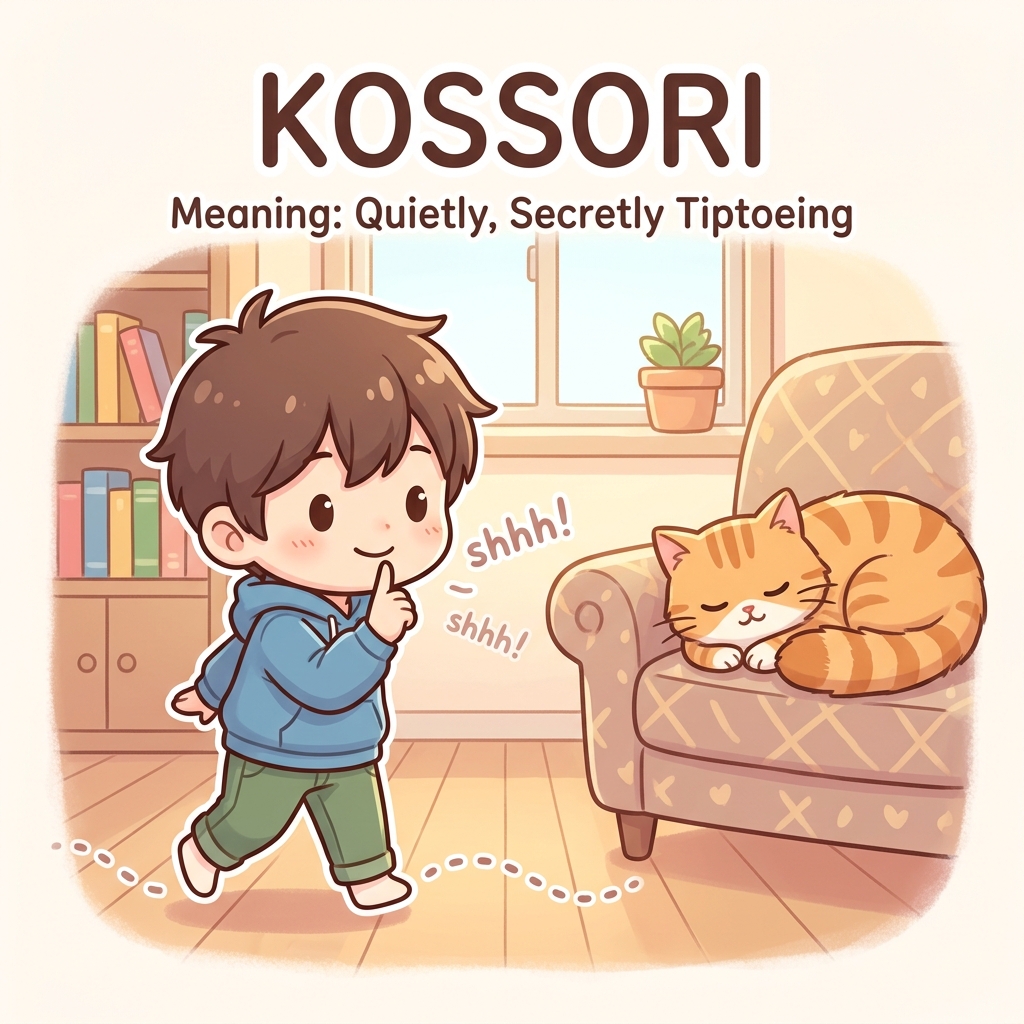
The Core Meaning of こっそり (kossori)
こっそり (kossori) is used when someone does something quietly and discreetly, usually because they do not want other people to notice. It can describe sneaking out of a room, hiding something, preparing a surprise, or doing something small in secret.
The important point is that こっそり (kossori) is not just “quietly.” It usually includes a feeling of secrecy, caution, or avoiding attention. If someone moves silently because they are trying not to be seen or heard, こっそり is often a natural choice.
The Scene Behind the Word
Imagine preparing a surprise birthday party. You bring in the cake, put up decorations, and send messages to friends while trying not to let the birthday person notice. In that kind of situation, こっそり (kossori) fits very well.
A learner once tried to describe how their sibling ate the last snack from the fridge. Instead of just saying 'My sibling ate the snack,' they said, '妹が冷蔵庫からこっそりケーキを食べていた' (Imōto ga reizōko kara kossori kēki o tabeteita - My younger sister was secretly eating cake from the refrigerator). This use of こっそり (kossori) adds a small but clear feeling of secrecy and mischief. It tells the listener not only what happened, but also how it happened.
When Japanese Speakers Use It
Japanese speakers use こっそり (kossori) in everyday situations where the action is done quietly and out of sight. Common uses include:
- Sneaking out or in: leaving or entering a place without being noticed.
- Hiding something: putting something somewhere secretly.
- Doing something secretly: eating a snack, checking something, or reading something without wanting others to know.
- Preparing a surprise: arranging something quietly so the other person does not find out too early.
So the focus is not only on the action itself. こっそり (kossori) describes the quiet, hidden way the action is done.
Listen to こっそり (kossori) in Real Sentences
Play the audio and listen to how the examples sound in Japanese.
Japanese: 彼はみんなに気づかれないように、こっそり部屋を出て行った。
English: He quietly slipped out of the room so no one would notice him.
Japanese: 妹が冷蔵庫からこっそりケーキを食べていた。
English: My younger sister was secretly eating cake from the refrigerator.
A Native-Sounding Tip for こっそり (kossori)
Pair こっそり with Hidden Actions こっそり (kossori) often sounds natural with verbs that already suggest quiet or hidden action. For example, 抜け出す (nukedasu) means “to slip out” or “to sneak out,” and 隠す (kakusu) means “to hide.” So expressions like こっそり抜け出す and こっそり隠す are very easy to understand. The word こっそり makes the secretive feeling stronger.
Avoiding Common Pitfalls with こっそり (kossori)
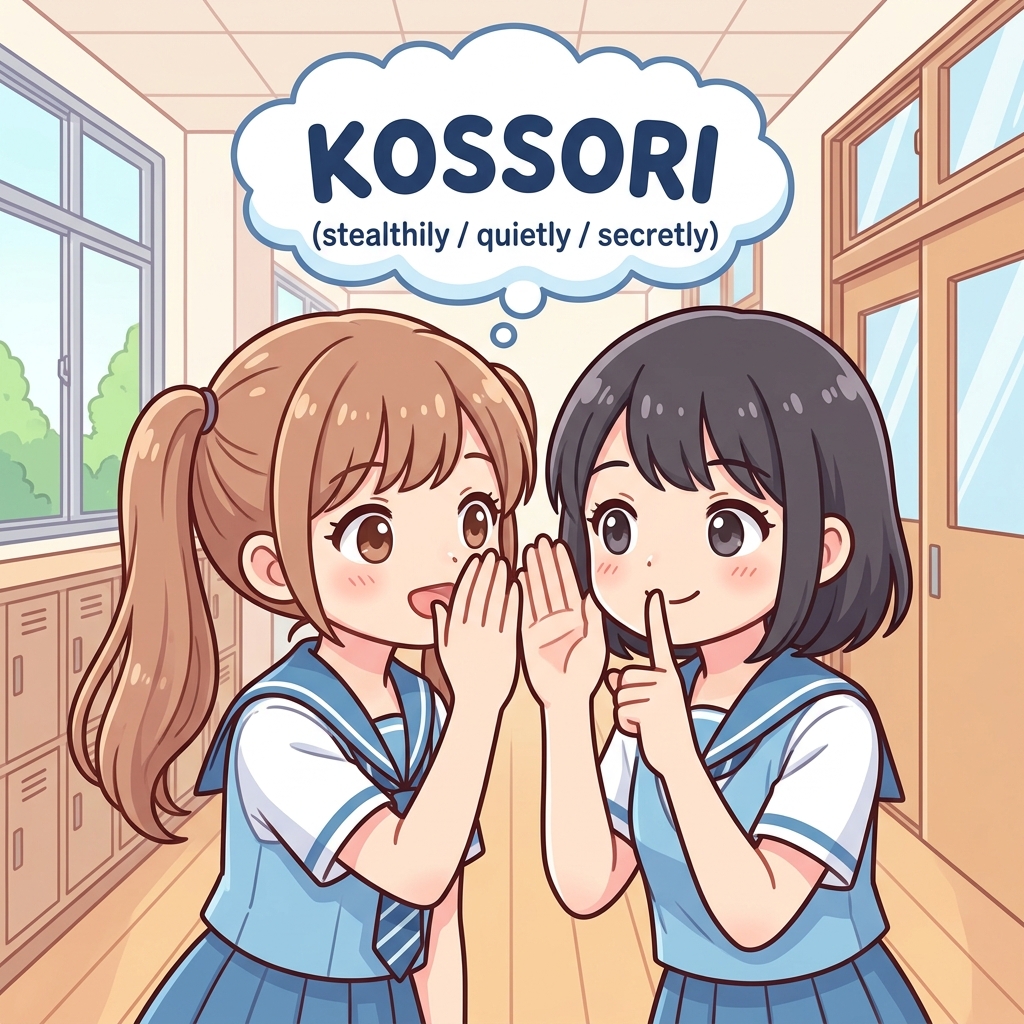
Common Mistake: Do not use こっそり (kossori) every time you simply mean “quietly.” If you want to say “Please speak quietly,” 静かに話してください (shizuka ni hanashite kudasai) is more natural. こっそり (kossori) usually suggests that the person is trying not to be noticed. In other words, there is often a hidden or secretive feeling behind the action.
Similar Expressions to こっそり (kossori)
Several Japanese expressions can sound close to こっそり (kossori), but they are not exactly the same. The difference is mainly in what kind of “quietness” they describe.
| Expression | Romaji | Meaning/Nuance |
|---|---|---|
| ひっそり | hissori | Quiet, still, or secluded; often used for places or atmospheres |
| そっと | sotto | Gently, softly, or carefully; not always secretive |
| 内緒で | naisho de | Secretly; often about keeping information or an action private |
ひっそり (hissori) often describes a quiet atmosphere, while そっと (sotto) focuses more on gentleness or care. 内緒で (naisho de) means “secretly,” but it does not always have the same physical, stealthy feeling as こっそり (kossori). こっそり is especially useful when someone is doing something quietly so others will not notice.
Frequently Asked Questions
Can こっそり (kossori) be used for positive actions?
Yes. こっそり (kossori) can be used for both positive and negative actions. For example, こっそりプレゼントを用意する means to prepare a present secretly. The word itself does not automatically mean the action is bad. It mainly describes the discreet way the action is done.
Is こっそり (kossori) only for physical movements?
No. It is often used for physical actions, such as sneaking out or hiding something, but it can also be used for non-physical actions. For example, こっそり計画を立てる means to make a plan secretly. The key idea is that the action is done quietly or privately so other people do not notice.