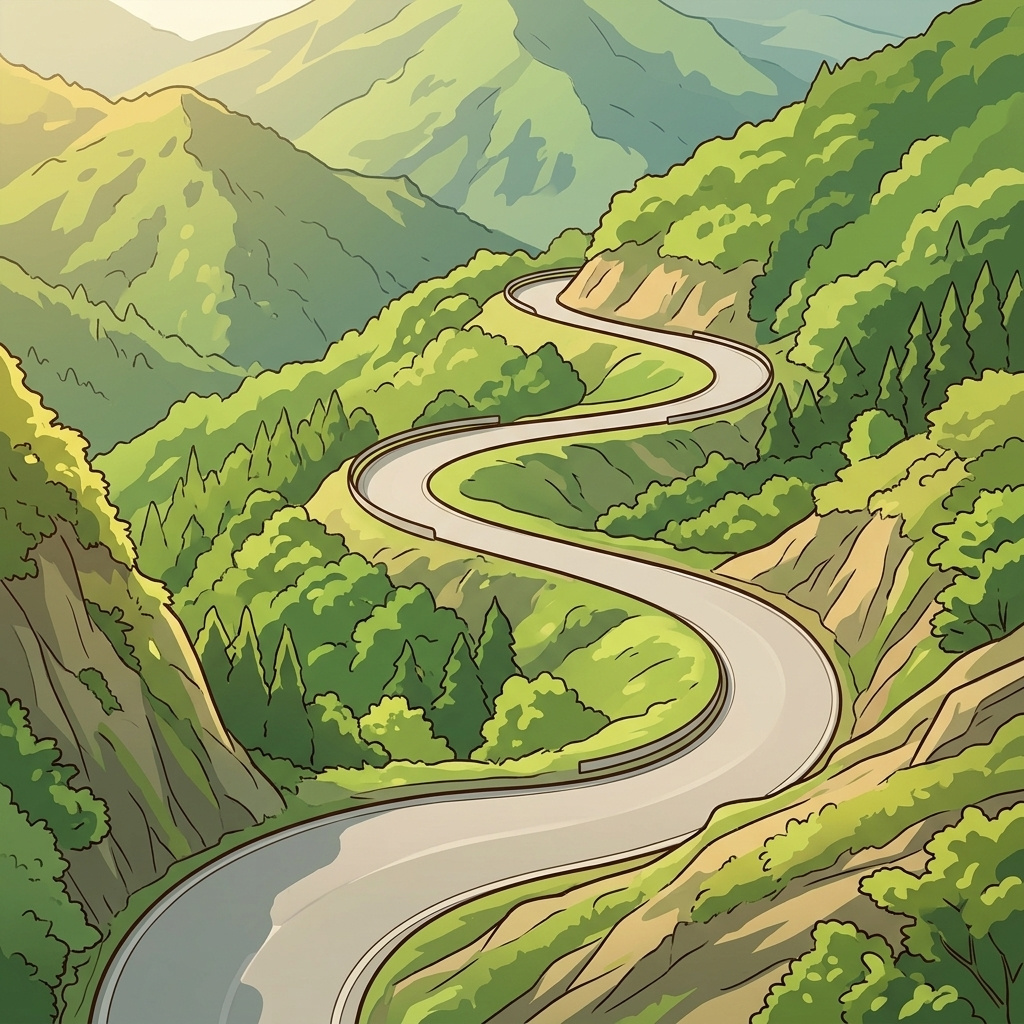
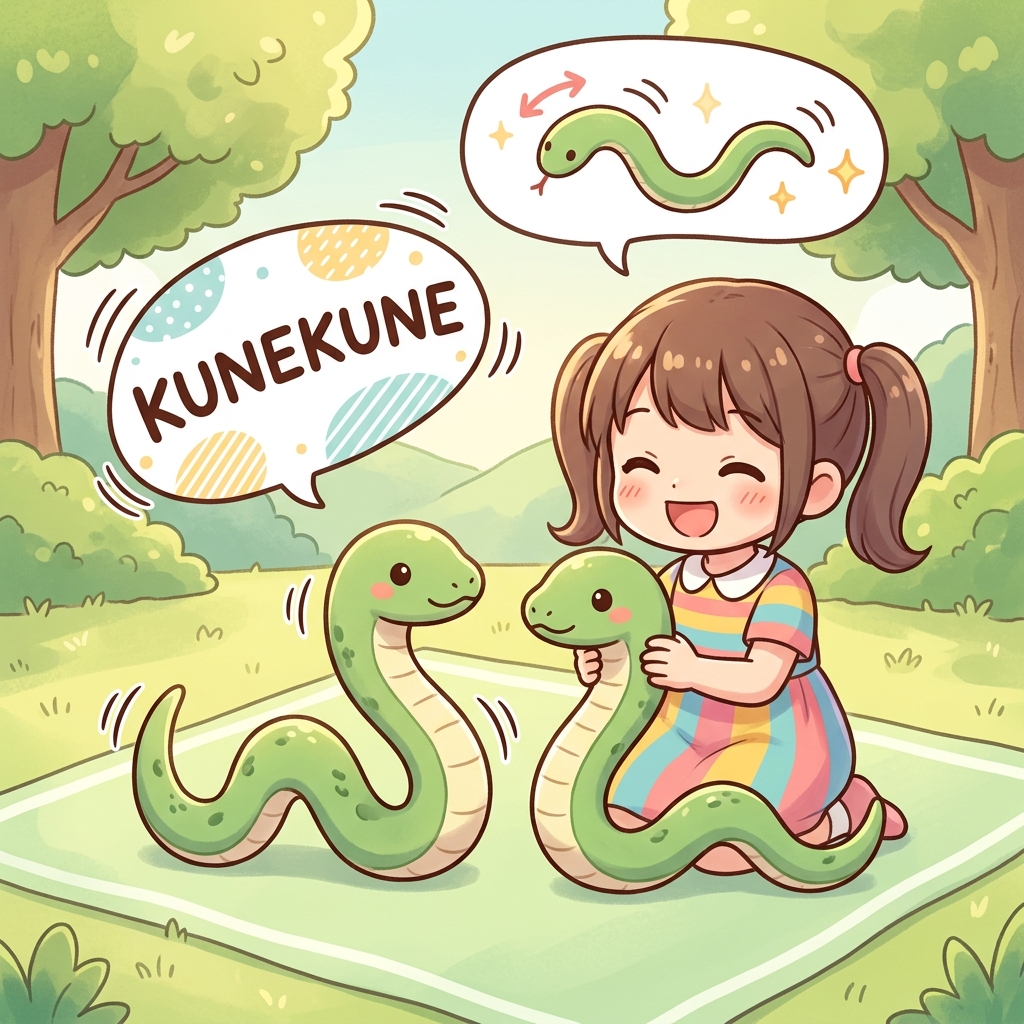
Ever found yourself wanting to describe something bending, twisting, wiggling, or winding in Japanese, but only basic verbs came to mind? Japanese onomatopoeia like くねくね (kunekune) helps you describe these movements more vividly. It is often used for flexible, winding, or wiggly movement, such as a snake moving, a winding road, or someone twisting their body.
Learning くねくね (kunekune) will help you go beyond simple words like “bend” or “move.” It adds the feeling of repeated curves, soft twisting, or movement that is not straight or firm.
The Core Meaning
At its heart, くねくね (kunekune) describes something bending, twisting, or moving in repeated curves. The movement is not straight, stiff, or sharp. Instead, it feels flexible, winding, or wavy.
It is often used for long or flexible things, such as snakes, worms, roads, rivers, ropes, or bodies. Depending on the context, it can sound natural, playful, strange, or even a little unsettling. The important image is repeated curving movement.
The Scene Behind the Word
The beauty of くねくね (kunekune) is that it can describe many different scenes:
- Flexible Animals: A snake moving through grass, a worm wriggling on the ground, or an animal twisting its body. These movements are soft, continuous, and winding.
- Wobbly or Flexible Objects: A piece of jelly jiggling on a plate, a springy toy moving back and forth, or something soft bending without firmness.
- Winding Paths or Rivers: A mountain road that twists and turns, or a river that curves through the landscape. The path does not go straight; it winds repeatedly.
- Body Movement: A person twisting, swaying, or wiggling their body. Depending on the context, this can feel playful, awkward, restless, or evasive.
When Japanese Speakers Use It
Using くねくね (kunekune) lets you describe movement more specifically than simply saying 曲がる (magaru - to bend) or 揺れる (yureru - to sway). It is especially useful when the movement has repeated curves or soft twisting.
For example, 山道がくねくねしている means the mountain road winds back and forth. A snake can くねくね動く because its body bends in continuous curves. A person can also 体をくねくねさせる, meaning they twist or wiggle their body. This last use should be handled carefully, because it can sometimes sound awkward, unnatural, or suggestive depending on the situation.
くねくね (kunekune) is not just “bending.” It suggests repeated curves, twisting, or winding movement. For roads and rivers, it means winding. For animals, it can mean wriggling or slithering. For people, it describes twisting or wiggling the body, but the nuance depends strongly on context.
Avoid using くねくね (kunekune) for rigid, sharp, or sudden turns. It implies a continuous, winding, or flexible movement. For example, a car making one sharp turn would not usually be described as くねくね. A mountain road with many curves, however, can be くねくねしている.
Try Saying くねくね (kunekune) Naturally
Play the audio and listen to how the examples sound in Japanese.
Japanese: 山道がくねくねと曲がりくねっている。
English: The mountain road winds and twists.
Japanese: 彼は質問に答えるのを避けるように、体をくねくねさせていた。
English: He was twisting his body as if trying to avoid answering the question.
Similar Expressions
To further enrich your vocabulary, here are a few related expressions that describe similar types of movement, but with different nuances:
| Japanese | Romaji | Nuance |
|---|---|---|
| うねうね | uneune | Larger, wave-like, undulating movements, such as a thick rope, large river, or rolling shape. |
| ぐにゃぐにゃ | gunyagunya | Soft, limp, bendy, and lacking firmness, such as overcooked noodles or a weak body. |
| ふにゃふにゃ | funyafunya | Soft, flimsy, or weak in a lighter and often more delicate way than ぐにゃぐにゃ. |
| よろよろ | yoroyoro | Staggering or tottering due to weakness, tiredness, injury, or old age. |
Frequently Asked Questions
Can くねくね (kunekune) be used for people?
Yes. くねくね (kunekune) can describe a person twisting, swaying, or wiggling their body. However, use it carefully. Depending on context, it can sound playful, awkward, overly cute, evasive, or even slightly suggestive. For neutral body movement, a more direct phrase may sometimes be safer.
What's the difference between くねくね (kunekune) and うねうね (uneune)?
Both describe winding or curving movement, but the scale and feeling are different. くねくね (kunekune) often fits smaller, sharper, or more flexible repeated curves, such as a winding road, snake, or body movement. うねうね (uneune) usually feels larger, thicker, or more wave-like, such as a big river, thick rope, or large undulating shape.