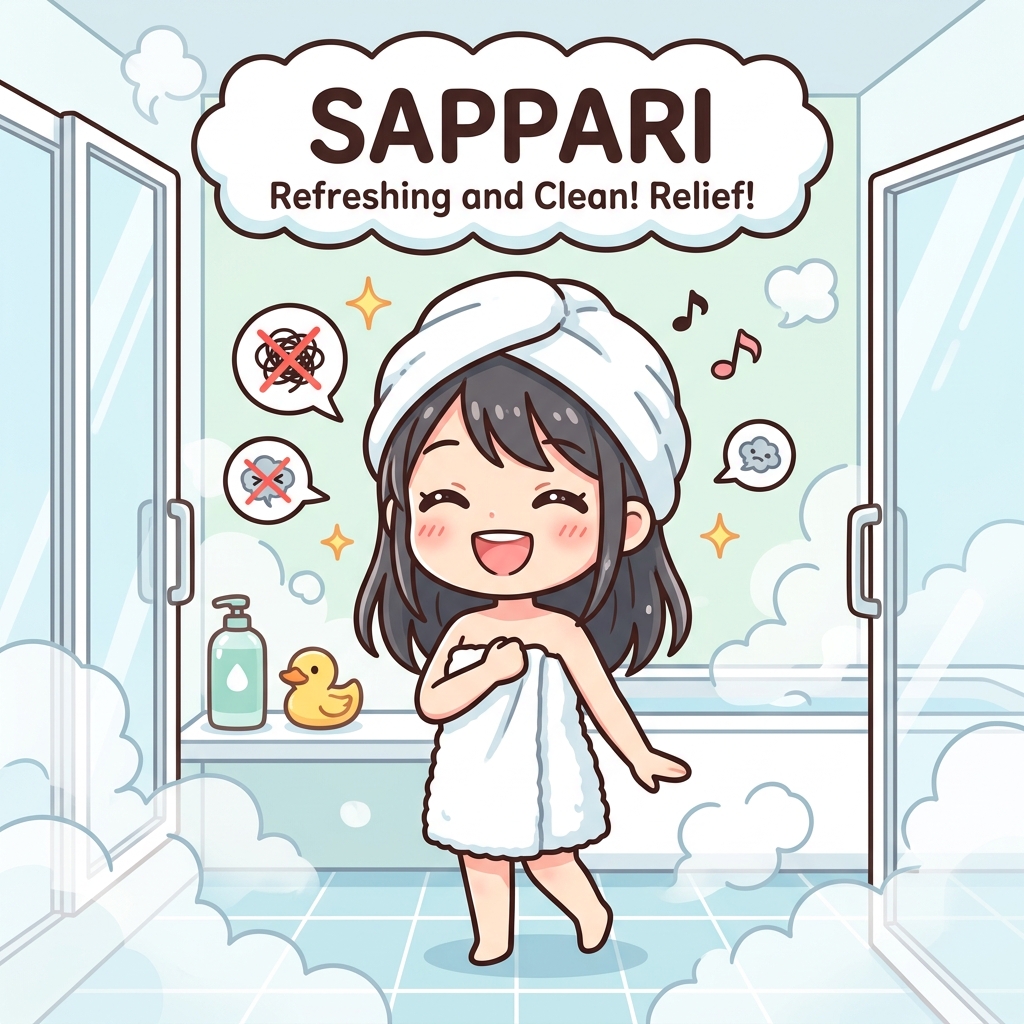
Ever found yourself wanting to express the feeling of being refreshed, clean, or mentally lighter after a long day? In Japanese, さっぱり (sappari) is a very useful word for that. It can describe physical refreshment, a light taste, a clean appearance, or a mind that feels free from heaviness.
However, さっぱり (sappari) is not only positive. It can also appear in expressions like さっぱり分からない, meaning “I don’t understand at all.” This article explains the main positive uses first, then shows the important negative/intensifying pattern learners should know.
The Feeling Behind さっぱり (sappari)
At its core, さっぱり (sappari) often describes a clean, light, refreshing, or unburdened state. Think of the feeling after taking a shower on a hot day, eating a light dish that is not oily, or finally finishing something that had been bothering you.
The word often suggests that something heavy, sticky, oily, messy, or mentally burdensome has been removed. That is why it can describe both physical and emotional refreshment.
What This Expression Looks Like in Real Japanese
さっぱり (sappari) is very versatile and appears in many daily situations.
Physical Refreshment
One of the most common uses of さっぱり (sappari) is physical refreshment. After a bath, shower, haircut, or workout, you might say さっぱりした to mean you feel clean, refreshed, and lighter.
Example: 汗をかいた後、シャワーを浴びてさっぱりした。
Mental Relief and Clarity
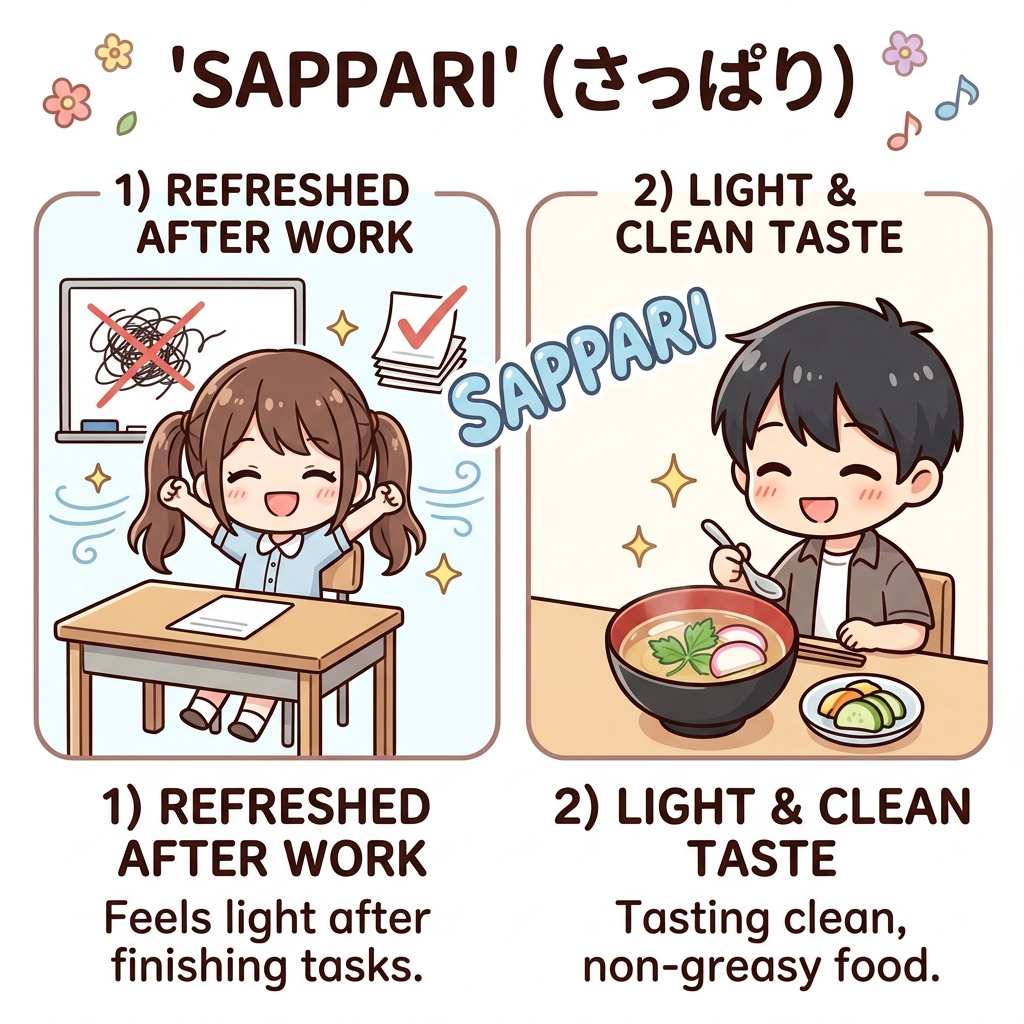
さっぱり (sappari) can also describe mental relief. When a problem is solved, a worry disappears, or you finally make a decision, your mind may feel light and clear.
Example: プレゼンが終わって、やっとさっぱりした気分だ。
Describing Light Food
For food, さっぱり (sappari) describes a light, clean, refreshing taste. It often suggests that the food is not oily, heavy, rich, or overwhelming. Salads, citrus-based dishes, clear soups, cold noodles, and simple Japanese dishes can be described this way.
Example: このサラダはドレッシングがさっぱりしていて美味しい。
Appearance and Personality
さっぱり (sappari) can also describe appearance or personality. If someone gets a haircut and looks cleaner or lighter, you can say さっぱりしたね. If someone has a さっぱりした性格, they may be straightforward, frank, and not the type to hold grudges.
However, depending on context, さっぱりした性格 can also imply that someone is a little淡泊, meaning emotionally light, not clingy, or not overly sentimental.
Listen to さっぱり (sappari) in Real Sentences
Play the audio and listen to how the examples sound in Japanese.
Japanese: シャワーを浴びたら、気分がさっぱりした。
English: After taking a shower, I felt completely refreshed.
Japanese: 難しい問題が解決して、心がさっぱりした。
English: The difficult problem was solved, and I felt a sense of relief and clarity.
One Word for Refreshment, Lightness, and Relief
「さっぱりした!」 fits after a shower, haircut, cleanup, or emotional relief. For food, it means light and refreshing rather than heavy or oily. The word often carries an “ah, that feels better” mood.
When It Sounds Too Strong or Too Detached
While さっぱり (sappari) is often positive, context matters. Saying さっぱりした about a personal worry, a shower, or a haircut sounds natural. But using it after a sad or serious event may sound too detached, as if you are emotionally finished with it or do not care much anymore.
Also remember that さっぱりした人 can be a compliment, meaning straightforward and not resentful. But in some contexts, it can sound like the person is emotionally light, dry, or not very attached. The nuance depends on tone and situation.
Another Important Use: さっぱり分からない
Learners should also know a very common pattern: さっぱり + negative expression. In this use, さっぱり means “not at all” or “completely not.”
For example, さっぱり分からない means “I don’t understand at all.” さっぱり覚えていない means “I don’t remember at all.” This is different from the refreshing meaning, but it is very common in everyday Japanese.
Common Pitfall
Do not assume さっぱり is always positive. In phrases like さっぱり分からない or さっぱり覚えていない, it intensifies the negative meaning and means “not at all.” Always check whether it is used with a positive expression or a negative one.
Related Expressions
| Expression | Meaning |
|---|---|
| すっきり (sukkiri) | Refreshed, clear, neat, or uncluttered. Often emphasizes that something has been cleared away, organized, or mentally resolved. |
| 爽やか (sawayaka) | Fresh, refreshing, pleasant, or bright. Often used for weather, wind, taste, appearance, or a person’s impression. |
| あっさり (assari) | Light, simple, not rich or heavy. Often used for taste, style, or a person’s attitude. |
How to Remember the Mood
To remember さっぱり (sappari), imagine a refreshing shower after a hot day, a light citrus dish after heavy food, or the feeling of relief after solving a problem. It is the feeling of heaviness being removed.
Then remember the second pattern separately: さっぱり + negative means “not at all,” as in さっぱり分からない.
Frequently Asked Questions
Can さっぱり (sappari) be used for people's appearance?
Yes. If someone gets a haircut and looks neater, cleaner, or lighter, you might say 「さっぱりしたね!」 (sappari shita ne!), meaning “You look refreshed/neat!” It implies a clean, uncluttered look.
Is さっぱり (sappari) always positive?
No. It is often positive when it means refreshed, clean, light, or relieved. However, in negative expressions like さっぱり分からない, it means “not at all.” Also, depending on context, さっぱりした性格 can mean straightforward and pleasant, or a little emotionally detached.
Mastering さっぱり (sappari) will help you express physical refreshment, light taste, mental relief, neat appearance, and even “not at all” in negative expressions. It is a small word with several very useful everyday meanings.