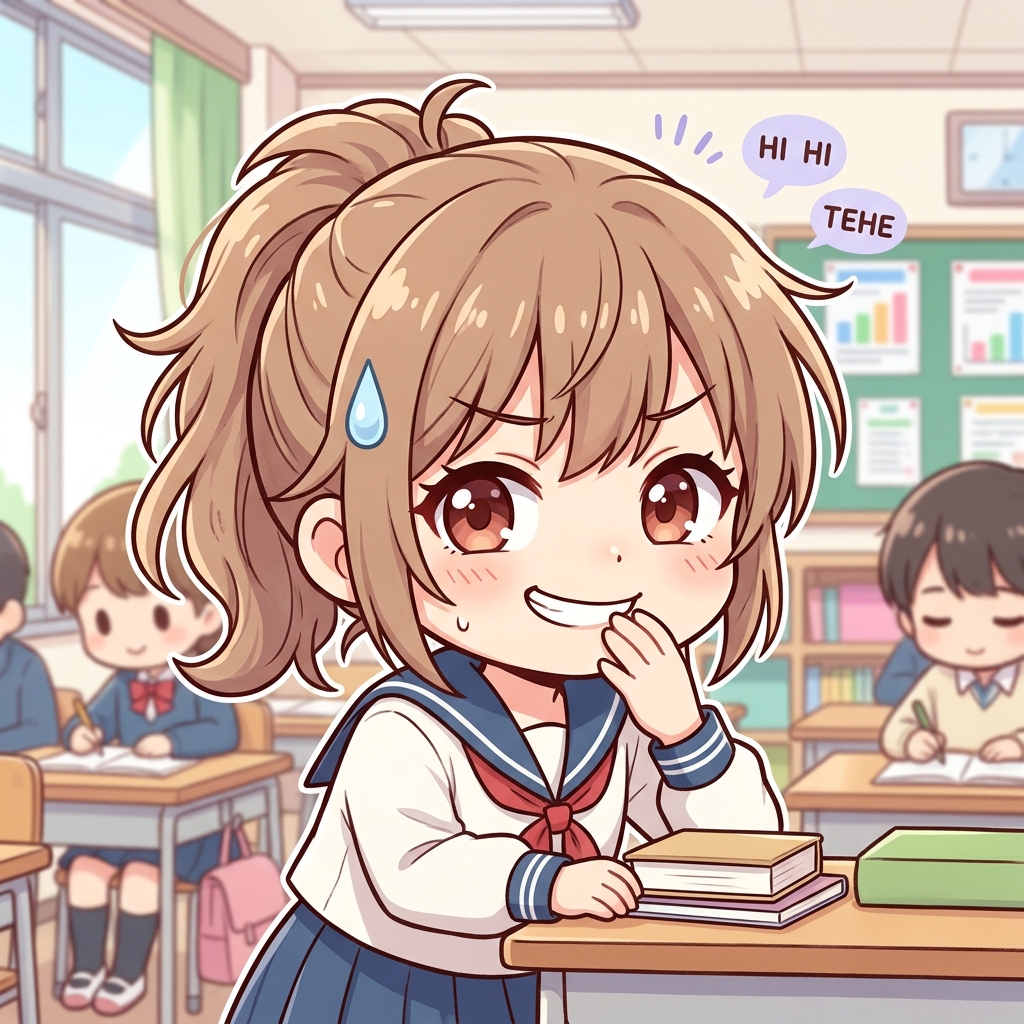
Imagine watching a Japanese drama. A character smiles, but the smile does not feel completely warm or innocent. Is the character amused, hiding something, teasing someone, or quietly enjoying a secret? This is where にやにや (niyaniya) becomes useful. It does not describe just any smile. It usually describes a smirk or grin that suggests hidden thoughts, mischief, teasing, or private amusement.
Understanding にやにや (niyaniya) helps you read emotional nuance in Japanese. In anime, manga, dramas, and everyday conversation, this word can tell you that a smile is not simply happy. It may contain a secret, a joke, a plan, or a slightly suspicious feeling.
What This Word Really Feels Like
にやにや (niyaniya) describes someone smiling or grinning in a way that feels sly, teasing, self-satisfied, or secretly amused. It is often translated as “smirking” or “grinning to oneself.” The person may know something others do not, may be enjoying someone’s reaction, or may be hiding a mischievous thought.
It is different from a warm, open smile. にやにや often creates a slightly uncomfortable or suspicious impression, especially when the situation is serious. However, it is not always evil or sinister. Among friends, it can simply mean someone is smiling in a teasing or mischievous way.
How It Works in Context
にやにや (niyaniya) focuses on a facial expression, especially a smile that feels indirect or full of hidden meaning. A person may にやにや笑う, meaning they grin or smirk in a way that suggests secret amusement. You can also say にやにやしている, meaning someone is sitting there smirking or grinning to themselves.
The key point is that the smile is not purely bright or innocent. It often suggests that the person is amused by something, hiding their true thoughts, teasing someone, or feeling pleased with themselves.
Natural Usage Scenes
You will often encounter にやにや (niyaniya) in social situations and character descriptions. It is common for:
- Anime or manga characters: A villain, rival, or clever character smiles as if they know something others do not.
- Mischievous children: A child may にやにやする after pulling a prank or hiding a joke.
- Teasing among friends: Someone may grin knowingly when a friend is embarrassed or hiding a crush.
- Suspicious situations: A person may smile in a way that makes others wonder what they are planning.
This word is useful because it adds emotional information to a smile. It tells the listener that the expression may include hidden amusement, teasing, or suspicion.
Try Saying にやにや (niyaniya) Naturally
Play the audio and listen to how the examples sound in Japanese.
Japanese: 彼は何か企んでいるかのように、にやにやと笑っていた。
English: He was grinning mischievously, as if plotting something.
Japanese: その店員は、客をだまそうとでもしているかのようににやにやしていた。
English: The store clerk was smirking, as if trying to trick the customer.
A Common Learner Mistake
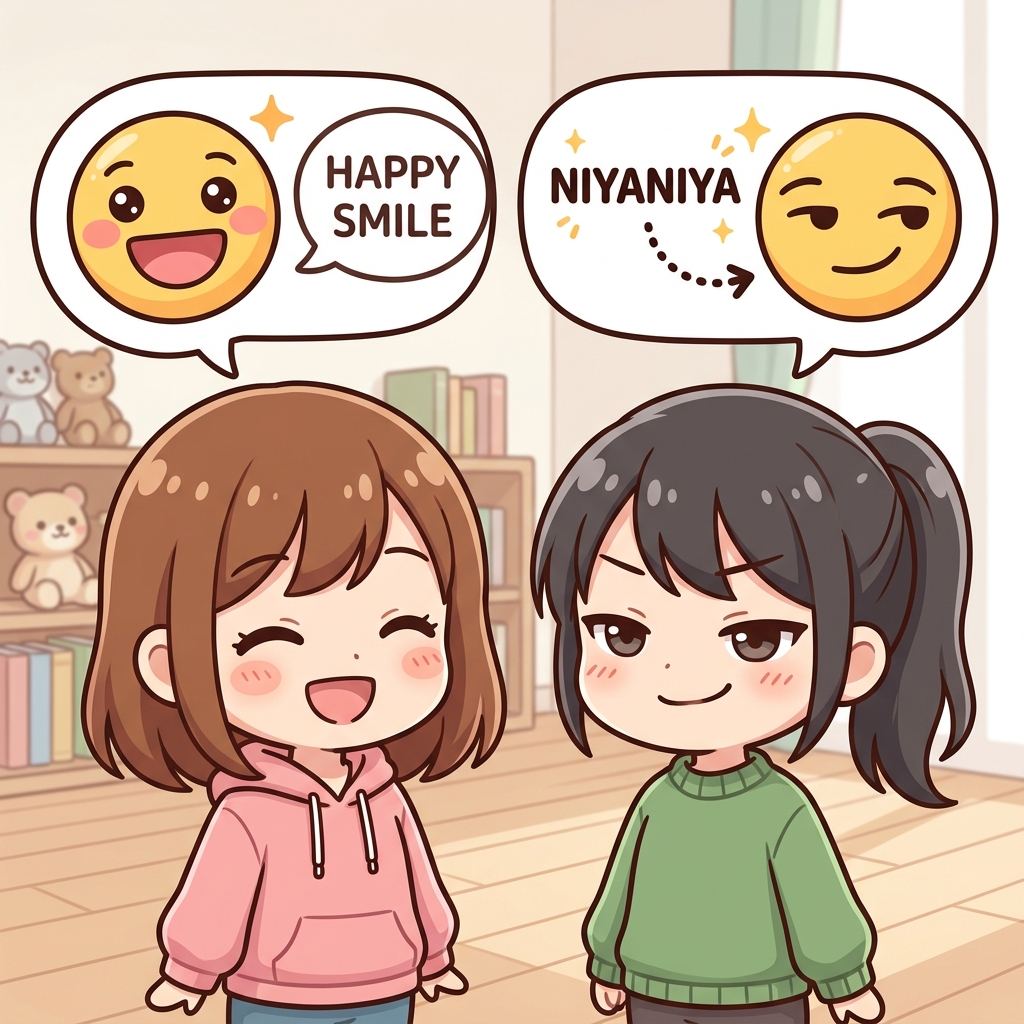
A common mistake is confusing にやにや (niyaniya) with more positive smile expressions like にこにこ (nikoniko). にこにこ usually describes a cheerful, friendly, genuine smile. にやにや, on the other hand, often suggests a smirk, hidden amusement, teasing, or suspicious intent.
For example, if a kind teacher smiles warmly at a student, にこにこ is probably more natural. If a character smiles because they are hiding a trick or enjoying someone else’s embarrassment, にやにや is much more appropriate.
How to Remember It
To remember にやにや (niyaniya), imagine a person smiling while keeping a secret. They may not say anything, but their face suggests, “I know something you don’t.” The smile is not open and cheerful. It is a knowing grin, a teasing smirk, or a smile with hidden meaning.
Read the Hidden Attitude in the Smile
When someone is にやにやしている, the smile often feels indirect. It may suggest hidden amusement, teasing, self-satisfaction, or a lack of sincerity. In a serious or formal situation, it can easily sound suspicious or inappropriate.
Frequently Asked Questions
Is にやにや (niyaniya) always negative?
No, not always. にやにや (niyaniya) often has a negative or suspicious nuance, especially when the smile feels creepy, scheming, or insincere. However, it can also describe a playful or teasing smirk among friends. Even then, it usually suggests hidden amusement rather than pure, open happiness.
How is にやにや (niyaniya) different from other smiles like にこにこ (nikoniko)?
にこにこ (nikoniko) describes a bright, cheerful, and friendly smile. It usually feels warm and positive. にやにや (niyaniya) describes a smirk or grin that suggests hidden thoughts, mischief, teasing, self-satisfaction, or suspicion. In simple terms, にこにこ feels open and friendly, while にやにや feels indirect and loaded with meaning.