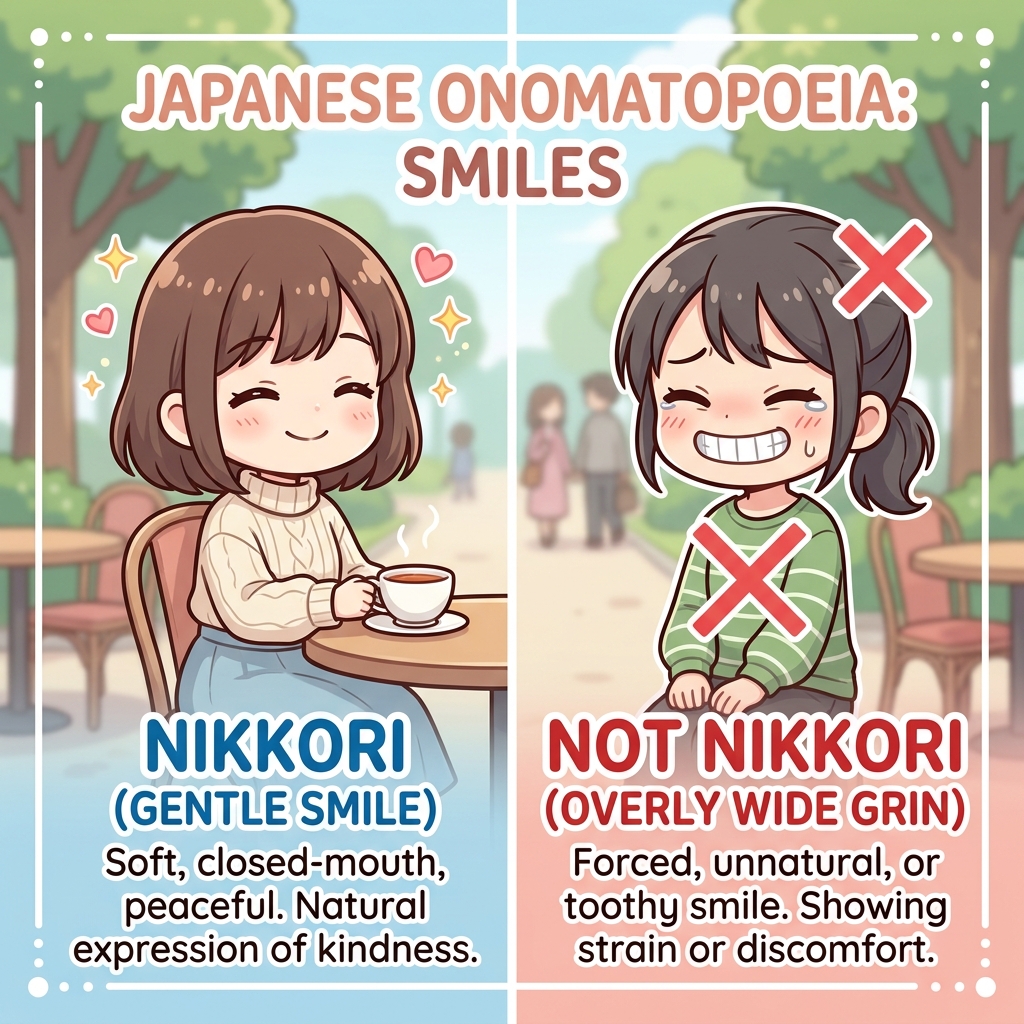
Learning Japanese means entering a world of subtle expressions, and onomatopoeia like にっこり (nikkori) are important for sounding natural. At first, you might think it simply means “to smile,” but にっこり has a softer and more specific nuance. It usually describes a gentle, pleasant smile that appears naturally on someone’s face. If you use it for a loud laugh or a huge grin, it may sound a little unnatural.
This article explains when にっこり (nikkori) feels natural, when it does not, and how to avoid common learner mistakes.
More Than a Simple Emotion: Understanding にっこり (nikkori)
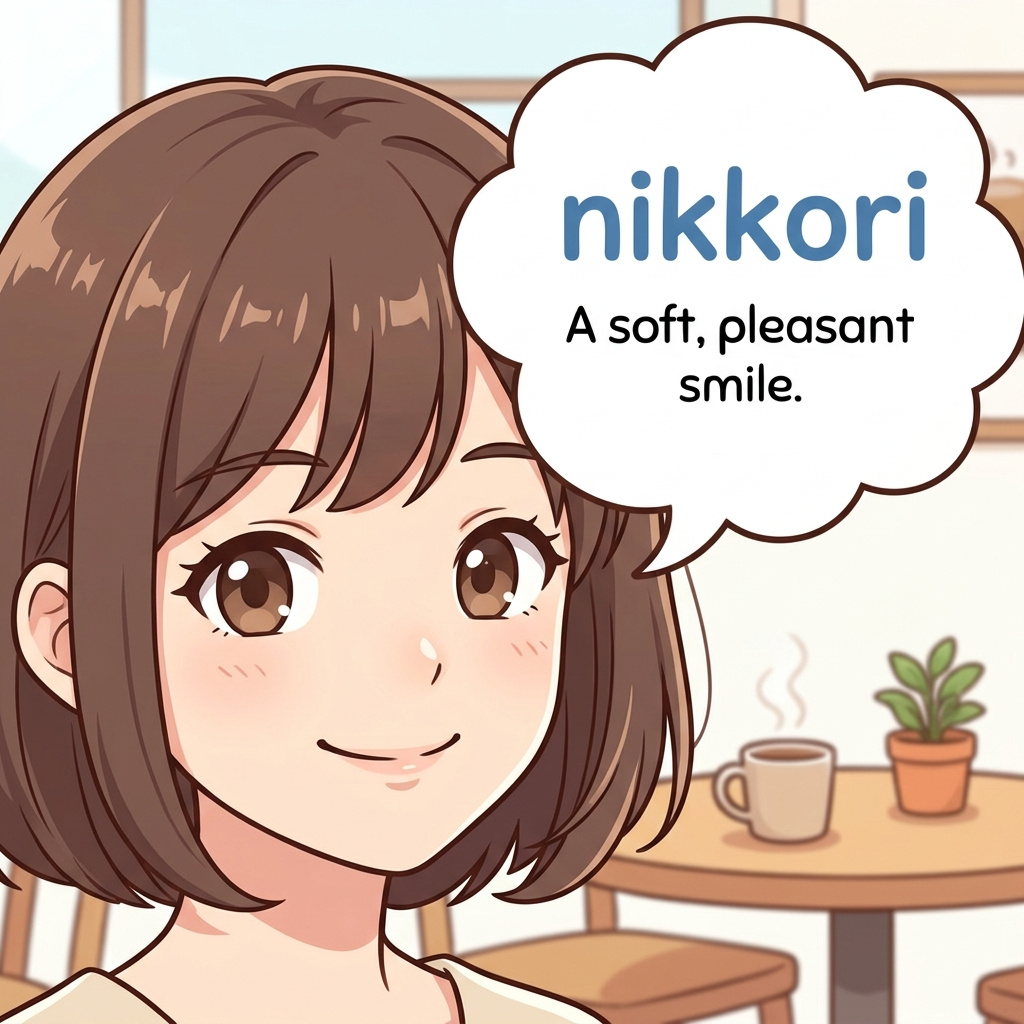
At its heart, にっこり (nikkori) describes a warm, gentle, and pleasant smile. It often suggests kindness, relief, quiet happiness, or soft amusement. The smile is usually calm rather than loud or exaggerated.
For example, someone might にっこり smile at a child, at a friend’s small joke, or after receiving kind words. The feeling is not “bursting into laughter.” It is closer to a natural smile that quietly shows warmth or happiness.
The Face, Mood, and Situation
The visual feeling of にっこり (nikkori) is important. It usually suggests a soft smile, often with relaxed eyes and a gentle expression. It does not usually describe a wide open-mouthed laugh or a very dramatic grin. The mood is calm, positive, and friendly.
This makes にっこり different from words that describe loud laughter or continuous smiling. It focuses on the moment when someone’s face brightens gently with a smile.
The Gentle-Smile Test
When in doubt, think of にっこり (nikkori) as a gentle smile that appears naturally. If someone is laughing loudly, grinning very widely, or making a big dramatic expression, another word will probably sound more natural.
Practice にっこり (nikkori) with Audio
Play the audio and listen to how the examples sound in Japanese.
Japanese: 彼女は私の冗談ににっこり微笑んだ。
English: She smiled gently at my joke.
Japanese: 彼は赤ちゃんににっこり顔を向けた。
English: He turned toward the baby with a gentle smile.
Anime, Manga, and Everyday Nuance
In anime and manga, characters may be described as にっこり (nikkori) when they give a reassuring smile, show quiet kindness, or express gentle affection. A parent smiling at a child, a friend giving a warm response, or a character showing calm confidence can all fit this word.
In everyday conversation, にっこり is useful when you want to describe a smile that feels soft and positive. It adds more nuance than simply saying “smiled,” because it tells the listener what kind of smile it was.
What Learners Should Watch Out For
A common learner mistake is using にっこり (nikkori) for any kind of happy facial expression. For example, if someone laughs loudly at very good news, にっこり may feel too quiet. If someone gives a huge, excited grin, にっこり may also sound too gentle.
The key is that にっこり describes the manner of the smile, not just the happiness behind it. It is usually soft, warm, and controlled. It is not the best word for loud laughter, a big open-mouthed laugh, or a very exaggerated grin.
Common Mistake
Do not use にっこり (nikkori) for a big laugh or a loud, energetic reaction. にっこり is about a gentle smile. If the person is laughing out loud, words like 笑う (warau), くすくす笑う (kusukusu warau), or げらげら笑う (geragera warau) may fit better depending on the situation.
A Natural Way to Use It
にっこり (nikkori) is a good fit when someone shows quiet pleasure, gentle affection, kindness, or relief. A grandmother looking at her grandchild might にっこり smile. A person receiving a thoughtful gift might にっこりする. A teacher might にっこり笑う to reassure a student.
Focus on the feeling of a soft, warm smile. If the smile is loud, exaggerated, forced, or sarcastic, にっこり may not be the best choice.
Related Expressions
| Japanese | Romaji | Meaning/Nuance |
|---|---|---|
| にこにこ | nikoniko | Smiling cheerfully or continuously. Often feels more openly happy than にっこり. |
| くすくす | kusukusu | Giggling or chuckling softly. This describes a quiet laugh, not just a smile. |
| げらげら | geragera | Laughing loudly and openly. Much stronger and louder than にっこり. |
Frequently Asked Questions
Can にっこり (nikkori) describe a laugh?
Usually, no. にっこり (nikkori) describes a smile, not a laugh. It can appear near a laughing situation, but the word itself focuses on the gentle facial expression. If there is actual sound or laughter, another expression may be more accurate.
Is にっこり (nikkori) a positive or negative expression?
にっこり (nikkori) is usually positive. It often suggests warmth, kindness, calm happiness, or gentle amusement. However, like many expressions, the surrounding context matters. In most everyday situations, it describes a pleasant and natural smile.