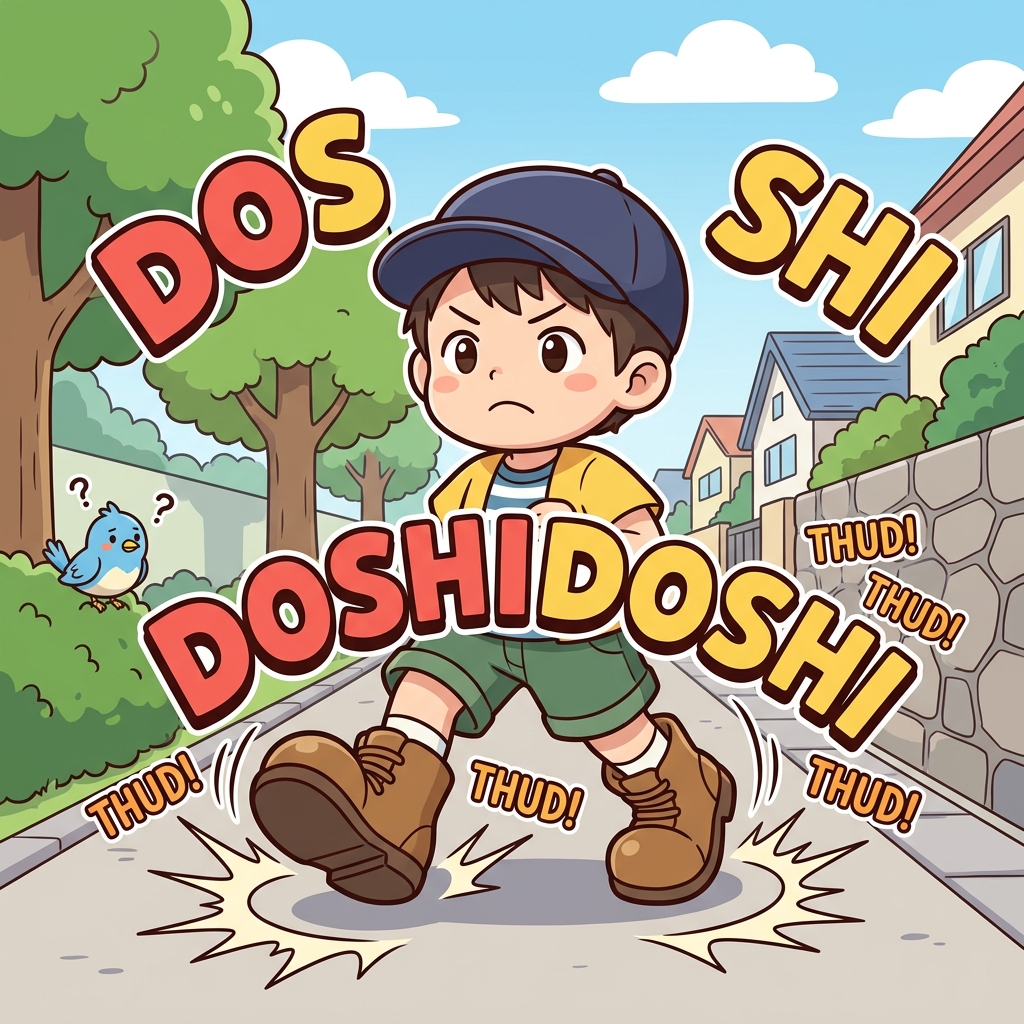
When learning Japanese, understanding onomatopoeia helps you catch the real feeling behind conversations, stories, anime, and everyday descriptions. One useful expression is どしどし (doshidoshi). It can describe repeated heavy impact, such as heavy footsteps or thudding sounds, but it also has another common use: encouraging people to do something actively and without hesitation.
In this article, we will focus first on the sound and movement meaning of どしどし, then explain the common expression どしどし応募してください, which means “please apply freely / actively.”
What どしどし (doshidoshi) Really Feels Like
As a sound or movement expression, どしどし (doshidoshi) gives the feeling of repeated heavy impact. Imagine heavy footsteps on stairs or a large person walking with force. The key ideas are weight, repetition, and impact.
It is not a light tap or a gentle walk. When someone walks どしどし, the movement feels heavy, forceful, and noticeable. Depending on the context, it can suggest anger, impatience, confidence, tiredness, or simply the physical weight of the movement.
How It Works in Context
どしどし (doshidoshi) is often used with verbs of movement or impact. For example, どしどし歩く can describe someone walking with heavy steps, while どしどしと音がする can describe repeated heavy thudding sounds.
When used for people, it does more than say “walk.” It describes the manner of walking. A character walking どしどし may sound angry, frustrated, tired, or physically heavy. In stories and anime, this kind of onomatopoeia helps show emotion without directly explaining it.
Hear どしどし (doshidoshi) in Context
Play the audio and listen to how the examples sound in Japanese.
Japanese: 怒った父が階段をどしどしと上っていった。
English: My angry father stomped up the stairs.
Japanese: 上の階の人が、夜遅くまでどしどしと歩き回っていた。
English: The person upstairs was stomping around until late at night.
Natural Usage Scenes
You may encounter どしどし (doshidoshi) in situations where repeated heavy movement or impact is important:
- Heavy Footsteps: A person stomping up the stairs, walking angrily down a hallway, or moving with heavy steps.
- Large Animals: A large animal moving heavily through an area may be described with どしどし in a vivid story-like context.
- Forceful Repeated Actions: Repeated pounding, stamping, or heavy contact can also be described with どしどし when the sound feels strong and continuous.
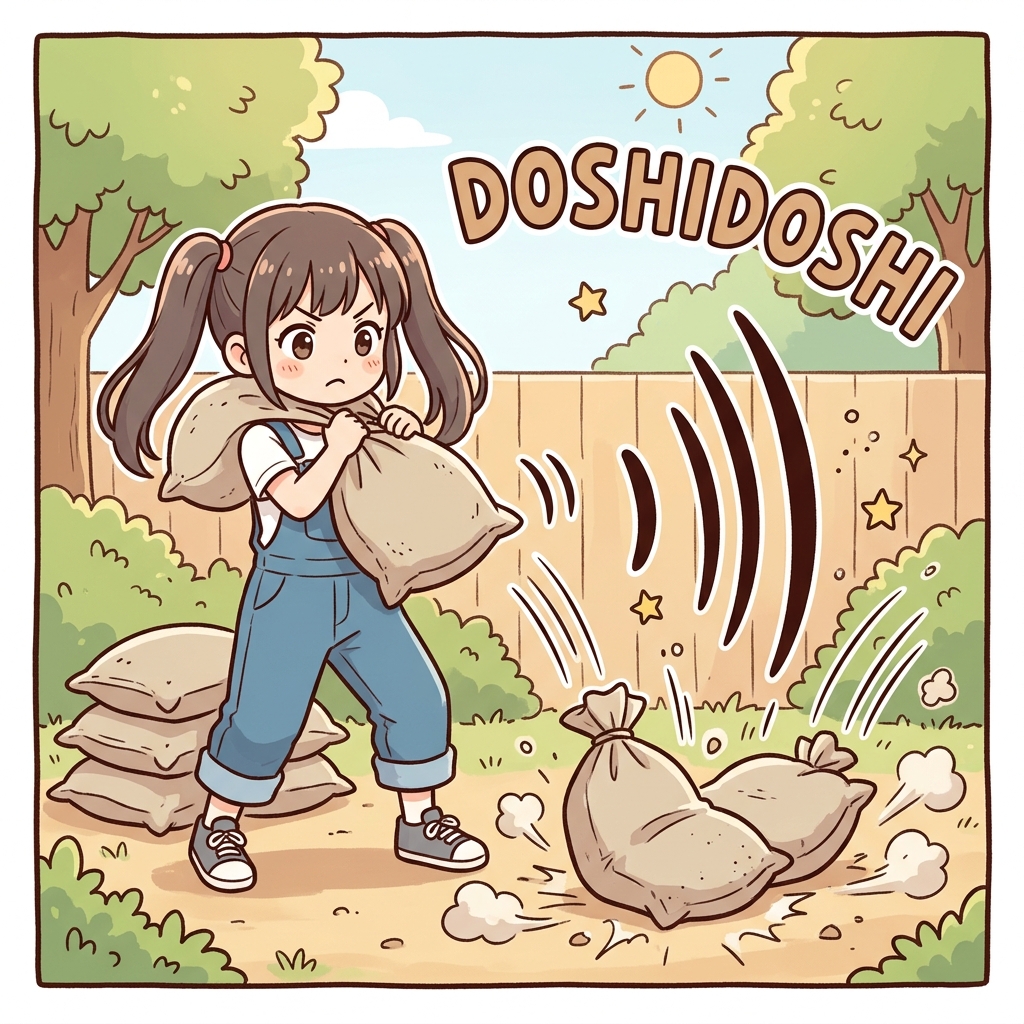
Listen for Repeated Heavy Impact
For sound and movement, どしどし (doshidoshi) suggests repeated heavy impact. Think “stomp-stomp” or “thud-thud,” not just one single sound. It often describes the manner of movement, so it can also reveal the person’s mood or the intensity of the scene.
A Common Learner Mistake
A common mistake is translating どしどし (doshidoshi) simply as “walking.” While it can describe walking, the important part is the heavy, forceful, repeated feeling. If you miss that nuance, you may miss the emotion or intensity in the sentence.
For example, if a character goes up the stairs どしどし, they are probably not walking quietly or casually. They may be angry, impatient, or making heavy steps. The word adds atmosphere to the scene.
Avoid This Mistake:
Do not translate どしどし (doshidoshi) as only “walk.” In sound and movement contexts, always look for the added feeling of heaviness, force, and repetition.
Another Common Meaning: “Freely” or “Actively”
There is another important use of どしどし (doshidoshi) that learners should know. In expressions like どしどし応募してください, どしどし means “freely,” “actively,” or “without hesitation.” This is different from the heavy-footstep meaning.
For example, 質問があれば、どしどし送ってください means “If you have questions, please send them freely.” In this usage, the word encourages many actions to happen energetically or without holding back. It often appears in announcements, campaigns, invitations, and promotional messages.
How to Remember どしどし (doshidoshi)
For the sound meaning, imagine heavy steps repeating: stomp, stomp, stomp. The repeated どしどし sound helps you feel the continuous impact. For the invitation meaning, imagine many applications, questions, or messages coming in one after another. Both uses share a sense of repeated or energetic movement, but the actual meaning changes by context.
Related Expressions
| Japanese | Romaji | Meaning/Nuance |
|---|---|---|
| どんどん | dondon | Repeated knocking or drumming sound; also means steadily, rapidly, or more and more. |
| のそのそ | nosonoso | Moving slowly and heavily, often with a sluggish or clumsy feeling. |
| ずんずん | zunzun | Moving forward steadily and forcefully. |
Frequently Asked Questions
Is どしどし (doshidoshi) always negative?
No. In sound and movement contexts, it can suggest force, weight, or intensity, so it may appear in scenes involving anger or frustration. However, it can also describe heavy movement neutrally. In invitation phrases like どしどし応募してください, it is positive and means “please apply freely / actively.”
Can どしどし (doshidoshi) be used for small sounds?
Usually, no. When used for sound or movement, どしどし implies heavy, impactful, and repeated sounds. It is not suitable for light tapping or small delicate sounds. For lighter repeated sounds, words like とんとん (tonton) may be more natural.
What does どしどし応募してください mean?
どしどし応募してください means “Please apply freely,” “Please apply actively,” or “We welcome many applications.” In this expression, どしどし does not mean heavy footsteps. It encourages people to send applications without hesitation.