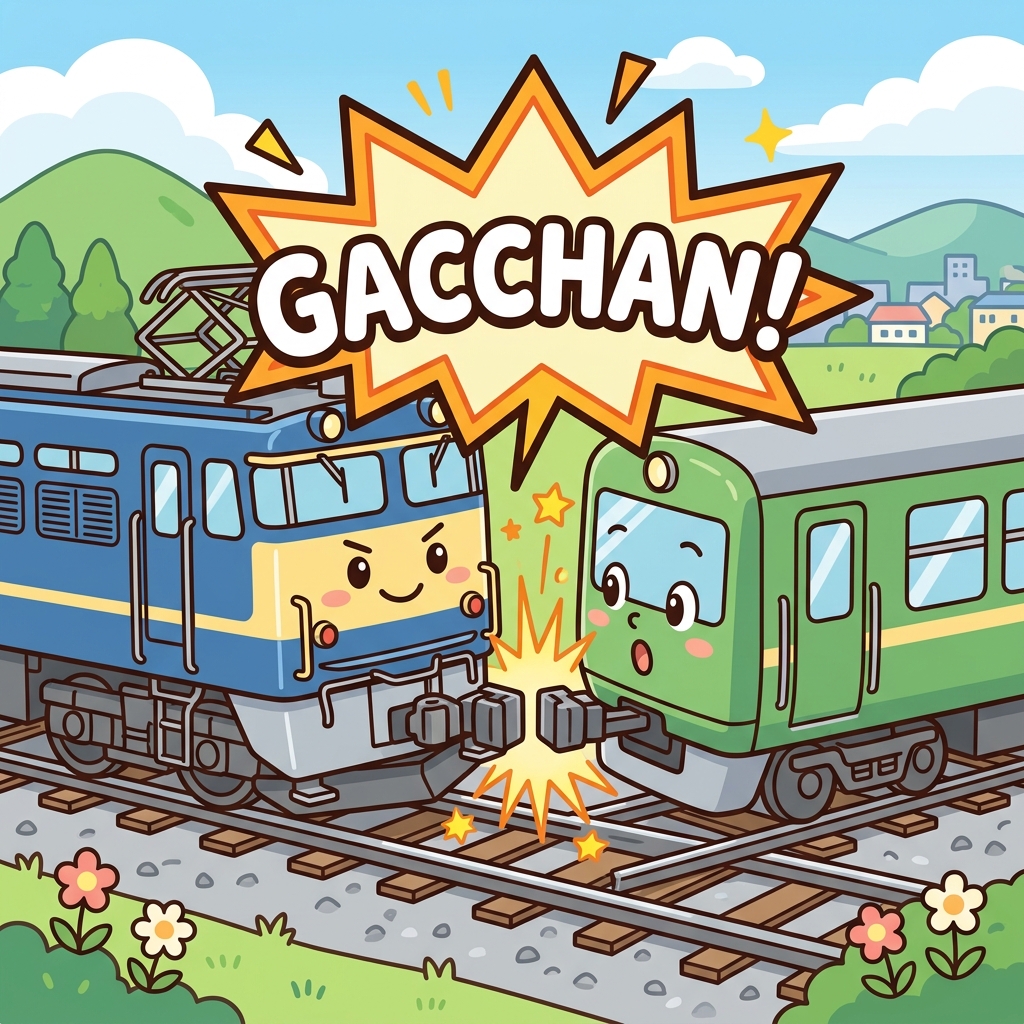
Have you ever heard the sound of a heavy door closing, a metal latch snapping into place, or train parts connecting with a solid clunk? In Japanese, one natural way to describe that kind of sharp, forceful sound is がっちゃん (gacchan).
This word is useful when the sound is not just loud, but also sudden, heavy, and a little mechanical. It gives the listener a clear image of something hard hitting, locking, closing, or connecting.
The Core Meaning of がっちゃん (gacchan)
がっちゃん (gacchan) is a Japanese onomatopoeia used for a strong clunking, clanging, or crashing sound. It often describes hard objects hitting each other, a heavy door closing, or a machine part moving into place.
The important point is the feeling of impact. がっちゃん is not just “a loud sound.” It usually suggests that something solid moved suddenly and made a clear, forceful noise.
The Scene Behind the Word
Think of a train coupling, a metal gate closing, or a heavy lock snapping shut. These sounds are not soft or light. They have weight. That is the kind of scene where がっちゃん feels natural.
The small っ in がっちゃん also matters. It creates a short pause before the sound, which makes the word feel sharper and more sudden. Compared with a smoother sound word, がっちゃん feels more like an impact happening at one clear moment.
When Japanese Speakers Use It
Japanese speakers may use がっちゃん when they want to describe a sound with a clear hit, snap, or mechanical feel.
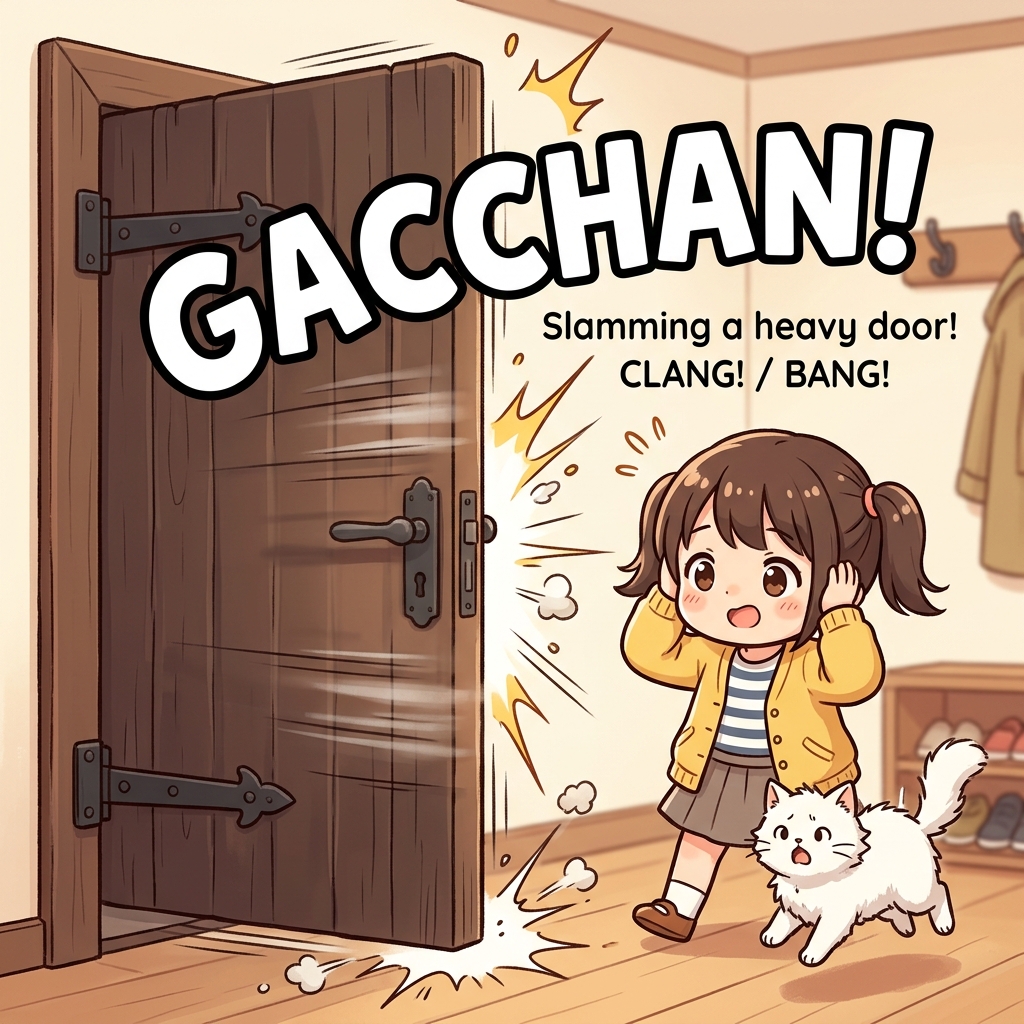
- Doors: A heavy door closes with a strong clunk. If the door shuts suddenly or firmly, がっちゃん can fit well.
- Trains: Train cars or metal parts connect with a solid sound. がっちゃん can describe that moment of contact.
- Machines: A machine part locks, presses, shifts, or engages with a strong mechanical sound.
- Locks and latches: A lock, latch, or metal fitting snaps into place with a clear sound.
In many cases, がっちゃん gives the sentence a more vivid feeling than simply saying “it made a loud noise.” It tells the reader what kind of loud noise it was.
A Native-Sounding Tip
Use がっちゃん (gacchan) when the sound feels sudden, solid, and forceful. It works especially well for metal, machinery, doors, locks, or heavy objects coming together.
Try Saying がっちゃん (gacchan) Naturally
Play the audio and listen to how the examples sound in Japanese.
Japanese: ドアががっちゃんと閉まり、部屋に静寂が戻った。
English: The door slammed shut with a 'gacchan', and silence returned to the room.
Japanese: 電車が駅に到着し、連結器ががっちゃんと音を立てた。
English: The train arrived at the station, and the couplers made a 'gacchan' sound.
Common Learner Mistake
Do not use がっちゃん for every loud sound. It is best for sounds with impact, weight, or a mechanical feeling. For example, a person shouting loudly would not normally be described with がっちゃん.
Similar Expressions
Japanese has many sound words, and some are close to がっちゃん. The difference is often about weight, material, and the type of movement.
| Expression | Meaning/Nuance |
|---|---|
| ガチャン (gachan) | A clanging or crashing sound. Very close to がっちゃん, but often a little more general. |
| ドスン (dosun) | A heavy thud, often when something falls or lands heavily. It feels less metallic or mechanical. |
| バタン (batan) | A door or flat object slamming shut. It is common for doors, but does not always have the same mechanical weight as がっちゃん. |
Frequently Asked Questions
Is がっちゃん (gacchan) always negative?
No. It can describe a door slamming in anger, but it can also describe a neutral mechanical sound, such as a train part connecting or a lock snapping shut. The feeling depends on the situation.
How is がっちゃん (gacchan) different from just “loud”?
がっちゃん is about the type of sound, not only the volume. It suggests a sudden, forceful impact, often involving something hard, heavy, or mechanical.
Can I use がっちゃん for small sounds?
Usually, no. If the sound is light, soft, or delicate, another onomatopoeia would probably sound more natural. がっちゃん works better when the sound has weight or force.
Final Thoughts
がっちゃん (gacchan) is a useful word when you want to describe a sharp, heavy, or mechanical sound in Japanese. It is especially good for doors, locks, trains, machines, and hard objects hitting or connecting.
When you hear a sound that feels like a strong “clunk,” “clang,” or “snap,” がっちゃん may be the word you are looking for. Pay attention to the force behind the sound, and you will start to understand when this onomatopoeia feels natural.