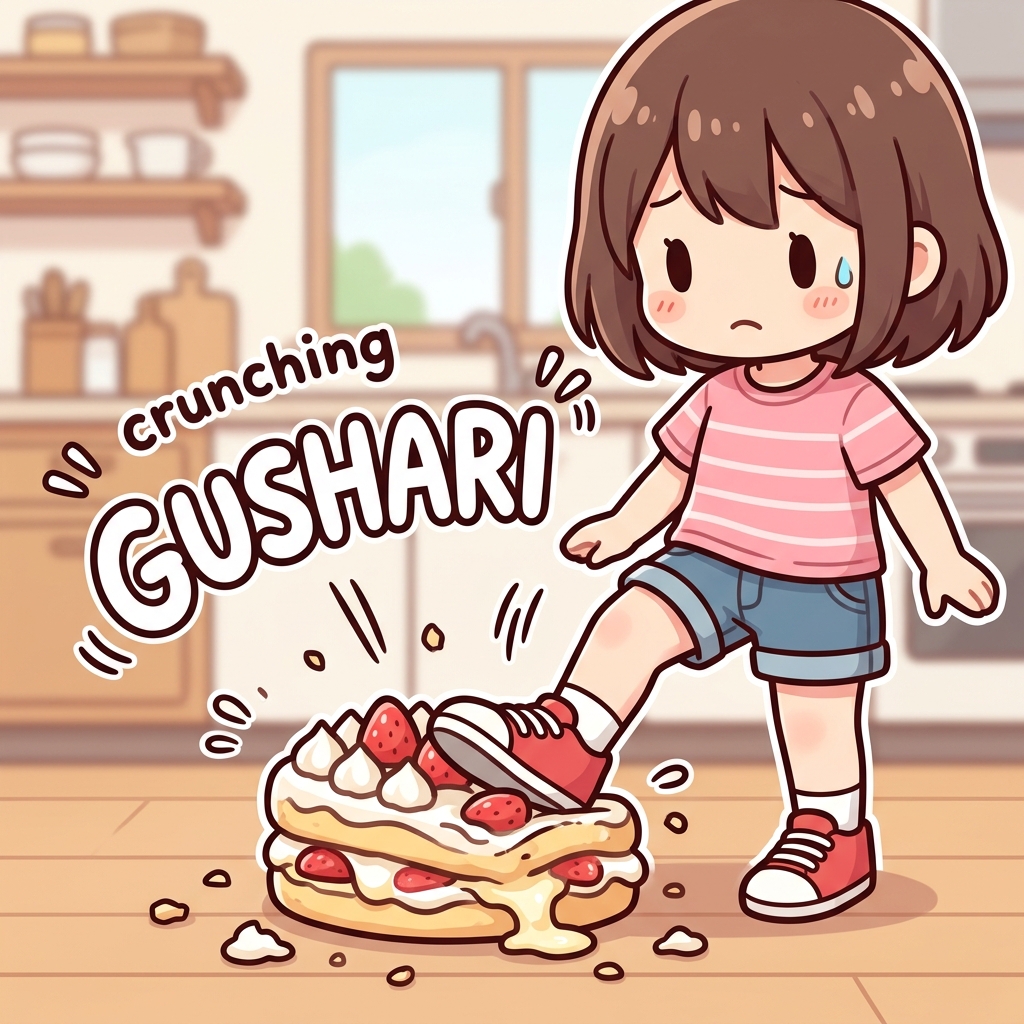
Learning Japanese onomatopoeia can feel like unlocking a secret code to more vivid and natural communication. Some words describe general actions, while others capture a very specific sound, movement, or visual impression. ぐしゃり (gushari) is one of those vivid words. It is useful when something loses its shape after being crushed, pressed, stepped on, or forcefully crumpled.
The Core Meaning
ぐしゃり (gushari) describes the sound, movement, or result of something being crushed or collapsed out of shape. It often gives the impression of a soft, fragile, or easily deformed object being pressed down with force. The result is usually messy, flattened, bent, or ruined.
This word is not only about sound. It also carries a strong visual feeling. When you hear ぐしゃり, you can imagine something losing its original form all at once. A cake box being stepped on, a paper cup being crushed, or a soft package being pressed flat can all fit this image.
The Scene Behind the Word
Imagine you accidentally step on a box containing a cake. The box collapses, and the cake inside loses its shape. That sudden, messy collapse is the kind of scene where ぐしゃり (gushari) feels natural.
You can also imagine someone angrily crushing a paper cup in their hand, or a soft package getting pressed under something heavy. The important point is that the object’s shape changes noticeably and often unpleasantly. ぐしゃり suggests a stronger and messier deformation than a gentle squeeze.
When Japanese Speakers Use It
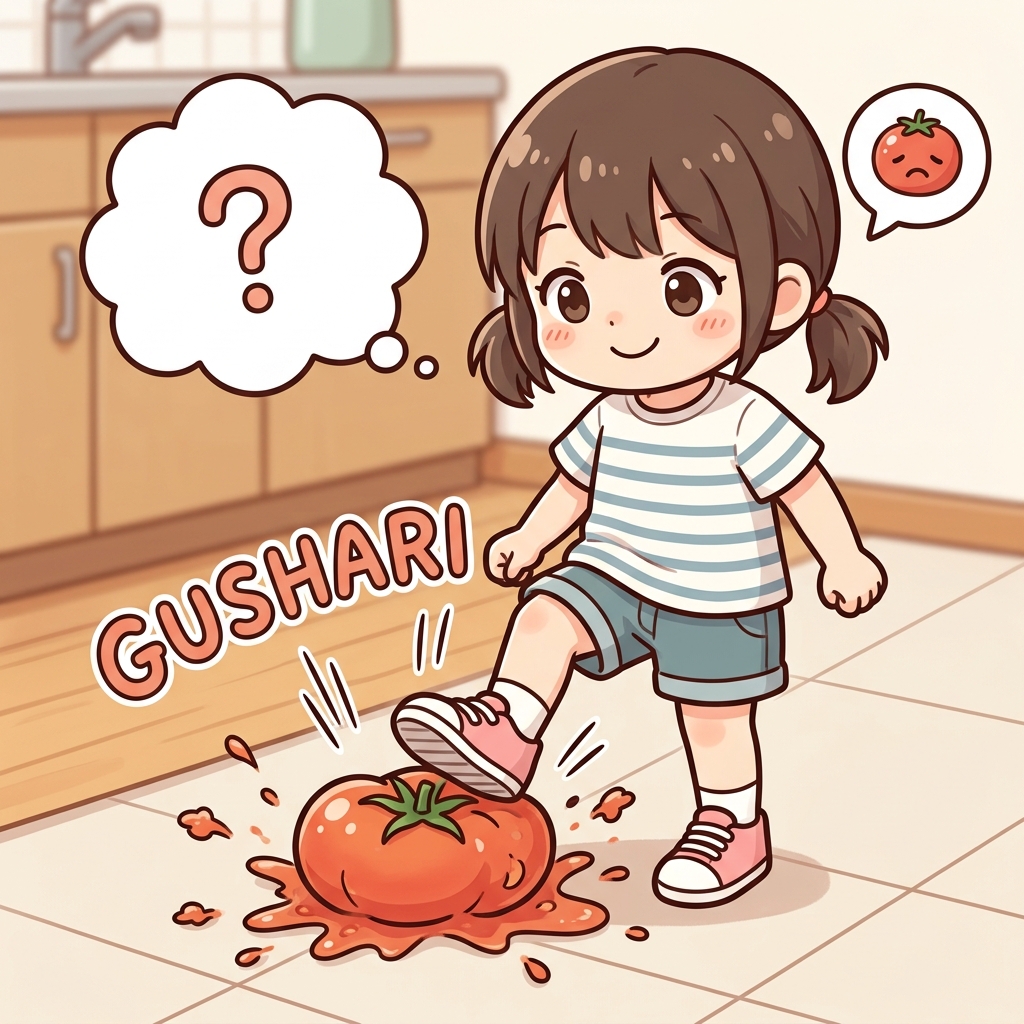
Japanese speakers use ぐしゃり (gushari) when they want to describe something being crushed, crumpled, or deformed in a clear and often unfortunate way. It works especially well when the object is soft, fragile, thin, or easy to bend out of shape.
- Accidental damage: A cake box, paper bag, package, or soft item gets stepped on or crushed.
- Intentional crushing: Someone crushes a paper cup, crumples paper, or presses something in anger.
- Deformation of shape: Something loses its neat shape and becomes flattened, bent, messy, or collapsed.
The key idea is not just “breaking.” ぐしゃり (gushari) is better for things that collapse, crumple, or lose shape, rather than hard objects that shatter into pieces. For example, a dropped cake becoming ruined can be described with ぐしゃり, but broken glass would usually need a different expression.
A Native-Sounding Tip
Use ぐしゃり (gushari) when the object’s shape collapses or gets badly deformed. It often sounds messy, forceful, and a little unpleasant. It is not the best choice for a light squeeze where the object keeps its general shape, or for hard things that simply crack or shatter.
Similar Expressions
While ぐしゃり (gushari) has its own nuance, these related expressions can help you understand the difference:
| Expression | Meaning | Difference from ぐしゃり (gushari) |
|---|---|---|
| ぺちゃんこ (pechanko) | Flat, flattened, squashed flat | Focuses more on the resulting flat state than on the crushing action or sound. |
| ぐにゃぐにゃ (gunyagunya) | Soft, bendy, floppy, flexible | Describes a soft or bendy state, not necessarily damage or crushing. |
| めちゃくちゃ (mechakucha) | Messy, ruined, chaotic | A broader word for a messy or ruined state, not specific to being crushed or crumpled. |
Practice ぐしゃり (gushari) with Audio
Play the audio and listen to how the examples sound in Japanese.
Japanese: 誤ってケーキの箱を踏んでしまい、中身がぐしゃりとなってしまった。
English: I accidentally stepped on the cake box, and the contents were crushed out of shape.
Japanese: 彼は怒って、持っていた紙コップをぐしゃりと握りつぶした。
English: He angrily crushed the paper cup he was holding.
Frequently Asked Questions
Is ぐしゃり (gushari) always negative?
It is usually negative or at least unpleasant. ぐしゃり (gushari) often suggests that something has lost its original shape in a messy or forceful way. However, the action itself can be practical or neutral in some contexts, such as crushing a paper cup before throwing it away. The word still gives a strong image of deformation or collapse.
Can ぐしゃり (gushari) be used for people or animals?
Usually, no. ぐしゃり (gushari) is best used for objects that can be crushed, crumpled, or deformed. Using it for people or animals would sound graphic, unnatural, or inappropriate in normal learning contexts. For serious accidents or injuries, Japanese uses more direct and careful wording instead of casual onomatopoeia like this.