The Core Meaning of びしょびしょ (bishobisho)
When you are learning Japanese, you quickly realize that simply translating words often misses the real nuance. For example, you may know 濡れる (nureru), meaning “to get wet.” But how do you describe something that is completely soaked, dripping, or saturated with liquid? That is where びしょびしょ (bishobisho) becomes useful.
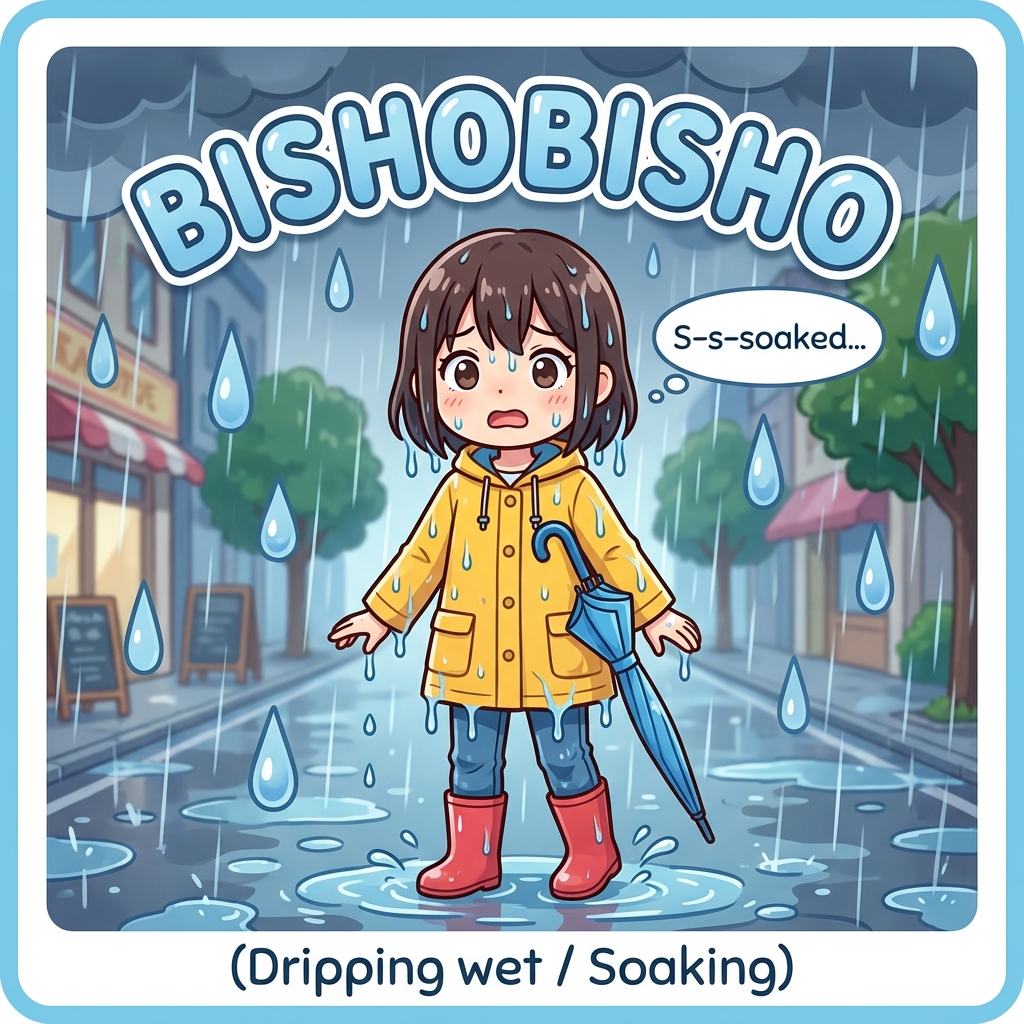
びしょびしょ (bishobisho) vividly describes something that is extremely wet. It often suggests that water or another liquid has soaked into something so much that it feels heavy, uncomfortable, or close to dripping. In English, it is close to “soaking wet,” “drenched,” or “sodden.”
The Scene Behind the Word
Imagine being caught outside in sudden heavy rain without an umbrella. Your clothes cling to your body, your hair is wet, and your shoes feel full of water. That kind of complete, uncomfortable wetness is a classic びしょびしょ (bishobisho) situation.
This word does not simply mean “wet.” It emphasizes the degree of wetness. A shirt that is slightly damp is not usually びしょびしょ. A shirt soaked with rain or sweat can be びしょびしょ. The word gives a strong sensory image of saturation, heaviness, and discomfort.
When Japanese Speakers Use It
Japanese speakers use びしょびしょ (bishobisho) when they want to emphasize that something is very wet, not just a little damp. It can be used for clothes, hair, shoes, towels, floors, bags, paper, or other things that have absorbed or been covered with too much liquid.
For example, if you say 服が濡れている (fuku ga nurete iru), it simply means “my clothes are wet.” But if you say 服がびしょびしょになった (fuku ga bishobisho ni natta), the listener understands that your clothes are soaked through. The expression makes the situation much more vivid.
Common Pitfall: Not Wet Enough!
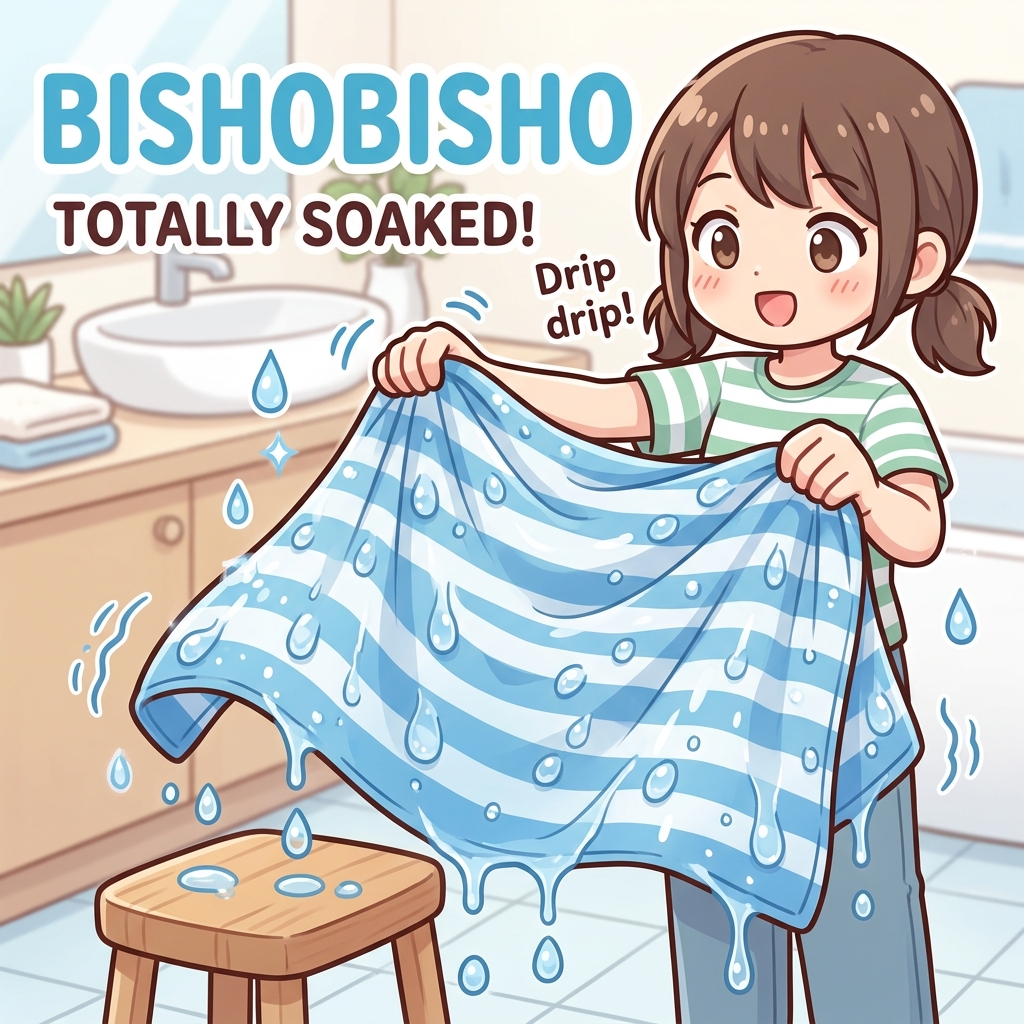
Do not use びしょびしょ (bishobisho) for something that is only slightly wet or mildly damp. If a towel is just a little moist, びしょびしょ sounds too strong. びしょびしょ usually implies a high degree of wetness, often enough that the object feels heavy, unpleasant, or close to dripping.
A Native-Sounding Tip
Use びしょびしょ (bishobisho) when the wetness feels excessive. If something is only damp, words like 湿った (shimetta - damp/moist) or 少し濡れている (sukoshi nurete iru - slightly wet) may sound more natural. For example, 湿ったタオル means “a damp towel,” while びしょびしょのタオル means “a soaking wet towel.”
Practice びしょびしょ (bishobisho) with Audio
Play the audio and listen to how the examples sound in Japanese.
Japanese: 突然の雨に降られて、服がびしょびしょになった。
English: I got caught in sudden rain, and my clothes became soaking wet.
Japanese: 暑すぎて、シャツが汗でびしょびしょになった。
English: It was so hot that my shirt became soaked with sweat.
Similar Expressions
While びしょびしょ (bishobisho) is excellent for describing extreme wetness, Japanese has other related expressions with slightly different nuances:
| Japanese | Romaji | Meaning | Nuance |
|---|---|---|---|
| びっしょり | bisshori | Soaking wet, drenched | Very similar to びしょびしょ. Often used when something is soaked through, especially with sweat, rain, or water. |
| ぐっしょり | gusshori | Soaked, heavily wet | Often emphasizes that liquid has soaked into something, making it heavy or thoroughly wet. |
| じめじめ | jimejime | Damp, humid, muggy | Describes unpleasant humidity or dampness in the air, a room, or the environment, not usually dripping wetness. |
| 湿った | shimetta | Damp, moist | A more neutral word for being slightly wet or moist. Much less intense than びしょびしょ. |
Frequently Asked Questions
Is びしょびしょ (bishobisho) only for water?
No. びしょびしょ (bishobisho) is most often used with water, rain, or sweat, but it can describe something soaked with other liquids too. For example, a floor covered with spilled juice or clothes wet with sweat can be described as びしょびしょ. The key idea is that the object is extremely wet or soaked.
Can I use びしょびしょ (bishobisho) for hair?
Yes. If your hair is completely wet after a shower, heavy rain, swimming, or sweating, you can say 髪がびしょびしょになった (kami ga bishobisho ni natta). It means your hair is soaked, not just slightly damp.