Appearance & Conditions

How Japanese People Use Guriguri Naturally

ChatGPT

貼り付けられたテキスト(1 点)(15).txt
ドキュメント
記事を確認してコピペで差し替えられるよう修正版を作って。例文や例文音声は絶対に変更しないで。

記事全体を確認します。今回は例文・音声ブロックは見当たらないため、そこは変更せず、HTML崩れ・表現の強さ・AdSense向けの自然さを中心に整えます。

思考時間: 25s
確認しました。主な修正点は、途中にあった不要な

の削除、表現の断定を少し柔らかくする修正、AdSense向けに自然で安全な言い回しへの調整です。例文・例文音声ブロックはありませんでした。元記事は添付テキストを確認しています。

以下をそのままコピペで差し替えてください。

Mastering Japanese Train Etiquette: 10 Essential Rules for Visitors

💡 Quick Answer

Japanese train etiquette is mainly about being considerate of other passengers. Keep your voice low, avoid phone calls, manage your luggage carefully, respect priority seats, and let people get off before you board.

Stepping onto a Japanese train can feel like entering a world of remarkable efficiency, punctuality, and cleanliness. For many visitors, it is also an introduction to a set of quiet, often unspoken manners that help everyone travel comfortably.

The good news is that Japanese train etiquette is not difficult. Most of it comes down to one simple idea: be aware of the people around you. By learning a few basic rules, you can ride trains in Japan with more confidence and show respect for local customs at the same time.


Understanding the Philosophy of Japanese Train Etiquette

⚠️ Avoid This

Avoid loud conversations, speakerphone use, or phone calls on the train. These are some of the most noticeable etiquette mistakes for visitors.

Japanese train etiquette is largely based on consideration for others, often expressed by the Japanese idea of omoiyari — being thoughtful about how your actions affect people around you. Trains are shared spaces, so small actions such as lowering your voice, moving your bag, or waiting your turn can make a big difference.

These customs are not usually enforced like strict laws. Instead, they are social expectations that help keep public transport calm, efficient, and comfortable. As a visitor, you do not need to be perfect. Simply observing local behavior and making an effort is usually enough.


Essential Japanese Train Etiquette Points for a Smooth Ride

1. Keep Your Voice Low and Put Your Phone on Silent

Japanese trains are generally much quieter than public transport in many other countries. To match this atmosphere, speak softly, avoid loud laughter, and do not play music or videos without headphones.

It is also common to switch your phone to silent or “manner mode.” Phone calls on regular trains are generally avoided. If you need to take an urgent call, it is better to get off at the next station or wait until you are outside the train.

2. Be Careful with Backpacks and Luggage

How you carry your belongings matters, especially during busy hours. If you are wearing a backpack, take it off and hold it in front of you or place it on the overhead rack when possible. This helps prevent accidentally bumping people behind you.

Large suitcases should be kept close to your body and away from doors or aisles. On crowded trains, even a small bag can become an obstacle if it blocks people from moving in and out.

3. Respect Priority Seating

Priority seats are usually marked with signs and are intended for elderly passengers, pregnant passengers, people with disabilities, people with injuries, and passengers with small children.

If the train is crowded, it is best to leave these seats open unless you need them. If you are sitting in a priority seat and someone who may need it boards the train, offer the seat politely. In some areas, passengers are also encouraged to avoid using phones near priority seating, especially where signs request it.

4. Line Up Neatly on the Platform

At many stations in Japan, platform markings show where passengers should line up before boarding. Join the line and wait until passengers have fully exited the train before getting on.

Pushing, cutting in line, or rushing into the train before others get off can feel very rude in Japan. A calm and orderly boarding process is one reason Japanese trains can move so efficiently.

Waiting Respectfully at the Platform

Waiting Respectfully at the Platform

5. Avoid Eating on Regular Commuter Trains

Eating and drinking rules depend on the type of train. On long-distance trains such as the Shinkansen and some limited express trains, eating boxed meals and snacks is common. On regular commuter trains, however, eating is generally avoided, especially if the food has a strong smell.

A quick drink of water is usually not a problem, but it is safer to avoid meals or messy snacks on crowded local trains. If you are unsure, look at what local passengers are doing.

🌏 Japan vs Other Countries

Compared with many countries, Japanese trains are often quieter and more orderly. The goal is not complete silence, but a shared effort to avoid bothering others.

6. Let Passengers Get Off First

Always allow passengers to leave the train before you board. Stand to the side of the doors rather than directly in front of them. This keeps the flow smooth and prevents unnecessary congestion.

This rule is simple, but it is one of the most important parts of train etiquette in Japan. Waiting just a few seconds makes boarding easier for everyone.

7. Avoid Blocking Doors and Aisles

When standing near the doors, move inward when possible so other passengers can enter and exit. During rush hour, people may need to pass through quickly, so blocking the doorway can create stress for everyone around you.

If you have a suitcase or large bag, keep it close and avoid placing it where people need to walk. Small adjustments can make a crowded train much easier to use.

8. Be Mindful of Personal Space

Japanese trains can become extremely crowded, especially during morning and evening rush hours. In these situations, personal space may be limited, so it is important not to take up more room than necessary.

Avoid spreading your legs, placing bags on empty seats, or leaning into other passengers if you can avoid it. When the train is crowded, try to make yourself as compact as possible.

9. Avoid Personal Grooming on the Train

Applying makeup, brushing hair, clipping nails, or doing other personal grooming on the train is generally viewed as inappropriate by many people in Japan. These activities are considered private and are better done at home, in a restroom, or in another suitable place.

This does not mean everyone will react strongly, but avoiding personal grooming helps you blend in with local expectations.

10. Do Not Stare at Other Passengers

In Japan, staring at other passengers can feel uncomfortable or intrusive. A brief glance is normal, but prolonged eye contact or openly watching someone is best avoided.

Many people on Japanese trains look at their phones, read, sleep, or look out the window. This quiet distance helps maintain a sense of privacy in a shared public space.


Frequently Asked Questions

  • Is it really silent on Japanese trains?
    Not completely. Quiet conversation is sometimes acceptable, especially outside rush hour. The key is to keep your voice low and avoid disturbing others.
  • Can I eat on the train in Japan?
    It depends on the train. Eating is common on Shinkansen and some long-distance trains, but it is generally avoided on regular commuter trains, especially crowded ones.
  • Can I sit in a priority seat if the train is empty?
    Practices vary, but it is safest to leave priority seats open if you do not need them. If you do sit there, be ready to give up the seat immediately when someone who may need it boards.
  • What should I do if I make an etiquette mistake?
    Do not panic. A simple apology such as sumimasen and a quick correction of your behavior is usually enough. Most people understand that visitors may not know every local custom.

✅ Tip

When you are unsure what to do, observe nearby passengers. Local behavior is often the best guide.


Making Your Journey Smooth and Enjoyable

Japanese train etiquette may seem detailed at first, but most rules come from a simple principle: do not inconvenience others. If you keep your voice low, manage your belongings, respect priority seats, and follow the flow of passengers, you will already be doing very well.

By learning these customs, you can enjoy Japan’s train system with more confidence and respect. The trains are not only a way to move around the country — they are also a window into Japan’s everyday culture of order, consideration, and shared public manners.

📝 Key Takeaways

  • Keep conversations quiet and avoid phone calls on regular trains.
  • Respect priority seats and offer them to passengers who may need them.
  • Hold backpacks and luggage carefully so they do not block aisles, doors, or other passengers.
  • Let passengers get off before boarding and follow platform lines when available.

🚀 Want to Learn More?

Discover more about navigating Japan's public transport system with our other helpful guides!

貼り付けられたテキスト(1 点)(16).txt
ドキュメント
これもお願い

思考時間: 4s
確認しました。主な修正点は、英語表現の自然化、少し大げさな表現の調整、説明の正確性アップ、FAQの追加、HTML構造の整理です。
例文の日本語・英訳・音声URLは変更していません。 元記事は添付テキストを確認しています。

以下をそのままコピペで差し替えてください。

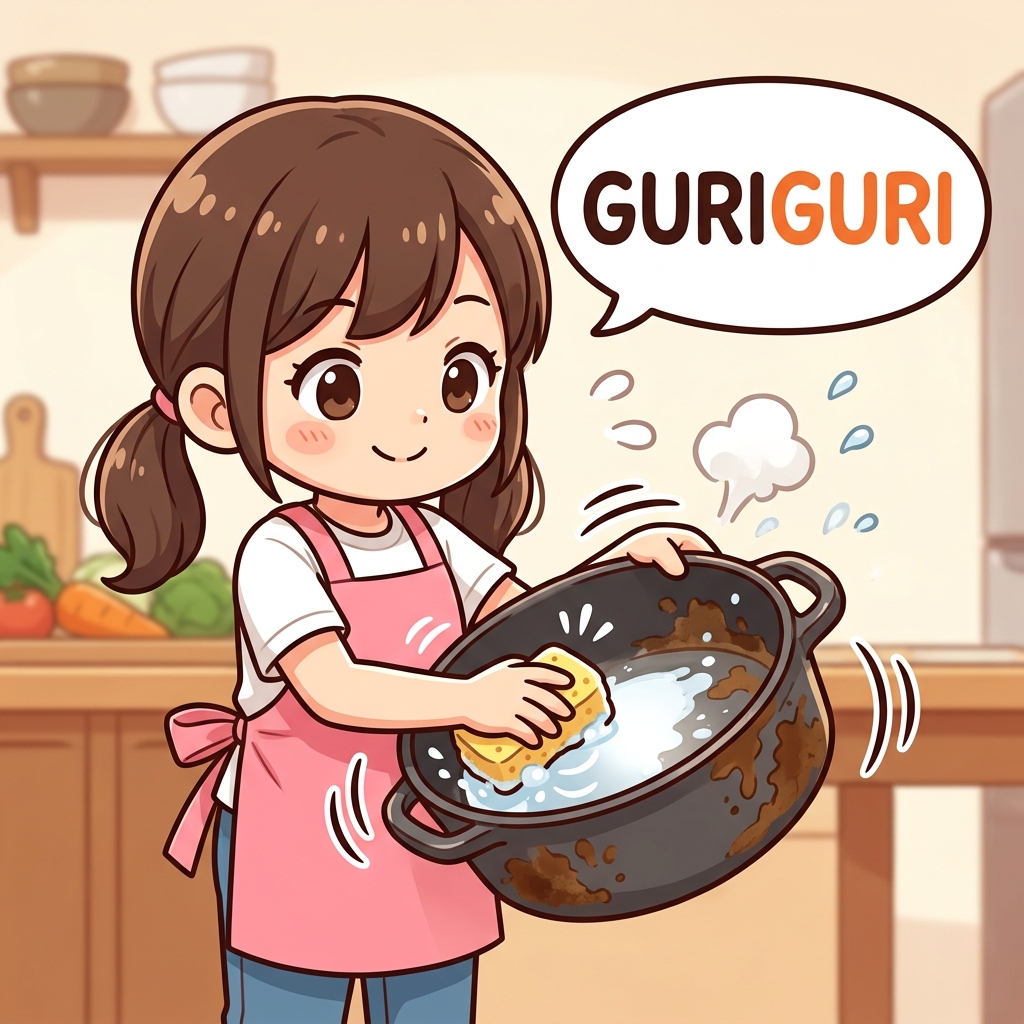
guriguri Japanese onomatopoeia explanation image

Have you ever tried to describe a stubborn stain you were scrubbing, a deep shoulder massage, or the feeling of something being pressed hard in a repeated motion? In Japanese, ぐりぐり (guriguri) is a useful onomatopoeic expression for exactly that kind of forceful, repeated pressure.

This word often describes rubbing, pressing, twisting, or massaging something with noticeable force. It is not usually used for a gentle touch. Instead, ぐりぐり (guriguri) gives the listener a strong tactile image: something firm being pushed, rubbed, or rotated again and again.

What ぐりぐり (guriguri) Really Feels Like

At its core, ぐりぐり (guriguri) expresses a strong physical sensation. Imagine pressing your thumb firmly into a stiff shoulder, scrubbing a burnt pot with effort, or feeling a small hard object digging into your foot. The movement is usually repeated, circular, back-and-forth, or pressing deeply into one spot.

The feeling is stronger than a light rub. It often includes a sense of resistance, pressure, or persistence. That is why ぐりぐり (guriguri) works well when the action feels a little intense, rough, or physically noticeable.

How It Works in Context

You will often see ぐりぐり (guriguri) used with verbs related to physical contact, such as rubbing, pressing, massaging, or twisting. The exact meaning depends on the verb that follows it.

For example, when used with こする (kosuru), it suggests scrubbing something firmly and repeatedly. When used with 揉む (momu), it can describe a deep massage or kneading pressure. With 押す (osu), it may suggest pressing something hard again and again.

The important point is that ぐりぐり (guriguri) usually adds a sense of repeated force. It helps the listener imagine not only the action itself, but also how the action feels.

Listen to ぐりぐり (guriguri) in Real Sentences

Play the audio and listen to how the examples sound in Japanese.

Japanese: 焦げ付いた鍋をぐりぐりこすって汚れを落とした。

English: I scrubbed the burnt pot vigorously to remove the dirt.

Japanese: 肩が凝っていたので、マッサージ師にぐりぐり揉んでもらった。

English: My shoulders were stiff, so I had the masseuse give them a deep, firm massage.

Natural Usage Scenes

One common situation is cleaning. If a pot, pan, or surface has something stuck to it, you might scrub it ぐりぐり (guriguri) to remove the stain. The word makes the action sound more forceful and persistent than simply “rubbing.”

Another common scene is massage. When someone presses deeply into a stiff shoulder or sore muscle with repeated pressure, ぐりぐり (guriguri) can describe that feeling very naturally. It can sound slightly intense, so it is especially suitable for a firm massage rather than a gentle one.

You may also hear it when describing a hard object pressing into something. For example, a pebble inside a shoe might feel like it is digging into your foot, or a child might press a toy firmly against the floor in a repeated motion. In these cases, the word helps express both pressure and repeated movement.

guriguri Japanese onomatopoeia usage example image

A Common Learner Mistake

A common mistake is using ぐりぐり (guriguri) for actions that are too gentle or too brief. This word is not usually appropriate for a soft touch, a single light push, or a delicate movement.

For example, if you lightly stroke a cat, gently wipe a table, or softly touch someone’s arm, ぐりぐり (guriguri) would sound too strong. The word needs a sense of pressure, repetition, and physical effort.

Avoid This Mistake!

Do not use ぐりぐり (guriguri) for light, gentle, or single actions. It usually implies forceful and repeated motion, often with a firm tactile feeling.

How to Remember ぐりぐり (guriguri)

To remember ぐりぐり (guriguri), connect it with the feeling of strong repeated pressure. Think of scrubbing a difficult stain, pressing into a stiff shoulder, or twisting something firmly in a small area.

The repeated sound pattern also helps. Like many Japanese mimetic words, repeating the sound gives a sense of repeated action. ぐりぐり (guriguri) feels heavier and firmer than softer expressions, which matches the image of strong rubbing, pressing, or massaging.

Native Speaker Insight

When using ぐりぐり (guriguri), focus on two ideas: repeated movement and noticeable pressure. If the action feels firm, persistent, or physically strong, this word may fit well.

Related Expressions

While ぐりぐり (guriguri) has its own strong tactile feeling, these related expressions can help you compare similar Japanese onomatopoeic words.

Japanese Romaji Meaning
ごしごし goshigoshi Scrubbing or rubbing repeatedly, often with a rough or cleaning-related feeling
ぎゅうぎゅう gyuugyuu Tightly packed, squeezed, or pressed together
くるくる kurukuru Spinning, twirling, or rotating lightly and repeatedly

Frequently Asked Questions

Is ぐりぐり (guriguri) always about physical actions?

In most everyday usage, ぐりぐり (guriguri) describes physical actions or physical sensations involving forceful, repeated pressure. It is especially common for rubbing, pressing, massaging, or something hard digging into a surface or body part.

Can ぐりぐり (guriguri) describe sounds?

ぐりぐり (guriguri) is mainly a mimetic expression, meaning it describes a manner, movement, or sensation rather than a sound itself. It may remind people of a grinding or pressing motion, but its main role is to express how the action feels or looks.

Is ぐりぐり (guriguri) casual?

Yes, it is common in everyday spoken Japanese and casual writing. It is useful in conversation, personal stories, manga-style descriptions, and explanations of physical sensations. In very formal writing, a more direct verb or phrase may be preferred.

What is the difference between ぐりぐり (guriguri) and ごしごし (goshigoshi)?

ごしごし (goshigoshi) often focuses on repeated scrubbing or rubbing, especially when cleaning. ぐりぐり (guriguri) feels stronger and more pressure-based. It often suggests pressing, digging, twisting, or rubbing firmly into one spot.

By learning ぐりぐり (guriguri), you can describe physical pressure and repeated motion in a much more vivid way. Whether you are talking about scrubbing a burnt pot, receiving a deep massage, or feeling something hard pressing into your foot, this small word adds a strong and natural sense of touch to your Japanese.

Free Quiz

Test Your Japanese Onomatopoeia Knowledge

Take a quick 10-question quiz and practice Japanese sound words such as wakuwaku, dokidoki, and kirakira.

Try the Quiz

-Appearance & Conditions