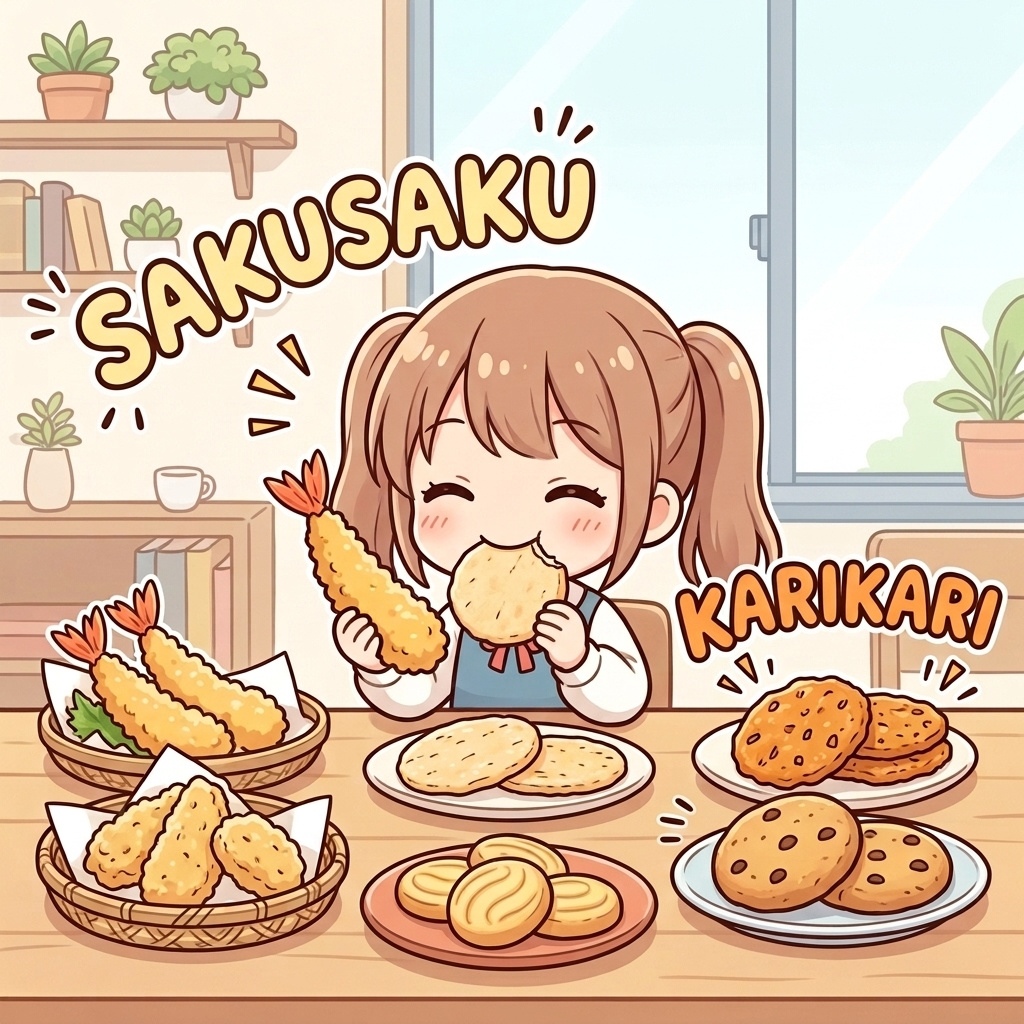
Stop Confusing Your Crispy Japanese Snacks!
Imagine ordering a crispy fried chicken (karaage) and wanting to describe its light, pleasant crispiness. Using 'karikari' might imply a harder, almost burnt crisp, while 'sakusaku' captures that delicate, satisfying crunch perfectly. Many Japanese learners struggle with the subtle differences between さくさく (sakusaku) and karikari, two onomatopoeia that both describe a crispy texture. The distinction helps you describe whether a food is delicately crisp or firmly crunchy.
Two Similar Sounds, Different Impressions
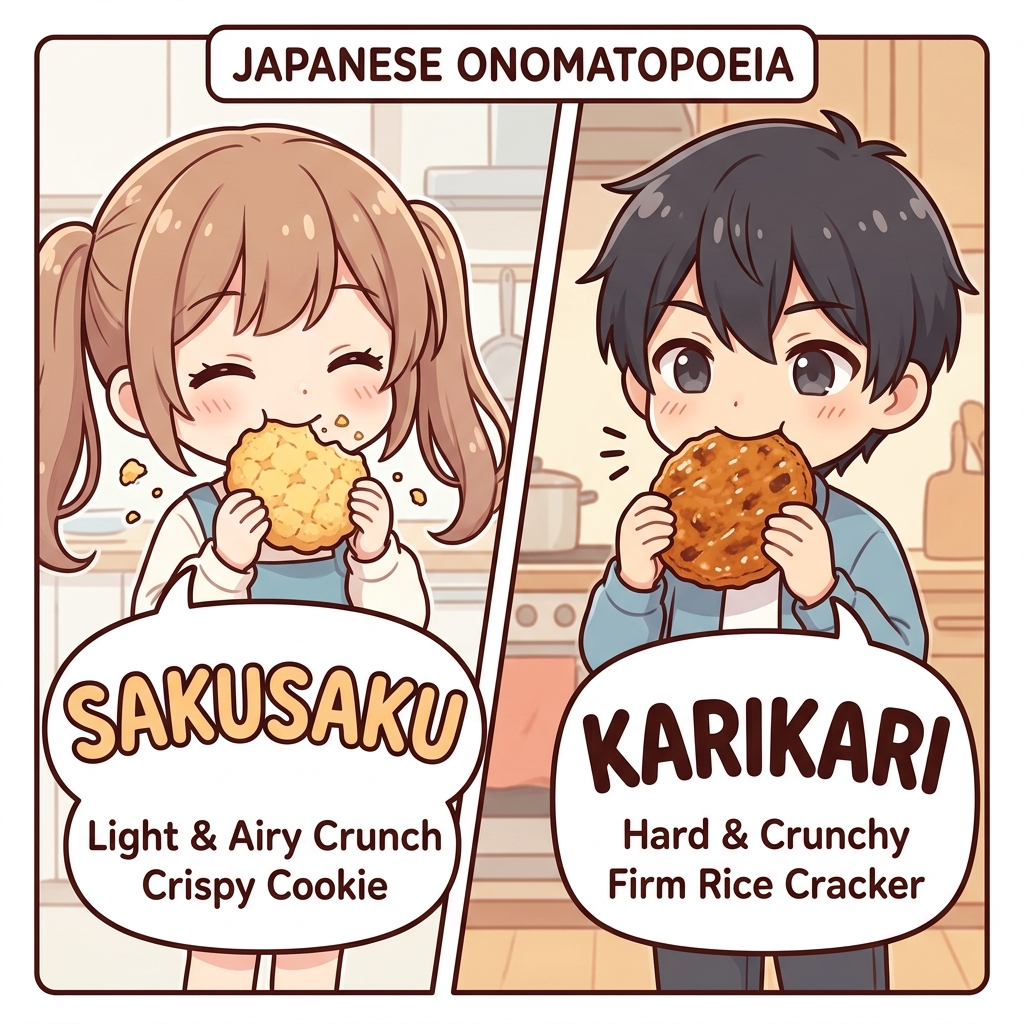
In the vibrant world of Japanese onomatopoeia, さくさく (sakusaku) and karikari both convey a sense of crispiness or crunch. They are frequently used to describe food textures, but their underlying impressions are quite distinct. While さくさく (sakusaku) generally suggests a light, pleasant, and often delicate crispiness, karikari leans towards a harder, more pronounced, and sometimes brittle crunch.
The Scene Behind Each Expression
さくさく (sakusaku): Light, Pleasant, and Smooth
This versatile onomatopoeia is used for textures that are light, comfortable, and often delightful to bite into. Think of the satisfying sound of a freshly baked cookie breaking apart in your mouth, the perfectly delicate crisp of tempura batter, or the gentle rustle of dry leaves underfoot during an autumn stroll. さくさく (sakusaku) implies something that is easy to chew and offers a pleasant, airy crunch. Beyond texture, it can also describe things progressing smoothly and efficiently, without any hitches, like work or tasks.
karikari: Harder, Brittle, and Pronounced
In contrast, karikari describes a harder, more brittle, and often more intense crunch. It's the sound you'd associate with a very thin cracker snapping crisply, a well-done piece of toast, or a hard-fried potato chip. While still enjoyable and often sought after, karikari suggests a texture that requires a bit more effort to bite through compared to さくさく (sakusaku). Sometimes, depending on context, it can even imply something is slightly overcooked or very dry, giving it that extra hard crispiness.
How Japanese Speakers Choose Between Them
The core difference lies in the degree and pleasantness of the crispiness. さくさく (sakusaku) often implies a more delicate, pleasant, and easy-to-chew crispiness, like a light biscuit or a perfectly fried tonkatsu. karikari suggests a harder, often more satisfyingly firm crunch, but can sometimes border on brittle or even slightly burnt if not used carefully. Understanding this distinction is crucial for accurate description.
Delicate Crispness or a Firm Crunch?
When describing food, 'sakusaku' often implies a more delicate, pleasant, and easy-to-chew crispiness (like a cookie or light tempura). 'karikari' suggests a harder, often more satisfyingly firm crunch, but can sometimes border on brittle or even slightly burnt if not used carefully.
Small Nuance, Big Difference
Using the right onomatopoeia changes the texture a listener is likely to imagine. For instance, describing a light, airy pastry as カリカリ (karikari) might make them imagine something much harder or drier than you intended. Conversely, calling a super-crunchy cracker さくさく (sakusaku) might understate its true, robust texture. Mastering these subtle differences allows for more precise and natural communication.
Common Pitfall
Imagine wanting to describe the light, pleasant crispiness of freshly fried chicken (karaage). Using 'karikari' might imply a harder, almost burnt crisp, while 'sakusaku' captures that delicate, satisfying crunch perfectly. Choose wisely to avoid miscommunication!
Quick Practice with Real Context
Let's look at some examples to solidify your understanding of さくさく (sakusaku) and karikari in action.
Compare the Sound and Feeling
Play the audio and listen to how the examples sound in Japanese.
Japanese: このクッキーは焼きたてで、さくさくしてて美味しいね。
English: This cookie is freshly baked and deliciously crispy.
Japanese: ポテトチップスがカリカリに揚がっていて、止まらない!
English: The potato chips are fried to a crisp, I can't stop eating them!
Related Expressions for Crispiness and Crunch
Japanese offers even more ways to describe various crunchy textures:
| Expression | Nuance | Example |
|---|---|---|
| パリパリ (paripari) | Very thin, brittle crispiness; easily broken. | 海苔 (nori - seaweed), 薄いせんべい (usui senbei - thin cracker) |
| ざくざく (zakuzaku) | Coarser, chunkier, more substantial crunch. | グラノーラ (granola), 揚げたてのフライドポテト (fried potatoes) |
| こりこり (korikori) | Chewy, elastic crunch; firm but not hard. | 軟骨 (nankotsu - cartilage), きくらげ (kikurage - wood ear mushroom) |
Frequently Asked Questions
Can さくさく (sakusaku) be used for non-food items?
Yes, さくさく (sakusaku) is commonly used for the sound of dry leaves or fresh snow underfoot, evoking a light, pleasant crunch. It can also describe work or tasks progressing smoothly and efficiently.
Is karikari always negative or does it imply something is burnt?
Not at all! karikari is often used positively for things like perfectly crisp potato chips, well-toasted bread, or a crunchy cracker, where a harder, more pronounced crunch is desired. It only *can* imply something is slightly overcooked or burnt if the context or tone suggests it, but it's frequently used for delicious, hard-crisp textures.