Guides

Your Essential Guide to Trash Separation in Japan: 10 Key Tips

Your Essential Guide to Trash Separation in Japan: 10 Key Tips

Trash separation in Japan can feel surprisingly complicated at first. A tourist may wonder where to throw away a coffee cup, a new resident may be staring at a local trash calendar, and someone in an Airbnb may not know whether bottles go in the room bin or a shared collection area.

This guide gives the big-picture rules first, then explains what changes for tourists, new residents, apartments, share houses, and short-term rentals. Rules vary by city, ward, building, and accommodation, so use this article as a practical starting point and check local instructions whenever possible.

Reviewed by: Why Japan Editorial Team
Last updated: May 2026

At a Glance

In Japan, trash is often separated into burnable, non-burnable, PET bottles, cans, glass bottles, paper, plastics, and bulky waste. Tourists should follow signs and accommodation instructions. Residents should use the local trash calendar, ask a landlord or building manager, and check city apps or multilingual guides when unsure.


Quick Guide: What Tourists Should Do First

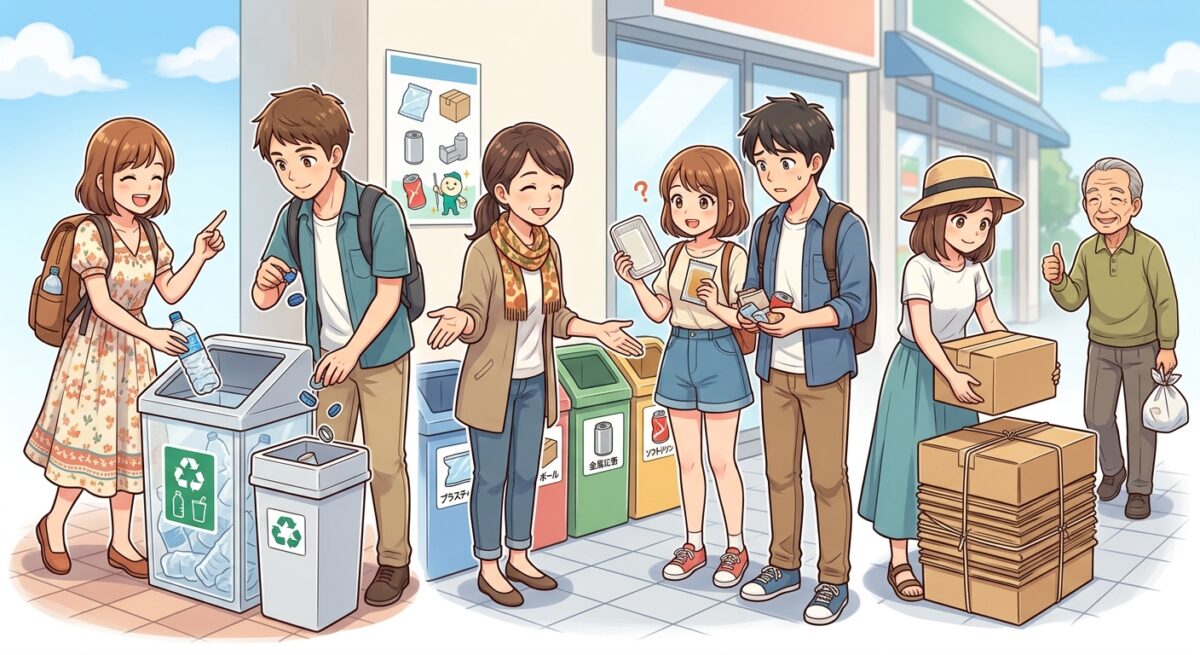
If you are visiting Japan for a short trip, you do not need to memorize every municipal rule. Your main job is to avoid littering, use labeled bins correctly, and take trash back to your hotel or accommodation when public bins are not available.

  • Carry a small trash bag: Public trash cans can be scarce, especially on streets and in parks.
  • Use bins only for what they show: Vending machine bins are usually for drink containers, not food wrappers or general trash.
  • Follow hotel or Airbnb instructions: Your accommodation may sort trash for you, or it may ask guests to separate bottles, cans, and burnable waste.
  • Do not leave trash beside full bins: If a bin is full or missing, carry the item until you find a proper place.
  • Ask before guessing: Hotel staff, guesthouse staff, and hosts are usually the safest source for local disposal advice.

Avoid This

Do not leave trash on benches, beside station bins, near vending machines, or at a neighborhood collection point unless you are sure that spot is meant for your trash.


Why Trash Separation Feels Complicated in Japan

Japan's waste system feels detailed because rules are local. A rule in Tokyo may not match the rule in Kyoto, Osaka, Sapporo, Fukuoka, or a smaller town. Even within one large city, rules may differ by ward, building, or collection point.

Trash separation is also tied to shared living. Collection points are often used by many households, and incorrectly sorted trash may be left behind for a building manager, neighbor, or resident group to deal with. This is why local signs, calendars, and building notices matter so much.

For visitors, this does not mean you must become an expert overnight. It means you should avoid broad assumptions. If you see separate bins, use the labels. If you are staying in a residence, check the local instructions before putting trash outside.

Japan vs Other Countries

In some countries, household waste may be sorted into only a few broad categories. In Japan, the exact categories, bags, pickup days, and disposal methods can depend heavily on the municipality and building.


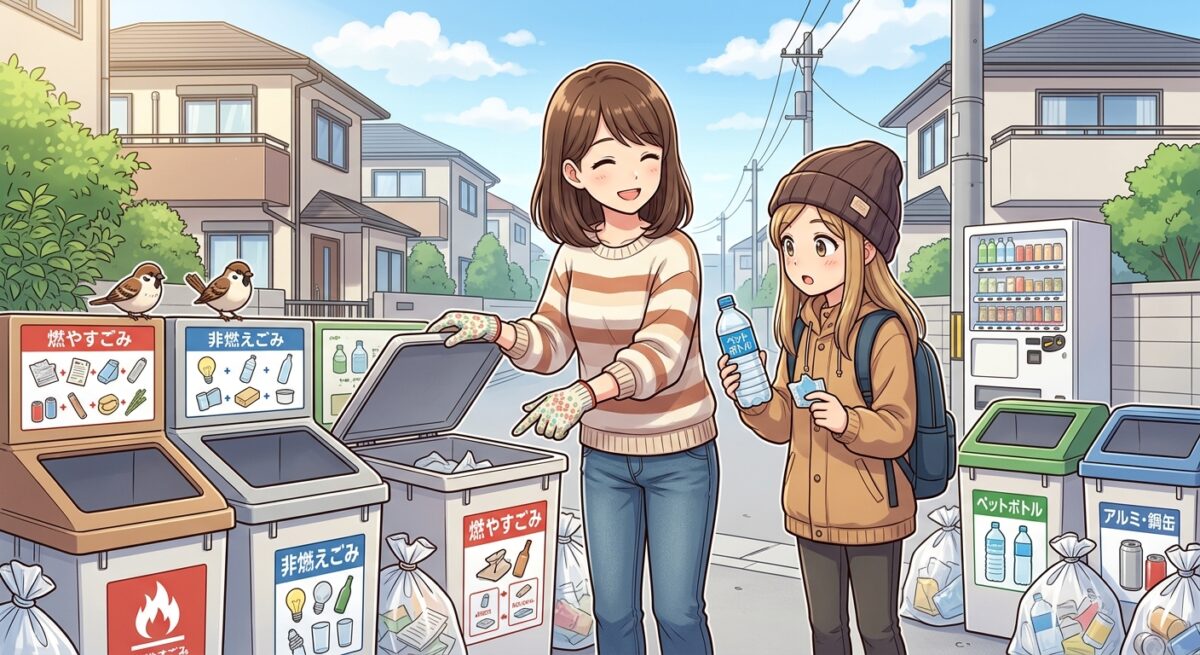
Basic Categories: Burnable, Non-Burnable, PET Bottles, Cans, and Paper

The names and details vary by area, but these categories appear often enough that they are useful for both travelers and residents.

Burnable Trash

Burnable trash, often called moeru gomi, may include food scraps, tissues, paper scraps, and some everyday waste. In some areas, certain plastic items may also be treated as burnable, while other areas separate plastics more strictly.

Non-Burnable Trash

Non-burnable trash, or moenai gomi, may include ceramics, small metal items, glass items, and other materials that do not fit burnable or recyclable categories. The exact list depends on local rules.

PET Bottles, Cans, and Glass Bottles

Drink containers are often separated. PET bottles may need to be emptied, rinsed, and separated from caps and labels. Cans and glass bottles may have separate collection bins or collection days.

Paper, Cardboard, and Plastic Packaging

Paper and cardboard may need to be flattened, bundled, or put out on a specific day. Plastic packaging can be especially confusing because some areas collect it separately, while others handle certain plastics differently.

Tip

If you are not sure whether an item is recyclable, check the local guide rather than guessing from the material alone. Japan's rules are often based on local disposal systems, not only on what the item is made of.


For New Residents: Collection Days and Local Rules

If you are moving into an apartment, house, dorm, or share house, the most important item is your local trash calendar. It usually shows which category is collected on which day, where to put trash, what bags to use, and how to prepare recyclables.

You may receive the calendar from a landlord, real estate agent, building manager, school, workplace, city office, or ward office. If you did not receive one, ask for it early. Many municipalities also provide multilingual guides, item search pages, or city apps that explain how to throw away specific items.

  • Trash calendar: Shows collection days for burnable trash, recyclables, non-burnables, paper, plastics, and bulky waste.
  • Landlord or building manager: Can explain building-specific rules, collection points, and time restrictions.
  • City apps and websites: Some municipalities let you search an item name and find the correct category.
  • Multilingual guides: Many city and ward offices offer guides in English, Chinese, Korean, Vietnamese, Portuguese, or other languages.

For a resident-focused explanation, see the related article: Navigating Japan's Trash Rules: An Expat's Guide to Separation.

Navigating Public Bins

For Apartments, Share Houses, and Airbnb Stays

Home-style stays can be more confusing than hotels because guests may be responsible for sorting trash themselves. Rules vary by city, ward, building, and accommodation, so the correct answer is often the one posted inside your room, lobby, trash area, or booking instructions.

Apartments and Long-Term Rentals

Apartment buildings may have a shared trash room, a caged outdoor collection area, or a neighborhood collection point. Some buildings allow trash to be placed in a shared area at any time, while others follow strict morning pickup rules. Ask your landlord or building manager before copying what another building does.

Share Houses and Dorms

Share houses and dorms often have house rules that simplify the local system for residents. Follow the labels on shared bins and ask the manager if an item is unusual, such as batteries, spray cans, broken glass, or small electronics.

Airbnb and Short-Term Rentals

For Airbnb-style stays, do not assume you can use a neighborhood collection point like a resident unless the host says so. Some hosts ask guests to leave trash inside the room, while others provide a specific disposal area. Follow the host's instructions because the building may receive complaints if trash is placed out incorrectly.

For household and accommodation-focused details, see: Mastering Japan's Home Trash Rules: A Visitor's Essential Guide.


Common Mistakes: Wrong Day, Wrong Bag, and Warning Stickers

Many trash problems in Japan come from small misunderstandings rather than bad intentions. The same item may be treated differently in another city, and a new resident may not realize that collection days are category-specific.

  • Wrong day: Trash put out on the wrong day may be left behind.
  • Wrong bag: Some municipalities require designated paid bags, while others allow clear or semi-transparent bags.
  • Wrong place: A collection point may be for one building, block, or neighborhood group only.
  • Mixed categories: PET bottles, caps, labels, cans, paper, and plastic packaging may need separate handling.
  • Trash left too early: Some places discourage putting trash out the night before because of crows, cats, insects, or odor.

If trash is rejected, it may be left with a warning sticker or note. If this happens, take it back, check the reason, re-sort it, and put it out on the correct day. It is uncomfortable, but it is also a common learning moment for newcomers.


Bulky Waste in Japan: What to Know

Large items usually cannot be placed at the normal collection point. Furniture, futons, shelves, mattresses, large appliances, and other oversized items may be treated as sodai gomi, or bulky waste.

The process often involves making a reservation with the municipality, paying a fee, buying a bulky waste sticker, attaching it to the item, and placing the item outside on the assigned day. The exact process varies by city and item type.

Before You Throw Away a Large Item

  • Check your city or ward website for bulky waste instructions.
  • Ask your landlord, building manager, or real estate agent if your building has special rules.
  • Do not leave furniture at a normal trash point without a reservation if local rules require one.
  • For appliances, confirm whether recycling laws or store pickup options apply.

When You Are Not Sure, Check Local Rules

The safest answer in Japan is usually local. If you are unsure, check the city guide, ward office website, accommodation instructions, landlord, building manager, or disposal app. A quick check can prevent warning stickers, neighbor complaints, or rejected trash.

For tourists, asking hotel or guesthouse staff is usually enough. For residents, keep the trash calendar visible until the schedule becomes familiar. For Airbnb guests, follow the host's instructions rather than using a local collection point on your own judgment.

Helpful Places to Check

  • Hotel or guesthouse front desk: Best for short-term visitors.
  • Airbnb host or accommodation manual: Best for short-term rentals.
  • Landlord or building manager: Best for apartments and share houses.
  • City or ward office: Best for official local rules and multilingual guides.
  • Municipal app or item search page: Best for checking unusual items.

Common Questions About Waste Disposal in Japan

Q: Can I put all my trash in one bag at my hotel?

A: It depends on the hotel. Some hotels sort waste internally, while others provide separate bins for guests. Follow the hotel?s instructions or ask the front desk.

Q: What if I cannot find a public bin?

A: Carry your trash with you until you return to your accommodation or find an appropriate bin. Many travelers keep a small bag in their backpack for this purpose.

Q: Are there different rules in different cities?

A: Yes. Trash separation rules can vary by municipality, ward, building, and accommodation. A rule in one city may not match another city.

Q: What does a warning sticker mean?

A: It usually means the trash was put out incorrectly, such as the wrong day, wrong bag, wrong category, or wrong collection point. Take it back, check the rule, and put it out correctly next time.

Q: Can I use vending machine bins for any trash?

A: Usually no. Bins near vending machines are mainly for drink containers such as cans and PET bottles. Do not put food wrappers or general trash there unless the label clearly allows it.


How This Article Was Reviewed

This article was reviewed by the Why Japan Editorial Team in May 2026. We checked the guidance for clarity, practical usefulness, and cultural balance, especially around avoiding overly broad claims about Japan's local trash rules.

Because waste rules vary by city, ward, building, and accommodation, this guide focuses on common patterns and decision points. Readers should still confirm the exact rule for their location, landlord, building manager, accommodation, or municipality.


Conclusion: Use the Local Rule, Not a Guess

Japan's trash separation system can feel detailed, but it becomes manageable once you know where to check. Tourists can usually follow signs and accommodation instructions. New residents should rely on the local trash calendar, building rules, and municipal guidance.

You do not need to know every rule in Japan. You need the rule for where you are staying or living. When in doubt, ask before putting trash out. That small step prevents most problems and shows respect for the shared spaces around you.

Key Takeaways

  • Trash rules in Japan vary by city, ward, building, and accommodation.
  • Tourists should carry small trash, use labeled bins carefully, and follow hotel or host instructions.
  • New residents should get a trash calendar and check with a landlord or building manager.
  • Warning stickers usually mean wrong day, bag, category, or collection point.
  • Bulky waste often requires booking, payment, and a special disposal sticker.

Want to Go Deeper?

For resident-focused rules, read the expat trash separation guide. For apartment and home situations, see the home trash separation guide.

Free Japan Tool
Not sure what is OK in Japan?

Try the Japan Etiquette Checker and learn what is polite, risky, or better to avoid in common situations such as trains, restaurants, shrines, onsen, hotels, shops, and public spaces.

Train manners Restaurant etiquette Onsen rules Shrine visits
Try the Japan Etiquette Checker

-Guides