Why Japan Editorial Team

Discover Japan Beyond the Surface.
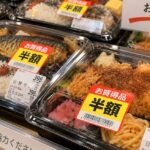
If you walk into a Japanese supermarket in the evening, you may notice small colored stickers appearing on bento boxes, prepared side dishes, and sushi trays, each marking the item down from its original price. In some stores, items may be marked down further later in the day if stock is still left. It looks like a system, and in a sense it is -- but it is not a nationwide schedule you can set your watch to. Short answer Many Japanese supermarkets mark down some prepared foods later in the day, as their selling window for that item gets ...

Can I use the toilet, and do I need to buy something? You're walking around in Japan, you need a restroom, and a convenience store is right there. Two questions usually show up at the same time: is it actually okay to use their restroom, and if you do, do you need to buy something on the way out? The short version is worth saying up front, because the honest answer isn't a strict rule either way. The short answer Whether a store's restroom is open to customers at all is a store-by-store decision, not a nationwide law. None of ...
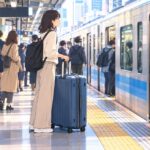
Tokyo trains are convenient — until you add a large suitcase Tokyo's trains are genuinely one of the easiest ways to get around a big city. That reputation is deserved most of the day. It changes with one specific combination: a large suitcase, on an ordinary commuter train, during the hours when that line is at its most crowded. This guide is about that specific combination — not trains in general, and not a warning to avoid them. Author's note: this comes from a standing practical view, not one specific trip — I haven't personally been stuck at one exact ...

Three employer-side cases in an MHLW casebook compare an English evaluation sheet, an English-language promotion assessment, and shared job-ability standards. Evidence is limited to employer reports.

In her first winter in Japan, Claudina mistook her aunt’s 不通 for 普通 while planning a train trip from Gunma to Chiba.

A year-round workplace guide for Japan covering company calendars, leave requests, seasonal events, dress codes, gifts, busy periods, and severe-weather communication.

Learn how to handle indirect answers in Japan without guessing: check context, look for concrete next steps, and use polite follow-up questions.
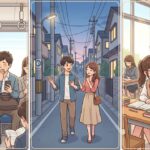
Use four checks—place, time, people nearby, and posted rules—to judge noise in Japan, manage calls and device audio, and respond calmly if asked to be quieter.

A practical guide to asking clearly in Japanese shops, hotels, stations, and restaurants— including returns, changes, extra fees, and what to do after a refusal.
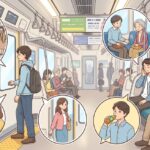
A step-by-step train etiquette guide for Japan, from platform lines and boarding to calls, luggage, priority seats, rush hour, delays, and useful Japanese.