Trash at a hotel is usually simple: use the room bin or ask the front desk. A short-term apartment, Airbnb, guesthouse, or home stay can be different because you may be using a residential collection system. The nearest pile of bags is not automatically the correct place for your waste.
Use This Order of Authority
- Instructions from your host or accommodation.
- Rules posted in the building or trash room.
- The municipality’s guide and collection calendar.
These sources should normally agree, but they answer different questions. A municipality defines collection categories and days; a building may control which collection point residents use and when its trash room opens; a host may ask guests to leave sorted bags inside at checkout.
General online advice cannot tell you which cage, room, or street corner belongs to your accommodation. If the house manual is unclear, ask before putting anything outside.
At Check-In: Find Four Pieces of Information
- Which indoor bins or bags are used for food waste, containers, and bottles or cans?
- Where should full bags be kept during the stay?
- May guests use the building’s collection point, or should trash remain inside?
- What should happen at checkout?
Take a photo of the relevant page in the house manual or save the host’s message. This is a practical record of the instruction; it is not a substitute for asking when an unusual item is involved.
During the Stay: Sort Only as Instructed
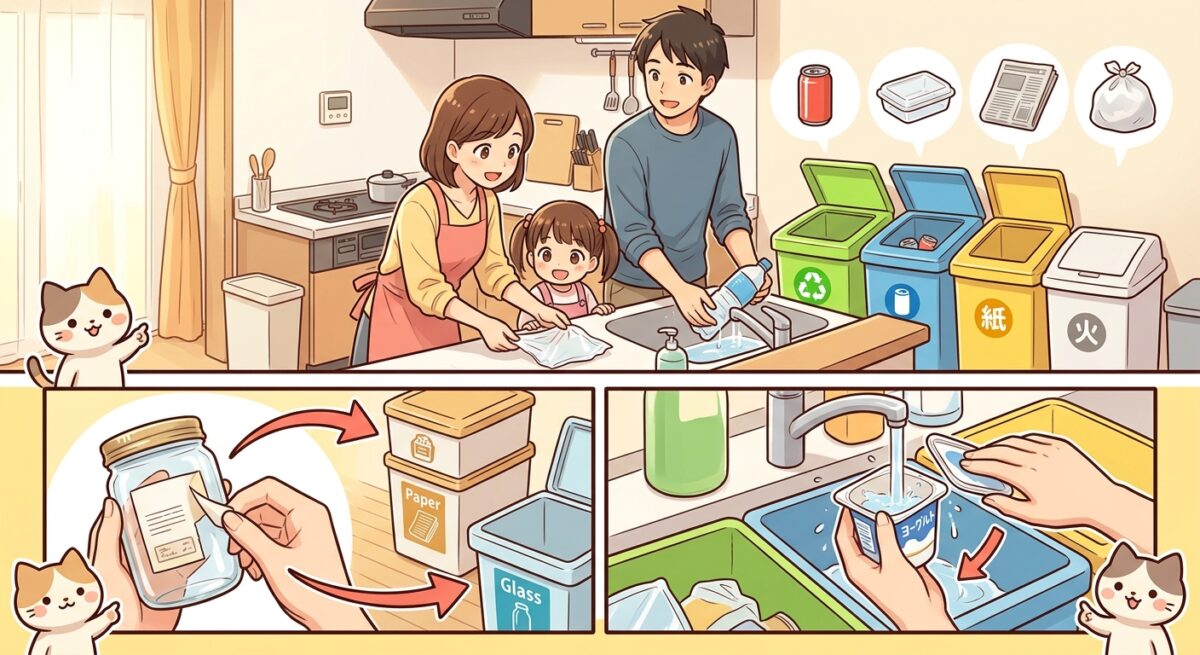
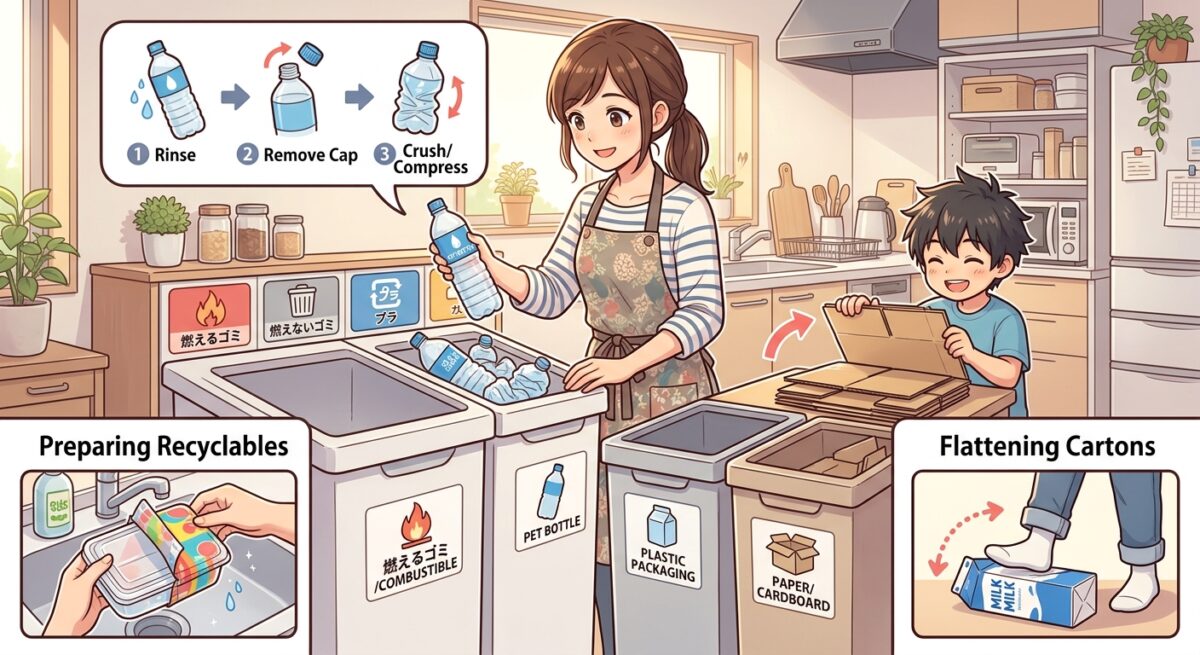
Common labels may include burnable waste, non-burnable waste, PET bottles, cans, glass bottles, paper, and plastic packaging. The exact categories and preparation steps vary by municipality. For example, one area may collect some plastic as a resource while another treats a similar item differently.
Use separate small bags if the accommodation asks for them, but do not redesign the host’s system based on rules from another city. Rinse or empty containers when instructed, close bags to control odors, and keep food waste inside until the permitted disposal time.
Do Not Assume a Nearby Collection Point Is Public
Residential collection points may be assigned to a particular building, block, or neighborhood group. Using the closest point without permission can place the waste in the wrong management area even if your sorting is otherwise correct.
If you cannot confirm the correct location, keep the bag inside and contact the host. Do not leave it beside a full cage, on the sidewalk, near a vending machine, or at a station bin.
Checkout: Follow the Host’s Final Instruction
| Instruction | Safe action |
|---|---|
| “Leave trash in the room” | Separate it as requested and leave it in the stated place. |
| “Use the building trash room” | Confirm the room, access method, bag rules, and permitted time. |
| “Put it out on collection day” | Confirm the category, date, time, and exact collection point. |
| No clear instruction | Message the host; do not guess or copy neighboring bags. |
A useful message is: チェックアウトのとき、ごみはどこに置けばいいですか? (Chekkuauto no toki, gomi wa doko ni okeba ii desu ka?) — “Where should I leave the trash at checkout?”
Items That Need a Separate Answer
Do not place suitcases, umbrellas, batteries, spray cans, broken glass, electronics, furniture, or large cardboard boxes into an ordinary bag without confirmation. Bulky-waste thresholds and hazardous-item procedures differ. A host may charge for an abandoned suitcase or need time to arrange municipal or commercial collection.
If you bought an item from a shop and immediately need to discard packaging, ask whether the shop can accept it. Acceptance is a store policy, not a general right. A vending-machine recycling box is for empty beverage containers, not mixed travel waste.
If Your Stay Becomes a Move
This article is for temporary accommodation. If you have a resident address and are responsible for regular household collection, use our first-week trash setup for new residents. For waste while sightseeing, see the traveler guide to trash bins in Japan.
Short-Term Stay Checklist
- Read the host and building instructions before the first bag is full.
- Keep the correct collection point private to the accommodation; do not assume nearby means available.
- Ask how checkout trash should be handled.
- Confirm large, sharp, pressurized, battery-powered, or liquid items separately.
- Keep written instructions until checkout is complete.
Two Common Questions
Can I leave trash in the apartment if collection day is after checkout?
Only according to the host’s instructions. Many hosts prefer guests to leave sorted bags inside, but that is not universal.
Can I use a convenience-store bin for accommodation trash?
Do not take a bag of accommodation waste to a store. Store bins, when available, are managed for that store’s customers and displayed categories. Ask the host how to handle the bag.