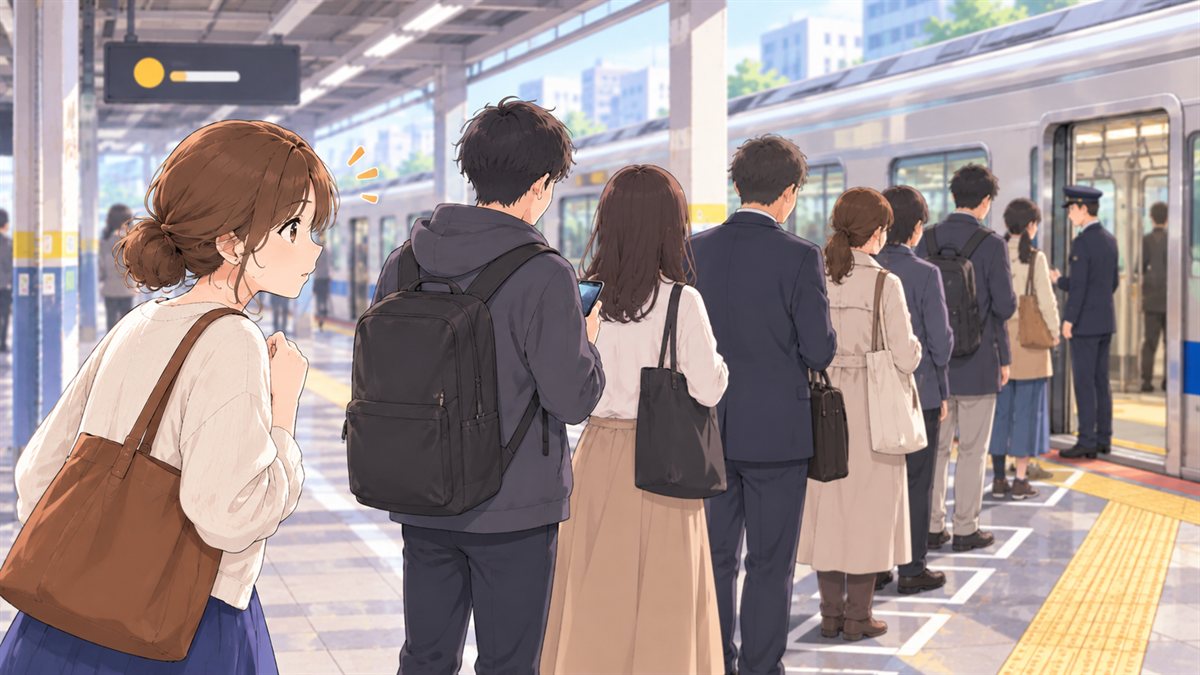
You arrive at a restaurant, clinic, ticket counter, or bus stop in Japan and see several people nearby—but no obvious line. Joining the nearest group can be a mistake. The place may use a paper waiting list, a numbered ticket, an electronic screen, or an order that regular users already understand.
This guide is for that specific problem: how to identify the waiting system, find the last person, and recover politely if you misunderstand it. For a broader place-by-place guide, see where to queue in common situations in Japan.
A Five-Second Check Before You Join
- Look down: Check for floor arrows, footprints, colored lines, or a mark labeled with the end of the line.
- Look near the entrance or counter: A clipboard, touchscreen, ticket dispenser, or QR-code notice may control the order.
- Look up: A screen may show ticket numbers, names, reservation times, or separate service categories.
- Watch one turn: If time allows, see whether the next person is called by position, name, or number.
- Ask before moving ahead: A short question is safer than assuming that nearby people are not waiting.
Do not block a doorway, ticket gate, stairs, or a narrow walkway while you inspect the system. Move to the side, then check the signs.
The Queue May Not Be a Standing Line
| What you see | What it may mean | What to do |
|---|---|---|
| People standing loosely near an entrance | They may be waiting in arrival order, waiting for names to be called, or waiting for companions | Check for a list or ask whether this is the line |
| A clipboard or tablet | The facility may use a name and party-size list | Register first; standing nearby alone may not secure a place |
| A small ticket machine | The order may be controlled by numbered tickets | Take one ticket per party if the instructions say so, and watch the display or listen for the number |
| Several colored floor lines | Different services, train types, or counters may use different queues | Match your destination, service, or reservation to the correct sign |
| No visible system | The last person may be around a corner or keeping a walkway open | Trace the line from the service point backward or ask staff |
Four Situations That Commonly Look Unclear
Restaurants and Cafes
Some restaurants use a visible line, while others ask guests to enter a name and party size on paper or a touchscreen. A ramen shop may require a meal ticket before or after joining the line; the sequence depends on the shop. Check the entrance notice before deciding where to stand.
Clinics, Service Counters, and Ticket Offices
A numbered ticket may control the order even when customers are sitting in different places. Keep the ticket and watch the display. If separate buttons exist for different services, confirm which one applies before taking a number.
Bus Stops and Taxi Stands
The first waiting person may stand beside rather than directly under the sign to leave room for boarding or pedestrians. At a designated taxi stand, follow its lane and staff guidance. Do not assume that a person standing away from the curb has given up their place.
Events and Reservation Entrances
There may be separate lines for ticket purchase, security, timed entry, same-day visitors, or people who already have a QR code. The shortest line is not necessarily the correct one. Confirm the sign before joining.
People Near the Service Point May Not Be in Your Line
Someone near a counter may be filling in a form, waiting for a companion, collecting an order, or asking a question. Conversely, a person sitting away from the counter may already hold a numbered ticket. Physical distance from the service point does not always show turn order.
Use visible evidence—the floor mark, list, ticket, screen, or staff instruction—before deciding who is next. When the evidence is unclear, ask rather than trying to negotiate the order through gestures alone.
Joining, Leaving, and Returning
| Situation | Safer action |
|---|---|
| Your companion arrives after you | Check the facility rule. At a busy entrance, it may be safer for the group to join together at the back rather than have several people enter midway. |
| You need to leave briefly | Tell your companion or ask staff first. A ticket or waiting-list entry may preserve the order, but a standing line may not. |
| A child or person needing assistance joins a companion | Allow space and follow staff direction. Accessibility or safety handling is not the same as casual cutting. |
| Staff move people to another lane | Follow the new instruction even if it changes the visible order; the facility may be managing capacity or safety. |
| You are unsure whether your place is still valid | Show the ticket or reservation and ask staff instead of stepping directly to the front. |
Rules for saving a place are facility-specific -- do not present one person holding a place for a large group as a generally accepted practice at every venue.
If You Accidentally Cut In
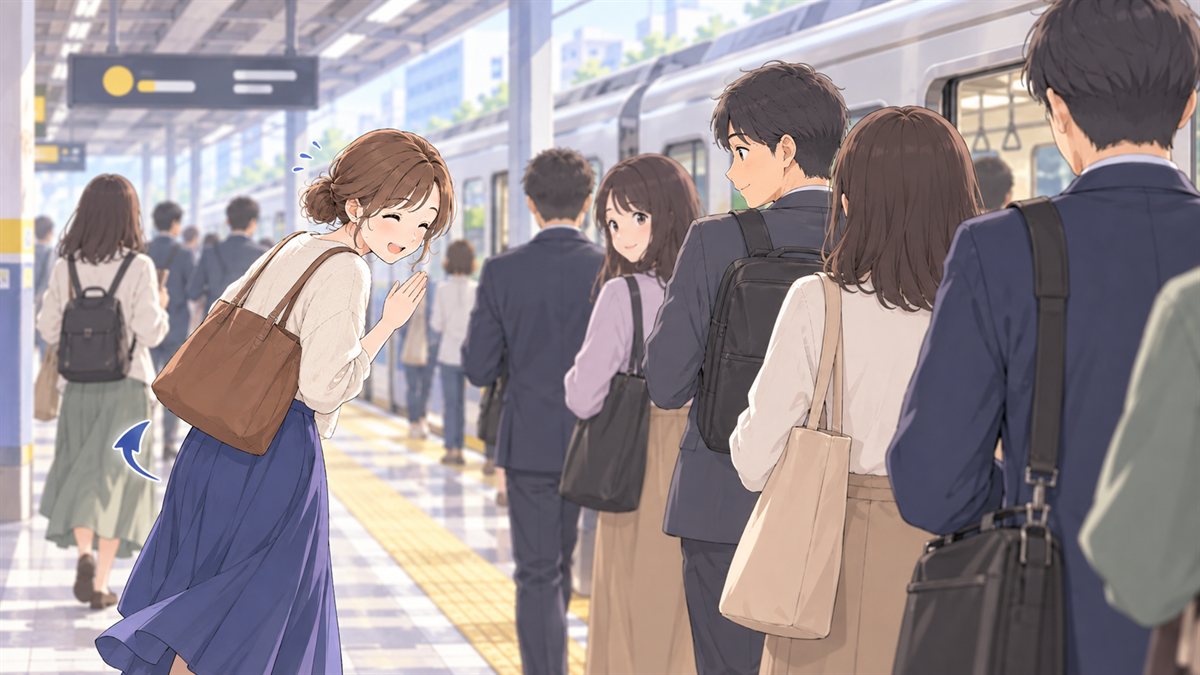
- Stop when someone points out the line or when you notice the mistake.
- Say sumimasen and move to the actual end.
- If the system uses a list or ticket, register correctly rather than arguing from where you were standing.
- If a staff member redirected you, explain briefly and follow the staff member’s current instruction.
A short correction is usually clearer than a long explanation. Do not invent a rule based on one person’s reaction; the facility’s signs and staff instructions are the safer source.
Useful Japanese Phrases
| Japanese | Romanization | English |
|---|---|---|
| これは列ですか? | Kore wa retsu desu ka? | Is this a line? |
If speaking is difficult, show your ticket or reservation screen and point to the line while asking. Staff may answer with a gesture, a number, or a different waiting location.
Official References
- JNTO: Japanese Manners Do’s and Don’ts — general guidance to observe signs, local arrangements, and orderly station behavior.
- Tokyo Metro: Before Getting on the Subway — official boarding-flow and platform-safety guidance.
- Tokyo Disney Resort: Requests When Entering the Park — a facility-specific example concerning place-saving and parties waiting together.