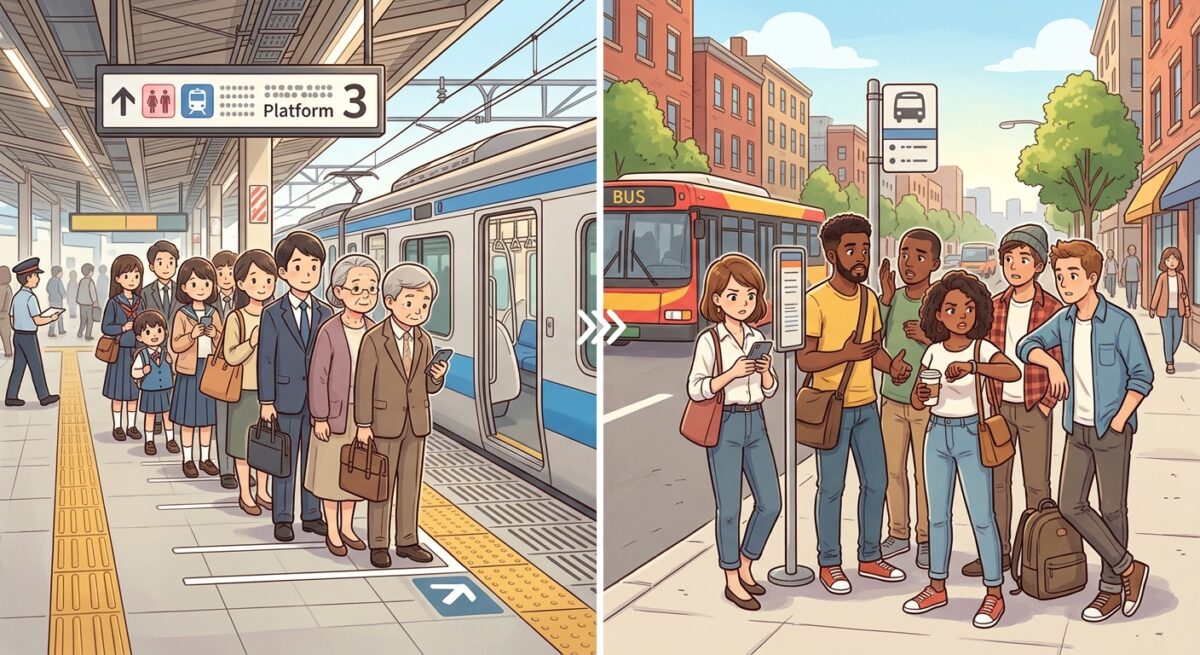
There is no single queueing rule that works at every station, restaurant, shop, and event in Japan. A train platform may use painted door positions; a restaurant may use a waiting list; a clinic may issue a numbered ticket; and an attraction may divide visitors by reservation type.
The practical skill is to read the local system before joining: look for signs, floor marks, ropes, tickets, screens, and staff instructions. This guide explains what to check in common places and which apparent exceptions should not automatically be treated as cutting in.
The Main Rule: Read the System, Not a Stereotype
Do not assume that every line will be single-file, silent, or visually neat. Crowd level, building layout, accessibility needs, and facility policy can change how people wait. Use this order of evidence:
- Current staff instructions and safety directions
- Facility signs, ropes, floor markings, and reservation categories
- Tickets, waiting lists, and display numbers
- The visible order of people already waiting
- A polite question when the system remains unclear
If there is no visible line at all, use our focused guide to find your place when a queue is unclear.
Queueing by Place: A Quick Decision Table
| Place | First thing to check | Common mistake |
|---|---|---|
| Train platform | Door position, train type, and floor line | Standing in the exit space or using the wrong service line |
| Bus stop | Stop sign, painted waiting area, and boarding method | Blocking the sidewalk or assuming every region boards the same way |
| Taxi stand | Designated lane and staff direction | Approaching a taxi ahead of people already in the stand |
| Convenience store or shop | Shared-line floor mark versus separate register lines | Walking directly to a newly opened register |
| Restaurant | Name list, ticket machine, reservation lane, or outdoor line | Waiting outside without registering |
| Theme park or event | Ticket type, entry time, security, and staff signs | Joining the longest visible line without checking its purpose |
| Temple or shrine | Ropes, one-way route, and any event-day instructions | Confusing a photo queue with an admission or worship route |
| Elevator | People already waiting and space needed to exit | Standing directly in front of the doors |
Train Platforms: Door Marks and Alighting First
At many urban stations, markings show where each train door is expected to stop. Different colors or numbers may correspond to different train types or boarding patterns, so confirm that you are using the marks for your service.
Wait behind the warning blocks and leave the door area open when the train arrives. Let passengers get off before boarding. Tokyo Metro’s official guidance also warns against rushing onto a train. If staff temporarily change the line during congestion, follow the current instruction rather than returning to an earlier floor position.
Keep suitcases beside you rather than across the queue or exit path. For behavior after boarding, see our guide to train etiquette in Japan.
Buses and Taxis: Local Operation Matters
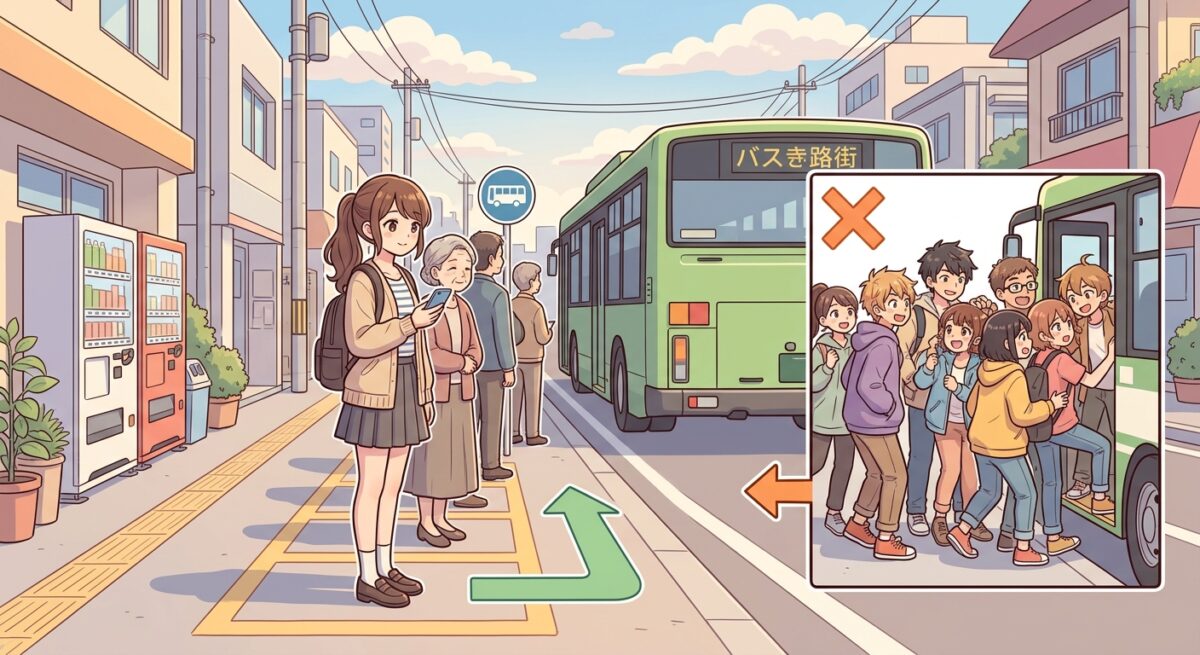
Bus boarding and payment methods vary by operator and area. Some stops have a clear painted line; others have only a sign and an informal order. Wait without blocking pedestrians, allow passengers to get off, and follow the door and payment instructions shown for that service.
At a taxi stand, join the designated line and use the next vehicle directed to you. Away from a stand, local pickup rules may differ. Do not step into traffic or treat a passenger drop-off point as an automatic boarding queue.
Shops, Convenience Stores, and Service Counters
A shop may use one shared line for several registers or separate lines for each register. Floor arrows or a sign near the back of the waiting area usually show which system applies. If another register opens, wait for staff to call the next person rather than racing across from the side.
At pharmacies, clinics, government counters, and ticket offices, a numbered ticket may replace the physical line. Check whether the screen separates services and keep your ticket until the transaction is complete.
Restaurants: Line, List, Ticket, or Reservation
Before joining people outside a restaurant, check for a paper list, touchscreen, meal-ticket machine, reservation entrance, or instructions about when the full party must be present. Systems vary even between branches of the same type of restaurant.
If your name or number is called while you are away, staff may move to the next party. Ask what to do when registering. Do not assume that leaving a bag at the entrance holds a place.
Theme Parks, Events, and Temples
Large venues can run separate lines for security, ticket sales, reserved entry, same-day entry, merchandise, food, and individual attractions. Read the line label before committing to a long wait. Staff may reroute a line to protect an emergency route or control crowd capacity.
Rules on joining companions and saving places are facility-specific. Tokyo Disney Resort, for example, asks the whole party to wait together at the entrance and says not to use belongings for place-saving. Do not extend that exact rule to every venue; check the current rule where you are.
At temples and shrines, a line may form for admission, a special viewing, a stamp, or a specific worship point. Other visitors may simply be moving through the grounds. Follow ropes and temporary signs, especially during festivals and seasonal events.
Elevators, Escalators, and Moving Areas
For elevators, stand to the side so passengers can exit, then board in waiting order. Wheelchair users, people with strollers, and others who need an elevator may be given priority or directed by staff. That is an accessibility arrangement, not queue cutting.
An escalator is a moving route, not usually a queue for a service. Stand securely, hold the handrail when needed, and follow current signs. Local standing customs differ and safety campaigns may ask passengers not to walk. Do not stop at the landing to check a phone or reorganize luggage.
Common Exceptions and Apparent Cutting
- Staff-directed movement: A person may be returning to a lane or counter after being instructed to move.
- Timed reservations: A later arrival may have a different appointment or entry category.
- Priority and accessibility: Facilities may assist disabled visitors, older people, pregnant passengers, or families with small children through a different route.
- Order collection: Someone approaching a counter may be collecting a prepaid item rather than joining the purchase line.
- Numbered tickets: A seated person whose number is called may be ahead of everyone standing nearby.
- Temporary lane changes: Staff may merge or split lines for safety or capacity.
If someone appears to cut in, first check whether staff have directed them or whether they hold a different ticket. If the order affects you and remains unclear, ask staff instead of confronting the person. For broader public-space behavior, read our guide to public manners in Japan.
Before You Join: Practical Checklist
- Confirm what the line is for.
- Find the actual end, even if it curves or leaves a walkway open.
- Check for a waiting list, ticket machine, display number, or reservation category.
- Keep doors, gates, stairs, tactile paving, and pedestrian routes clear.
- Let people exit vehicles and elevators first.
- Keep luggage with you and out of the moving path.
- Do not assume a companion can join later; check the facility rule.
- Allow staff to manage accessibility, safety, and capacity exceptions.
- If uncertain, ask staff or use a short confirmation phrase.
Useful Japanese Phrases
| Japanese | Romanization | English |
|---|---|---|
| 最後尾はどこですか? | Saikōbi wa doko desu ka? | Where is the end of the line? |
| ここに並べばいいですか? | Koko ni narabeba ii desu ka? | Should I line up here? |
| この列で合っていますか? | Kono retsu de atte imasu ka? | Is this the correct line? |
| 整理券は必要ですか? | Seiriken wa hitsuyō desu ka? | Do I need a numbered ticket? |