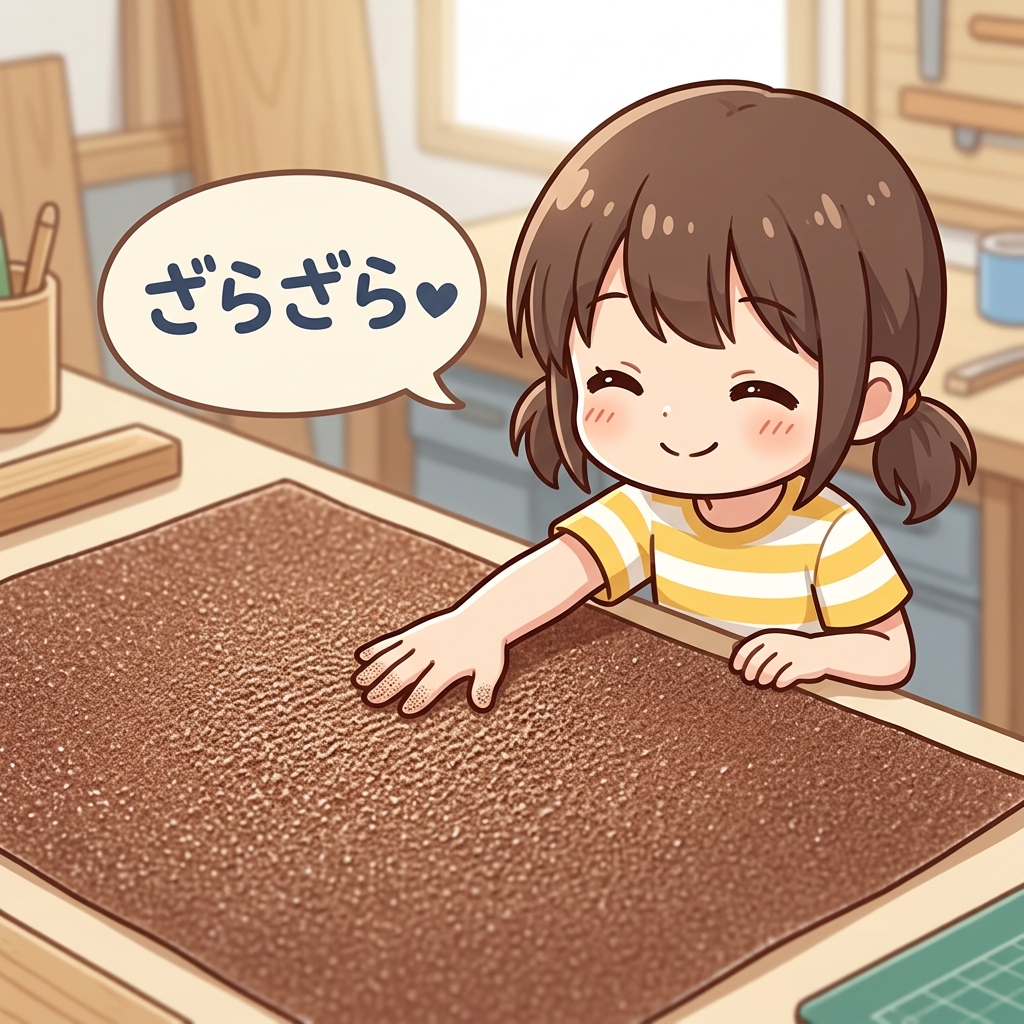
Ever struggled to describe that rough feeling of a sandy beach or a coarse fabric in Japanese? You're not alone. Many learners find themselves searching for the right words to convey textures, but mastering expressions like ざらざら (zarazara) can instantly elevate your fluency and make your conversations much more vivid. Learn to naturally describe rough and gritty textures in Japanese, making your conversations more vivid and native-like, even in casual settings. Imagine surprising a native speaker with your nuanced description – that's the power of learning onomatopoeia like this, turning everyday observations into fluent Japanese.
What This Word Really Feels Like
At its core, ざらざら (zarazara) is a powerful Japanese onomatopoeia that describes a distinct tactile sensation: rough, coarse, or gritty texture. Think of the feeling of fine sand between your fingers, the abrasive surface of sandpaper, or even the dry, slightly uneven texture of certain fabrics. It's a word deeply connected to your sense of touch, often felt with your hands or feet. Beyond just texture, it can also subtly suggest the sound or sensation of something moving or being rubbed against such an abrasive surface, like gravel crunching underfoot.
How It Works in Context
The most common and natural way to use ざらざら (zarazara) is by adding the verb suru (する), forming ざらざらする (zarazara suru). This translates to 'to feel rough/gritty' or 'to be rough/coarse'. For instance, if your hands feel dry and rough, you'd say 『手がざらざらする』 (te ga zarazara suru). You can also use it with shita (した) to create an adjective, as in 『ざらざらした手』 (zarazara shita te - rough hands) or 『ざらざらした道』 (zarazara shita michi - a rough road). This versatility makes it incredibly useful for describing everyday textures, allowing you to express subtle sensory details that go beyond simple adjectives.
💬 Native Speaker Tip:
When describing a texture you can feel with your hands or feet, adding '...suru' (ざらざらする) is very natural. For example, 『この布、ざらざらするね』 (Kono nuno, zarazara suru ne - This fabric feels rough, doesn't it?).
Natural Usage Scenes
Let's explore common scenarios where ざらざら (zarazara) shines, helping you sound more native:
- Sandy Beaches: After a fun day at the coast, your feet might feel distinctly ざらざら (zarazara) from the sand. It perfectly captures that gritty residue that clings to your skin, even after a quick rinse. This is a classic scenario where ざらざら (zarazara) is indispensable. For example, you might say, 『ビーチの後、足の裏が砂でざらざらするね!』 (Biichi no ato, ashi no ura ga suna de zarazara suru ne! - After the beach, the soles of my feet feel gritty with sand!).
- Rough Fabrics: Certain textiles, like unrefined linen, burlap, or some wools, can have a ざらざら (zarazara) texture that's not smooth to the touch. This term is ideal for describing clothing or upholstery that feels coarse against the skin, perhaps even slightly irritating. You could comment, 『このセーター、ちょっとざらざらするね』 (Kono seetaa, chotto zarazara suru ne - This sweater feels a bit rough, doesn't it?).
- Dry Skin: In colder months or with certain skin conditions, your skin might feel dry and ざらざら (zarazara), lacking its usual smoothness. This is a common way to describe chapped hands or rough elbows. For instance, 『冬は手が乾燥してざらざらする』 (Fuyu wa te ga kansou shite zarazara suru - In winter, my hands get dry and feel rough).
- Gravel Paths: Walking on a path covered in small stones or gravel often creates a ざらざら (zarazara) sensation under your shoes, sometimes accompanied by a subtle sound. It's the perfect word to describe that uneven, slightly abrasive ground. You might say, 『この道、石が多くて足元がざらざらする』 (Kono michi, ishi ga ookute ashimoto ga zarazara suru - This path has a lot of stones, so it feels gritty underfoot).
- Old Surfaces: An old, unvarnished wooden table, a weathered stone wall, or even a rough concrete surface can also be described as ざらざら (zarazara) due to its uneven, worn surface. This applies to anything that has lost its smoothness over time or was never smooth to begin with. For example, 『この壁、触るとざらざらしてる』 (Kono kabe, sawaru to zarazara shiteru - This wall feels rough when you touch it).
Mastering ざらざら (zarazara) allows you to go beyond simple adjectives and paint a more vivid picture in your Japanese conversations. Imagine telling a friend about your beach trip and effortlessly describing your sandy feet, impressing them with your nuanced fluency – that's the kind of natural communication you'll achieve!

A Common Learner Mistake
⚠ Avoid This Pitfall:
A frequent mistake is trying to use ざらざら (zarazara) as a standalone adjective directly before a noun without a connecting particle or verb. While you can say 『ざらざらした手』 (zarazara shita te - rough hands), it's often more natural and common to use the verb form: 『手がざらざらする』 (te ga zarazara suru - my hands feel rough). Remember that onomatopoeia often needs a verb like suru to function grammatically in a sentence.
How to Remember It
To help ざらざら (zarazara) stick in your memory, try associating it with a strong sensory image. Picture dragging a piece of sandpaper across wood, or the sound and feel of walking barefoot on a coarse, gravelly path. The repeated 'za-ra' sound itself has a slightly rough, repetitive quality that mirrors the texture it describes. The 'z' sound can also evoke a slightly abrasive, buzzing sensation, reinforcing the feeling of roughness.
Related Expressions
To further enhance your descriptive vocabulary, here are a few related expressions:
| Japanese | Romaji | Meaning |
|---|---|---|
| つるつる | tsurutsuru | Smooth, slippery |
| がさがさ | gasagasa | Dry, rustling (e.g., dry leaves, dry skin) |
| ごつごつ | gotsugotsu | Bumpy, rugged, lumpy |
Hear ざらざら (zarazara) in Context
Play the audio and listen to how the examples sound in Japanese.
Japanese: 海で遊んだ後、足の裏が砂でざらざらする。
English: After playing at the beach, the soles of my feet feel gritty with sand.
Japanese: この古い木製のテーブルは表面がざらざらしている。
English: This old wooden table has a rough surface.
Frequently Asked Questions
Can ざらざら (zarazara) describe sounds as well as textures?
While primarily tactile, ざらざら (zarazara) can indeed evoke a subtle auditory sensation. It can describe the sound associated with rubbing against a rough surface, such as the rustling of coarse fabric or the faint crunch of fine gravel underfoot. The sound is usually secondary to the primary tactile meaning, but it contributes to the overall sensory experience.
Is ざらざら (zarazara) always used in a negative context?
Not necessarily. While 'rough' or 'gritty' might sometimes imply an undesirable quality (like dry skin), ざらざら (zarazara) is fundamentally descriptive. It can be neutral when simply stating a texture, such as describing the natural feel of a certain type of paper or a stone surface. Its connotation depends heavily on the context and the speaker's intent, rather than being inherently negative.