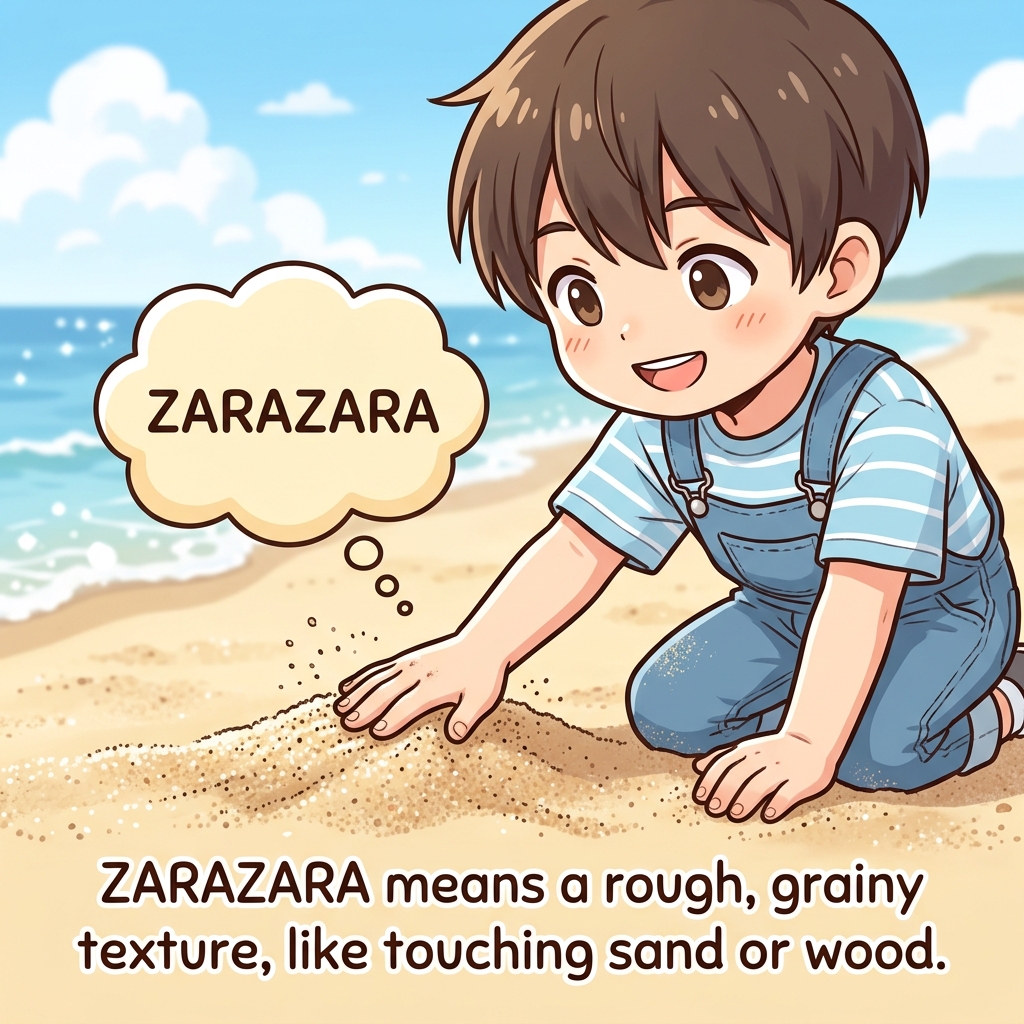
Imagine you are in Japan, exploring an old temple or walking along a sandy beach. You want to describe the rough texture of a stone wall, the gritty feeling of sand under your feet, or dry skin that no longer feels smooth. In Japanese, ざらざら (zarazara) is a very natural word for this kind of rough, grainy, or gritty texture.
Learning ざらざら (zarazara) is not just about memorizing a translation. It helps you describe texture in a vivid, sensory way. Instead of simply saying something is “rough,” you can make the listener almost feel the uneven surface or gritty sensation.
What This Word Really Feels Like
ざらざら (zarazara) describes a rough, coarse, grainy, or gritty feeling. It often refers to a surface that is not smooth because it has tiny bumps, particles, dryness, or unevenness. Think of sandpaper, unpolished wood, dry skin, a stone wall, or sand on your feet.
The word is especially useful when touch is important. It does not just label something as rough; it gives a tactile impression. You can use it for things you touch with your hands, feel under your feet, or even sense in your mouth when food has a grainy texture.
How It Works in Context
Like many Japanese onomatopoeia, ざらざら (zarazara) is flexible. You will often see it in these common patterns:
- With する (suru): Use ざらざらする (zarazara suru) when something feels rough or gritty. For example, 手がざらざらする (te ga zarazara suru) means “my hands feel rough.”
- With している (shite iru): Use ざらざらしている (zarazara shite iru) to describe the current texture of something. For example, この壁はざらざらしている (kono kabe wa zarazara shite iru) means “this wall is rough.”
- Before a noun: You can say ざらざらした砂 (zarazara shita suna) or ざらざらな砂 (zarazarana suna) for “gritty sand.” In many everyday contexts, ざらざらした sounds very natural because it describes the texture as a felt quality.
These patterns will help you use ざらざら naturally in conversation.
Hear ざらざら (zarazara) in Context
Play the audio and listen to how the examples sound in Japanese.
Japanese: この石の壁は手で触るとざらざらしているね。
English: This stone wall feels rough to the touch, doesn’t it?
Japanese: 砂浜を裸足で歩くと、足の裏がざらざらする。
English: When you walk barefoot on the sandy beach, the soles of your feet feel gritty.
Natural Usage Scenes
Here are some real-life situations where ざらざら (zarazara) sounds natural:
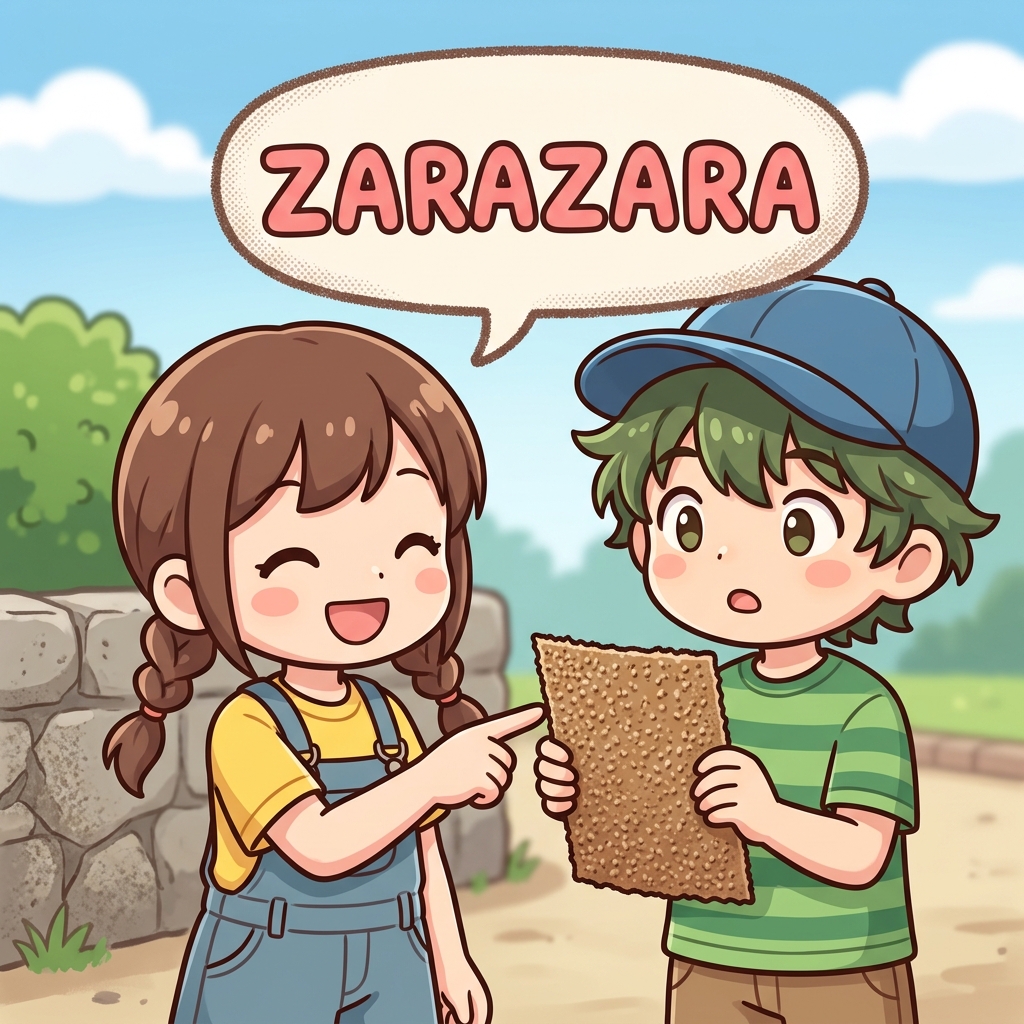
- Describing surfaces: An old stone wall, unpolished wood, concrete, or rough paper can be described as ざらざらしている.
- Skin conditions: If your skin feels dry and rough, especially in winter, you can say 肌がざらざらする (hada ga zarazara suru).
- Sand and gravel: Sand under your feet, a gravel path, or tiny particles on a surface can create a ざらざら feeling.
- Food textures: Some foods can feel ざらざら if they are grainy or coarse, such as unrefined sugar, some crackers, or a poorly mixed powdery drink.
Mastering these contexts will help you describe texture more naturally and vividly in Japanese.
A Common Learner Mistake
A common mistake is relying only on general adjectives like 粗い (arai - coarse/rough) when ざらざら (zarazara) would express the texture more vividly. 粗い can be correct in many contexts, especially when talking about something coarse, rough, or not fine. However, ざらざら is better when you want to focus on the actual feeling of a gritty or uneven surface.
Common Mistake:
Do not treat ざらざら (zarazara) as just another word for “bad” or “dirty.” It mainly describes texture. The feeling may be unpleasant in some cases, like dry skin or sand in your shoes, but the core meaning is rough, grainy, or gritty.
How to Remember It
To remember ざらざら (zarazara), imagine running your hand over a rough brick wall or feeling coarse sand between your fingers. The repeated sound of ざらざら can feel a little rough and scratchy, which matches the texture it describes.
Usage Tip:
Use ざらざらする when something feels rough, and ざらざらしている when you are describing its current texture. Before a noun, ざらざらした is very useful, as in ざらざらした壁 (a rough wall) or ざらざらした砂 (gritty sand).
Related Texture Expressions
While ざらざら (zarazara) describes rough or gritty textures, other Japanese onomatopoeia describe different tactile sensations:
| Japanese | Romaji | Meaning |
|---|---|---|
| つるつる | tsurutsuru | Smooth, slippery |
| もちもち | mochimochi | Chewy, springy, often for food |
| ふわふわ | fuwafuwa | Fluffy, soft, airy |
Frequently Asked Questions
Is ざらざら (zarazara) only used for physical objects?
Mostly, yes. ざらざら (zarazara) is mainly used for physical textures, such as sand, walls, skin, paper, or food texture. It can also describe a voice that sounds rough or husky, as in ざらざらした声, but this is an extension of the rough-texture image. The core meaning is still rough, grainy, or not smooth.
Can ざらざら (zarazara) be used for food?
Yes. ざらざら (zarazara) can describe food that has a coarse, grainy, or gritty texture in the mouth. For example, unrefined sugar, some crackers, powdery mixtures, or poorly blended sauces might feel ざらざら. It describes the mouthfeel, not the taste itself.