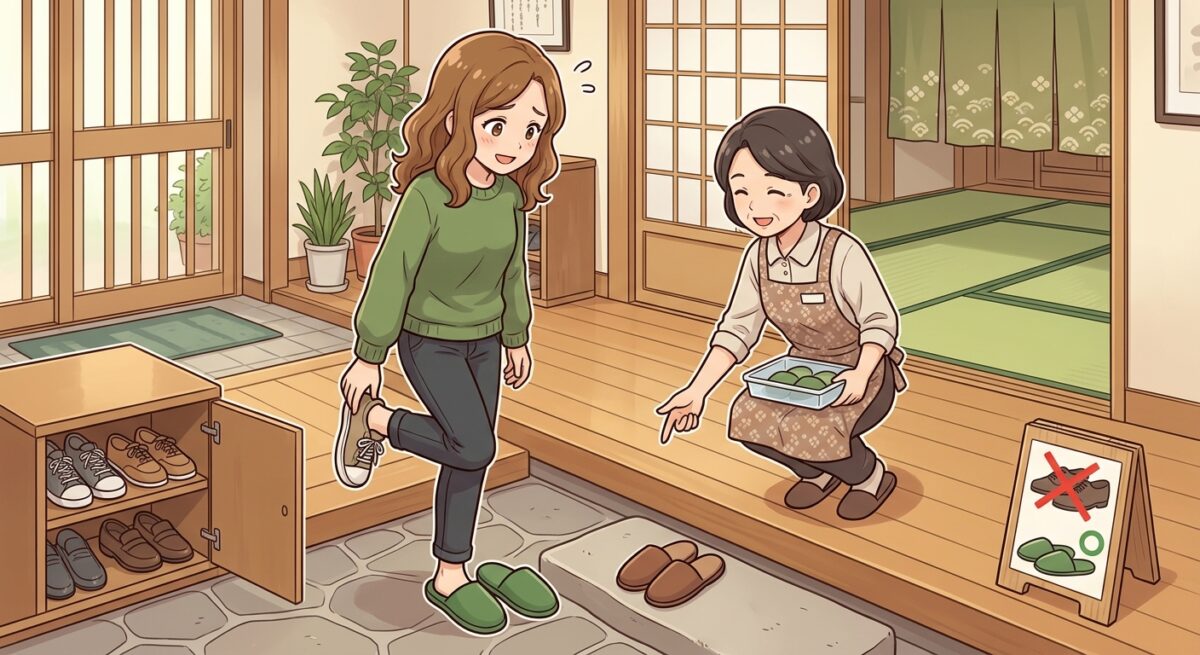
In Japan, shoe rules are not limited to private homes. Visitors may also need to remove shoes in public or semi-public places such as temples, shrines, ryokan, schools, clinics, small museums, traditional buildings, and rooms with tatami mats.
The rule is not the same everywhere. Some facilities allow shoes in most areas but ask visitors to remove them in one room. Others provide slippers, shoe lockers, plastic bags, or signs near the entrance. The practical skill is learning how to read the space before stepping in.
Reviewed by: Why Japan Editorial Team
Last updated: May 2026
Quick Answer
Remove your shoes in public places when you see a clear shoe-removal area, shoe lockers, indoor slippers, raised flooring, tatami mats, or a sign asking visitors to take off shoes. If there is no sign, no shoe shelf, and everyone is walking normally with shoes, you usually keep your shoes on. When unsure, pause at the entrance and ask staff before stepping forward.
Why Public Shoe Rules Can Be Confusing
Public shoe rules in Japan can be confusing because they often apply only to certain rooms or areas, not the entire building. A museum may allow shoes in most exhibition areas but require shoe removal in a restored house. A temple may allow shoes outdoors but not inside a wooden hall. A clinic may allow shoes in one area but ask visitors to change into slippers in another.
This is why visitors should not think of the rule as simply “shoes off everywhere” or “shoes on everywhere.” The correct answer depends on the facility, the room, the floor type, and the signs at the entrance.
A Note from Japan
In Japan, shoe rules are often about the boundary between outside and inside. Public places that use tatami, wooden floors, treatment rooms, or traditional spaces may treat shoe removal as part of keeping the area clean and respectful. If you slow down for a moment and look for slippers, lockers, signs, and floor levels, you can usually understand what to do without stress.
How to Recognize a Shoe-Removal Area
Many Japanese facilities make the rule visible before you enter the clean indoor area. Look for these signs:
- A step up from the entrance floor
- Shoe shelves or shoe boxes
- Coin lockers or numbered shoe lockers
- Rows of slippers near the doorway
- A sign saying “Please remove your shoes”
- Tatami mats beyond the entrance
- Other visitors changing footwear
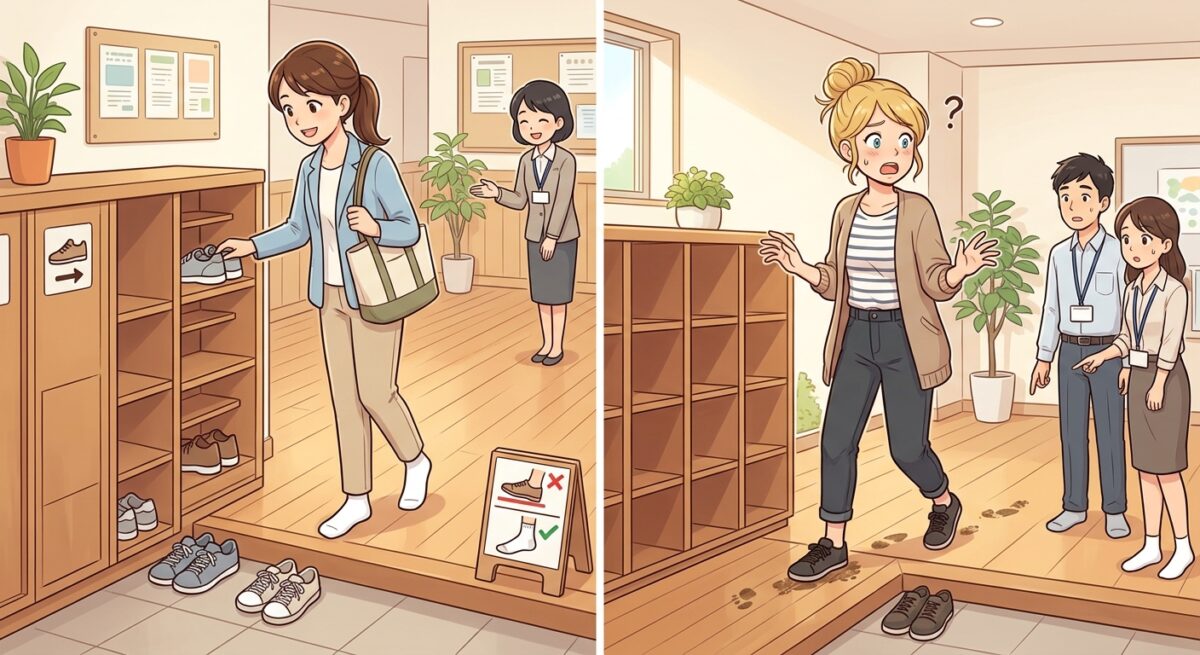
The lower entrance area is usually where outdoor shoes stay. Step out of your shoes there, then move onto the raised or clean floor without putting your socks back onto the shoe area.
What to Avoid
Do not walk past shoe shelves, slippers, or a raised entrance without checking the rule. If the facility has a clear shoe-removal setup, outdoor shoes should usually stay at the entrance.
Temples, Shrines, and Traditional Buildings
Outdoor areas of temples and shrines usually allow shoes. However, inner halls, prayer halls, historic buildings, and special viewing areas may require visitors to remove shoes.
Look for signs near the hall entrance. Staff may provide a plastic bag so you can carry your shoes, or there may be shelves where shoes are placed. In some wooden halls, visitors walk in socks. In others, slippers are provided.
Do not step onto tatami, polished wooden floors, or raised religious spaces with outdoor shoes unless it is clearly allowed.
Ryokan and Traditional Inns
Ryokan usually have clear shoe rules at the entrance. Guests remove outdoor shoes at the genkan and use indoor slippers or walk in socks depending on the property.
Inside the ryokan, you may need to remove slippers before entering your tatami room. Toilet slippers may also be provided in the bathroom or toilet area.
Because each inn has its own layout, follow the staff’s explanation at check-in. If you miss part of the explanation, ask before entering a room with shoes or slippers.
Schools and Public Facilities
Schools, community centers, sports halls, and some public facilities may have strict indoor shoe systems. Visitors may be asked to remove shoes, use guest slippers, or bring indoor shoes.
At schools, shoe lockers are common. In gymnasiums, outdoor shoes may be prohibited to protect the floor. Some events clearly mark separate entrances for outdoor shoes and indoor shoes.
If you are attending a school event, local class, community activity, or public workshop, check the invitation or facility information in advance.
Hospitals, Clinics, and Medical Facilities
Many modern hospitals allow outdoor shoes throughout the building. However, some small clinics, dental clinics, traditional clinics, rehabilitation rooms, or treatment spaces may ask patients to change into slippers.
Look for slippers, shoe shelves, or signs at the entrance. In medical settings, hygiene and safety matter, so follow the facility’s instructions even if the system feels unfamiliar.
If you have mobility concerns, tell staff before changing footwear. They may guide you to a safer option.
Museums, Historic Houses, and Local Archives
Large museums often allow shoes, but small local museums, preserved houses, castles, folk museums, and historic buildings may require shoe removal in certain areas.
Rules may change room by room. One exhibition space may allow shoes, while a tatami room or restored wooden area may not. Watch for signs, barriers, slippers, and staff instructions.
Do not assume that photography permission and shoe permission are connected. A room may allow photos but require socks, or require shoe removal but prohibit photography.
Public Tatami Areas
Tatami mats are a major clue. In public facilities, rest areas, cultural centers, tea rooms, traditional restaurants, or viewing rooms, shoes are usually removed before stepping onto tatami.
Slippers are often removed too. Tatami is commonly entered in socks or bare feet, depending on the facility. If slippers are lined up at the edge of a tatami room, leave them there before entering.
Japan vs Other Countries
In some countries, public buildings usually have one clear rule: shoes stay on. In Japan, the rule may change inside the same facility. A lobby may allow shoes, while a tatami room, treatment room, historic room, or shrine hall may require shoe removal.
Toilet Slippers
Some facilities provide separate toilet slippers. These are used only inside the toilet area. Change into them when entering, and change back to your indoor slippers or socks when leaving.
Accidentally wearing toilet slippers into another room is a common mistake. If it happens, simply return them and apologize briefly. The important thing is to correct it once you notice.
Shoe Boxes, Lockers, and Slipper Signs
Some facilities use open shelves. Others use lockers with keys or numbered tags. If a locker key is provided, keep it with you until you leave.
At busy places, do not leave valuables in shoes or shoe lockers unless the facility clearly provides secure storage. If your shoes are wet, muddy, or bulky, staff may show you a specific place or give you a bag.
If slippers are available in different sizes, choose a pair quickly and move away from the entrance so other visitors can change footwear.
What You Should Do
- Pause at the entrance and look for shoe shelves, lockers, slippers, signs, or raised flooring.
- Follow staff instructions and the behavior of other visitors.
- Remove outdoor shoes before stepping onto tatami, polished wooden areas, or raised indoor floors.
- Use provided slippers only in the areas where they are meant to be used.
- Keep toilet slippers inside the toilet area.
- Wear clean socks when visiting temples, ryokan, schools, or traditional facilities.
- Ask staff if the rule is unclear.
What to Avoid
- Do not walk past shoe shelves or slippers without checking the rule.
- Do not step onto tatami with outdoor shoes or regular indoor slippers.
- Do not wear toilet slippers back into hallways, rooms, or dining areas.
- Do not leave shoes blocking the entrance or walkway.
- Do not assume all hospitals, museums, temples, or public buildings follow the same system.
- Do not enter staff-only or restricted areas to store shoes.
Avoid This
Avoid stepping onto tatami, raised wooden floors, treatment rooms, or traditional indoor spaces while wearing outdoor shoes. If you are unsure, stop before crossing the entrance boundary and ask staff.
Frequently Asked Questions
Do I remove shoes in every public building in Japan?
No. Many public buildings allow shoes. Remove them only when signs, shoe shelves, slippers, raised floors, tatami mats, or staff instructions indicate that you should.
Do I wear slippers on tatami?
Usually no. In many places, slippers are removed before stepping onto tatami. Follow the facility’s signs or staff guidance.
What should I do if I forget and step in with shoes?
Step back, remove your shoes, and continue calmly. A short sumimasen is enough if staff or another visitor notices.
Are toilet slippers used in public facilities?
Sometimes. They are more common in traditional buildings, ryokan, some schools, clinics, and older facilities. If provided, use them only inside the toilet area.
Should I bring clean socks?
Yes, it is a good idea if you plan to visit temples, traditional buildings, ryokan, schools, or facilities with tatami rooms.
How This Article Was Reviewed
This article was reviewed by the Why Japan Editorial Team in May 2026. We checked the guidance for practical usefulness, visitor clarity, and cultural balance. Public shoe rules can vary by facility, room type, building age, staff guidance, region, and floor material, so this guide focuses on common clues and decision points rather than one fixed rule for every public place in Japan.
Final Thoughts: Treat Each Entrance as a Checkpoint
Public shoe rules in Japan are easiest when you treat each entrance as a small checkpoint. Look for lockers, slippers, signs, raised floors, and tatami before walking in.
You do not need to memorize every rule. Just pause, follow the facility’s setup, and ask when unsure. That habit will help you handle temples, ryokan, schools, clinics, museums, and traditional public spaces with confidence.
Key Takeaways
- Public shoe rules often appear at the entrance to a specific room or area, not always at the building entrance.
- Shoe boxes, lockers, slippers, raised floors, and tatami mats are strong clues.
- Temples, shrines, ryokan, schools, clinics, and small museums may have shoe-removal areas.
- Toilet slippers, if provided, should stay inside the toilet area.
- Some public facilities use slippers; others ask visitors to walk in socks.
- If you are unsure, pause and ask staff before stepping forward.
