Seeing many people in masks can feel unusual if public mask use is rare where you live. The easiest mistake is to treat every mask as evidence of illness, a government rule, or a message directed at you. In Japan, it may mean none of those things.
People may wear masks because they have symptoms, want to reduce concern for others, are dealing with seasonal allergies, prefer the extra privacy, or simply find masks familiar. The meaning depends on the person and the setting. This article explains how to read that social context without turning a common practice into a stereotype.
A mask is a clue, not a diagnosis
Japan's national guidance has treated mask use as an individual decision since March 13, 2023. That means two people in the same carriage or shop may make different choices without either person breaking a nationwide rule.
Japan's official tourism guidance also notes that masks are used for reasons including allergies and preventing the spread of germs when someone has symptoms. A covered face therefore does not tell you exactly why a person is wearing a mask. It is better not to ask a stranger whether they are sick or to assume that everyone nearby expects you to copy them.
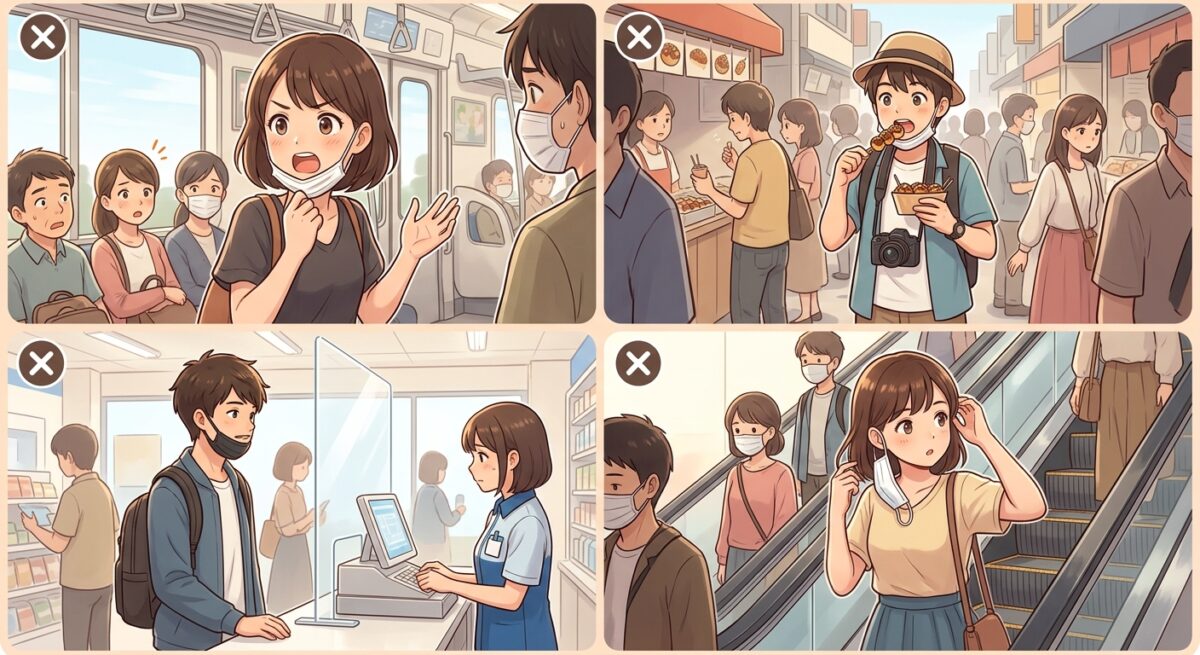
Four common misreadings
| What you notice | Easy assumption | Safer interpretation |
|---|---|---|
| Many masked passengers during the morning commute | “Masks are required on every train.” | Crowding, symptoms, seasonal illness, allergies, and personal preference can all affect the choice. National guidance recommends masks on crowded commuter trains and buses, but it is not a blanket rule for every journey. |
| A clinic asks visitors to wear masks | “Japan has brought back a nationwide mandate.” | Medical and care settings protect people who may be at higher risk. A facility request is specific to that setting. |
| Most people are unmasked at an outdoor attraction | “Masks no longer matter anywhere.” | Outdoor sightseeing and a hospital waiting room are different contexts. The same person may reasonably choose differently later in the day. |
| A shop employee is masked | “Customers are expected to wear one too.” | The employee may be following workplace practice or making a personal choice. Look for a customer-facing sign before drawing a conclusion. |
Why mask use can feel ordinary
Public mask use was visible in Japan before the COVID-19 pandemic. Seasonal allergies, cold symptoms, and concern about passing illness to other people helped make masks a familiar everyday item. Because of that history, a mask can attract less attention in Japan than it might in a place where masks appear only during a health emergency.
This familiarity is sometimes explained with the Japanese idea of omoiyari, or consideration for other people. That idea can be useful, but it should not become a claim that every Japanese person thinks the same way. Some people wear masks for others, some for themselves, and some do not wear one at all. Courtesy also includes respecting a person's reason for wearing or not wearing a mask.
Courtesy does not mean forcing one choice
The Ministry of Health, Labour and Welfare asks people not to force someone to wear or remove a mask against their wishes. This matters because a person's health, age, sensory needs, work, and comfort may not be visible.
- Do not treat an unmasked person as automatically rude when there is no posted requirement.
- Do not pressure a masked person to explain or remove it.
- Do not assume a facility's request applies to every place in Japan.
- Do follow a clear entry condition or staff instruction, or politely choose not to enter.
The cultural skill is not “copy everyone.” It is noticing which decision belongs to the individual and which instruction belongs to the facility.
Two everyday scenes
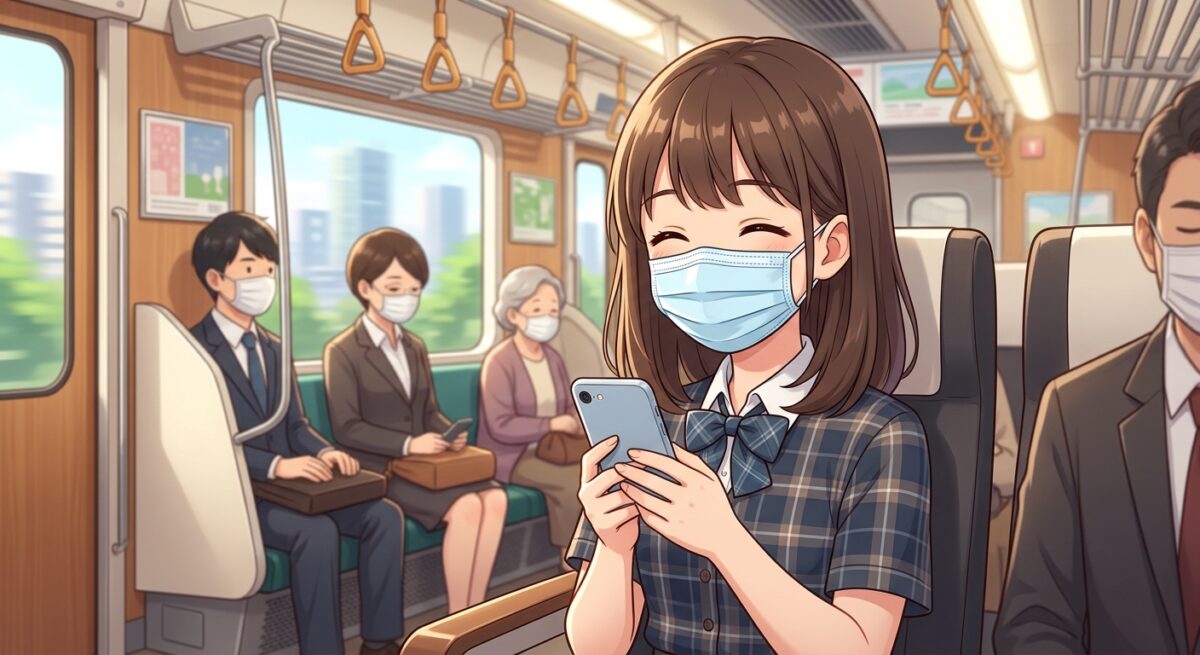
A crowded commuter train
You may see a mixture of masked and unmasked passengers. The national guidance specifically recommends mask use on crowded commuter trains and buses, particularly to protect people at higher risk. That recommendation explains why masks can be more visible at rush hour, but it does not prove that every passenger has the same reason or that every train has an entry rule.
An outdoor sightseeing area
At a park, shrine approach, or open-air shopping street, many people may be unmasked. Others may still wear masks for allergies, symptoms, sun or wind comfort, or personal preference. There is no need to interpret either choice as a statement about you.
What visitors can do instead of guessing
- Separate people from rules. Other visitors' choices are context, not proof of a requirement.
- Check the entrance. A posted request or staff instruction is more reliable than estimating the percentage of masked people.
- Ask one neutral question. You do not need to debate the cultural meaning of masks at the door.
- Leave room for exceptions. A person may have a reason that is not visible and does not need to be disclosed.
Japanese: マスクは必要ですか?
Romanization: Masuku wa hitsuyō desu ka?
English: Do I need a mask?
For a practical decision guide covering clinics, trains, restaurants, schools, symptoms, and hot weather, see when to wear a mask in Japan.
Official sources used for this interpretation
- Ministry of Health, Labour and Welfare: Mask-wearing guidance
- Japan National Tourism Organization: Japanese customs and etiquette
Guidance checked on July 20, 2026. Facility policies and public-health recommendations can change, so current signs and staff instructions take priority at the place you are visiting.