💡 Quick Answer
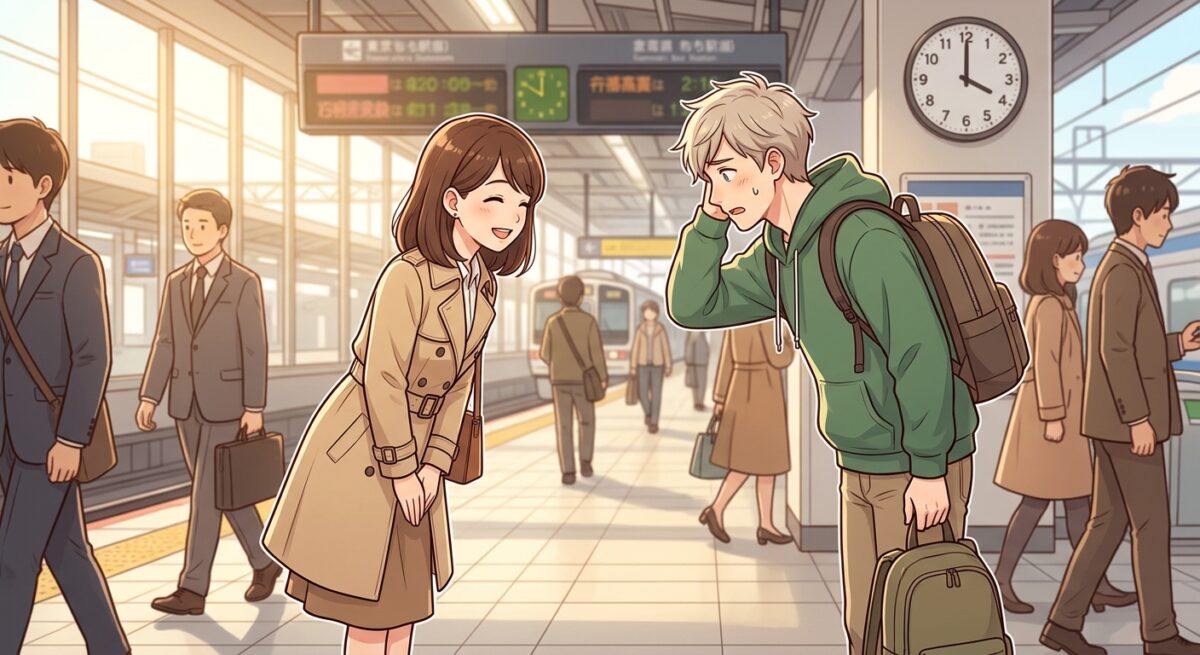
Foreign visitors often find bowing in Japan confusing because it changes depending on the situation, relationship, level of formality, and purpose, such as greeting, thanking, apologizing, or showing respect.
When you visit Japan, you will quickly notice how often people bow. Bowing may appear at hotel front desks, shops, restaurants, train stations, schools, offices, and even in casual daily interactions. For many foreigners, this can feel both elegant and confusing.
In Japan, bowing is more than a simple greeting. It can express respect, thanks, apology, acknowledgment, or humility. The difficult part for visitors is that the meaning changes depending on the situation, the depth of the bow, the timing, and the relationship between people.
Why Bowing Puzzles International Visitors
⚠️ Avoid This
Avoid bowing too deeply or for too long in casual situations. It can look overly formal, unnatural, or more serious than intended.
For people who are used to handshakes, hugs, verbal greetings, or casual waves, bowing can feel unfamiliar at first. Visitors may wonder how deeply to bow, how long to hold the bow, whether to bow back, or whether a simple nod is enough.
The confusion often comes from the fact that bowing is not a single fixed gesture. A quick nod to a shop staff member, a polite bow in a business setting, and a deep bow during a serious apology all carry different meanings. Japanese people usually understand these differences through habit and observation, but visitors may not have that background.
The good news is that international visitors are not expected to bow perfectly. In most everyday situations, a small nod or shallow bow with a polite attitude is enough.
The Japanese Perspective on Bowing
For many Japanese people, bowing is a natural part of communication. It is used to show respect, maintain harmony, and acknowledge the other person without needing many words.
Children learn bowing from a young age, and adults use it in many settings, from casual greetings to formal ceremonies. Because it is so familiar, Japanese people often adjust their bow naturally depending on the situation.
Importantly, bowing is not only about perfect posture. The feeling behind it matters. A simple, sincere bow can communicate politeness and respect even if the angle is not exact.
Understanding the Nuances: Why Bowing is Complex
The core difficulty for visitors is that bowing is highly contextual. It is often learned through observation rather than written rules, so it can feel unclear if you did not grow up with it.
- Lack of explicit rules: Bowing is usually learned through daily life, not from a simple rulebook. This makes it hard for visitors who want clear instructions.
- Variations in depth and duration: A casual greeting may only require a small nod, while a formal apology or expression of deep gratitude may involve a deeper bow.
- Context is key: A bow to a shop assistant, a teacher, a business client, or a close friend can look and feel different.
- Reciprocity and timing: Visitors may not know whether to bow first, bow back, or simply nod. In many cases, following the other person’s lead is safest.
- Silent communication: Bowing can communicate respect, thanks, apology, or acknowledgment without many words. This can be confusing for people from cultures that rely more on direct verbal expression.
✅ Tip
When unsure, a slight head nod or shallow bow is usually a safe and respectful gesture in most everyday interactions.
🌏 Japan vs Other Countries
In many countries, greetings rely more on handshakes, hugs, or direct verbal exchanges. In Japan, bowing often carries those social meanings quietly and non-verbally.
Decoding Different Bow Depths
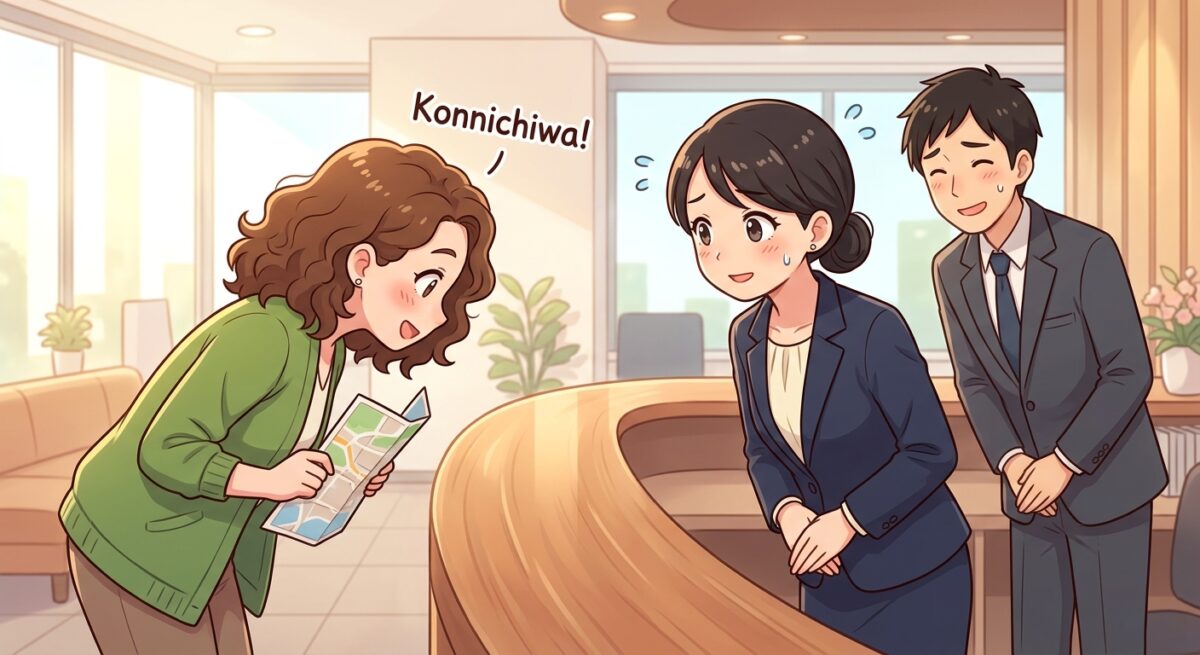
Here are some common bowing styles visitors may hear about. The exact angle does not need to be perfect, but understanding the general idea can help.
- Eshaku (会釈): A slight nod or shallow bow, often used for casual greetings, passing someone, or acknowledging a person briefly.
- Keirei (敬礼): A more polite bow, often used in business settings, customer service, formal greetings, or situations requiring clear respect.
- Saikeirei (最敬礼): A deep and very formal bow, used for serious apologies, deep gratitude, or highly formal occasions. Visitors rarely need to use this in ordinary travel situations.
Practical Tips for Bowing in Japan
You do not need to master every detail to be polite. These simple tips will help you feel more comfortable with bowing in Japan.
- Observe and imitate: Watch how Japanese people around you bow in similar situations. This is often the easiest way to learn.
- Start simple: In everyday situations, such as thanking a shop staff member or greeting someone briefly, a small nod or shallow bow is usually enough.
- Focus on sincerity: Your intention matters more than perfect technique. A respectful attitude will usually be appreciated.
- Do not overthink it: Most Japanese people understand that international visitors are learning. They will not expect perfect form.
- Use words with the bow: Saying Arigato gozaimasu when thanking someone or Sumimasen when apologizing, together with a small bow, feels natural and polite.
- Save deep bows for serious situations: Deep bows are usually for formal apologies, deep gratitude, or very formal settings. Casual interactions do not require them.
Frequently Asked Questions
Do I have to bow as an international visitor?
No, you do not have to bow perfectly in every situation. However, making a small effort to nod or bow lightly is a good way to show respect for Japanese culture.
Can I just say “hello” instead of bowing?
Yes. Saying “hello” or Konnichiwa is fine. However, combining it with a slight nod or shallow bow often feels more polite in Japan.
What if I bow at the wrong time or too deeply?
Do not worry too much. Most Japanese people understand that visitors may not know the exact etiquette. If your attitude is respectful, a small mistake is unlikely to cause offense.
Should I bow to shop staff?
A small nod or light bow is enough if you want to respond politely. You do not need to match the deeper or more formal bows sometimes used by customer service staff.
Is bowing the same as apologizing?
Not always. Bowing can be used for greetings, thanks, apologies, respect, or acknowledgment. The meaning depends on the situation and the words used with it.
Conclusion
Bowing in Japan can seem complex because it carries many meanings in a quiet, non-verbal way. It changes depending on the situation, relationship, and level of formality.
For visitors, the most important thing is not perfect technique. A sincere nod or shallow bow, combined with polite words and a respectful attitude, is usually enough for everyday interactions. By observing people around you and starting simple, bowing can become less intimidating and more meaningful during your time in Japan.
📝 Key Takeaways
- Bowing in Japan can express greeting, thanks, apology, respect, or acknowledgment.
- The depth and timing of a bow depend on the situation and relationship.
- Visitors do not need perfect technique; sincerity and respect matter most.
- A slight nod or shallow bow is usually safe in everyday situations.
- Deep bows are generally reserved for serious or formal moments.
🚀 Want to Learn More?
Explore more essential Japanese etiquette to enhance your cultural understanding.
