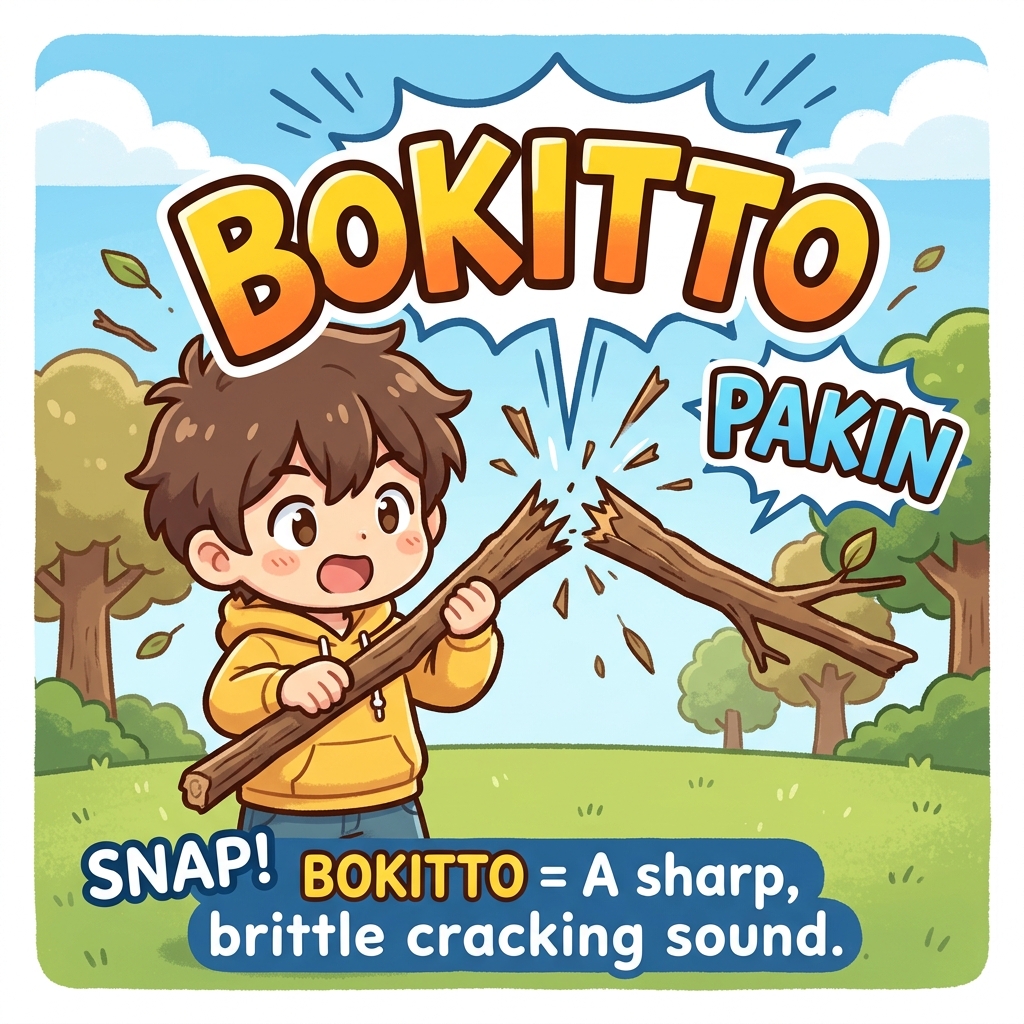
Ever wondered if Japanese onomatopoeia like ぼきっ / ぼきっと (bokitto) and パキン / パキンと (pakin) are interchangeable? Both can describe a sharp, sudden breaking or snapping sound, but the image they create is different. Choosing the right one helps you show the thickness, hardness, and force of the object more naturally in Japanese.
The Core Difference
ぼきっ / ぼきっと (bokitto) describes a sudden snap or crack, often when something relatively thick, hard, stiff, or resistant breaks. It gives the impression of an object that takes some force before it gives way. A dry branch snapping, a thick stick breaking, or a stiff object cracking can fit this sound.
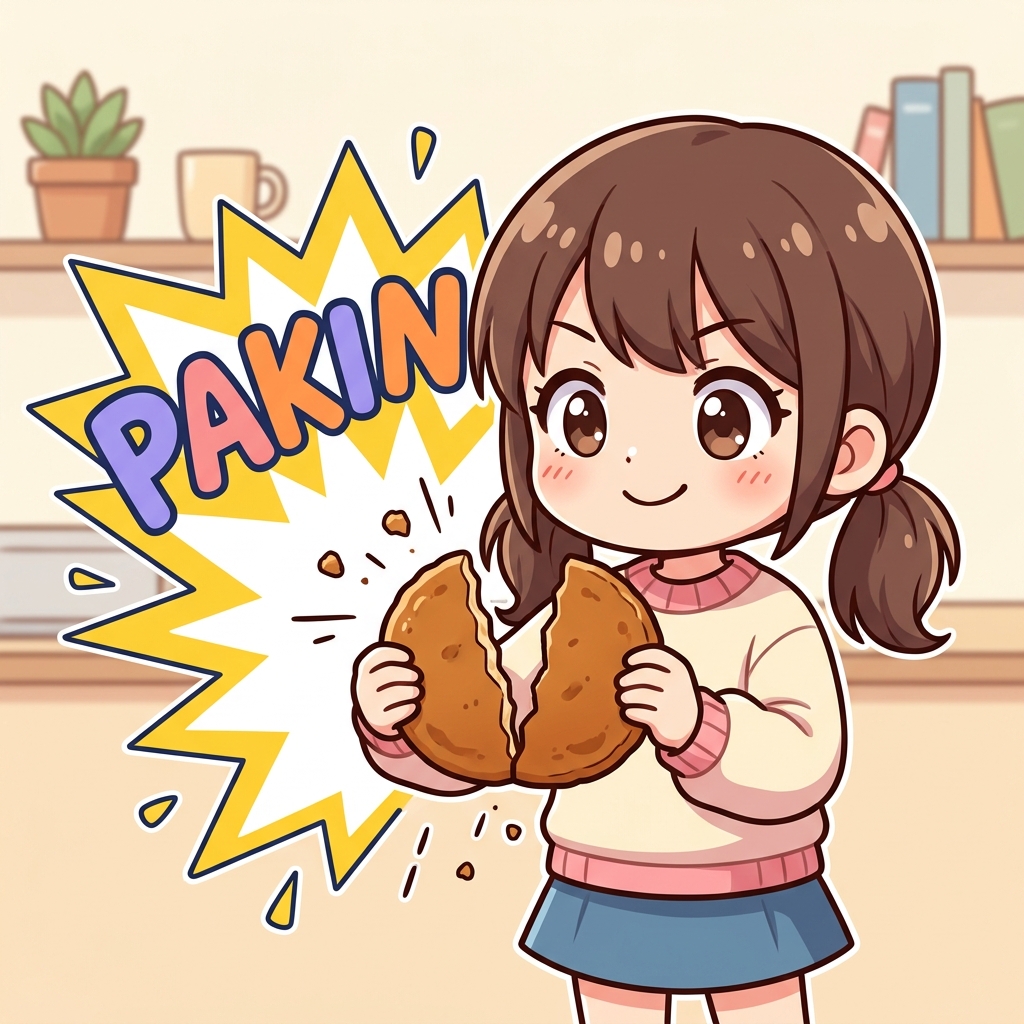
パキン / パキンと (pakin), on the other hand, often suggests a lighter, sharper, and cleaner breaking sound. It is commonly used for thinner, harder, or more brittle things, such as thin plastic, a small piece of ice, a thin board, or a crisp object that breaks with a clear snap.
How the Feeling or Force Changes
The difference often comes down to the object’s thickness and the feeling of resistance. ぼきっ / ぼきっと (bokitto) usually feels more solid and forceful. The object has some body or thickness, and the break feels heavier than a small crack.
パキン / パキンと (pakin) feels sharper and lighter. It often gives the image of something hard but thin breaking cleanly. The sound is crisp, quick, and less heavy than ぼきっ. For example, a thin plastic ruler or a small piece of ice may break with a パキン sound.
Where Each Sound Fits Naturally
To understand the difference, imagine the object and the kind of break:
- ぼきっ / ぼきっと (bokitto) often fits sturdy branches, thick sticks, stiff joints cracking, or a thicker object breaking with some resistance.
- パキン / パキンと (pakin) often fits thin plastic, thin ice, thin crackers, brittle pieces, or a light, crisp break.
In simple terms, ぼきっと feels heavier and more resistant, while パキンと feels thinner, sharper, and crisper.
A Native-Sounding Way to Remember It
Thickness and Resistance Decide the Snap
Think of ぼきっと (bokitto) as a solid snap with more body and resistance. Think of パキンと (pakin) as a crisp, sharp snap from something thinner or more brittle. If the object feels thick, stiff, or resistant, ぼきっと may fit better. If it feels thin, hard, and easy to crack cleanly, パキンと may sound more natural.
A Common Mix-Up to Avoid
Common Mistake
A common mistake is using パキンと (pakin) for a thick, sturdy branch snapping. While it still describes a sharp break, it may make the branch sound thinner or more brittle than intended. For a thicker branch or something that breaks with more resistance, ぼきっと (bokitto) usually sounds more natural. For a thin plastic ruler, thin ice, or a crisp brittle object, パキンと is often a better fit.
Hear ぼきっ (bokitto) and pakin in Context
Play the audio and listen to how the examples sound in Japanese.
Japanese: 乾いた木の枝がぼきっと折れた。
English: The dry tree branch snapped with a 'bokitto' sound.
Japanese: 薄いプラスチックの定規がパキンと割れた。
English: The thin plastic ruler broke with a 'pakin' sound.
Related Snapping Sounds
Japanese has several expressions for snapping, cracking, and breaking sounds. These words overlap, but each one has a slightly different feeling:
| Onomatopoeia | Meaning | Example Context |
|---|---|---|
| ポキッ (pokitto) | A smaller or lighter snap than ぼきっと. | A small twig, pencil, or chopstick. |
| パキッ (pakitto) | A crisp, sharp crack or snap, often lighter than パキン. | A thin cracker, small piece of ice, or brittle object. |
| バキッ (bakitto) | A louder, stronger, or more violent break. | A thick board or dramatic break in fiction. |
Frequently Asked Questions
Are ぼきっ / ぼきっと (bokitto) and パキン / パキンと (pakin) interchangeable?
Not completely. Both can describe a sharp snapping or breaking sound, but ぼきっと usually suggests a thicker, stiffer, or more resistant object breaking. パキンと usually suggests a thinner, harder, more brittle object breaking cleanly. If you switch them, the listener may imagine a different material or thickness.
Can ぼきっ / ぼきっと (bokitto) be used for human bones?
In fiction, manga, anime, or exaggerated casual descriptions, ぼきっ / ぼきっと can be used for a dramatic bone-breaking sound. However, in real medical or serious situations, it is better to use more direct and careful wording. For learners, it is safest to understand this as a dramatic or fictional sound effect rather than a neutral everyday medical expression.