Unlock the dual meanings of ぶつぶつ (butsubutsu) to accurately describe everything from skin textures to gently boiling liquids in Japanese, enhancing your descriptive vocabulary. This versatile onomatopoeia is essential for painting vivid pictures in everyday conversations, helping you avoid awkward misunderstandings and sound more natural.
The Core Meaning: Skin Textures
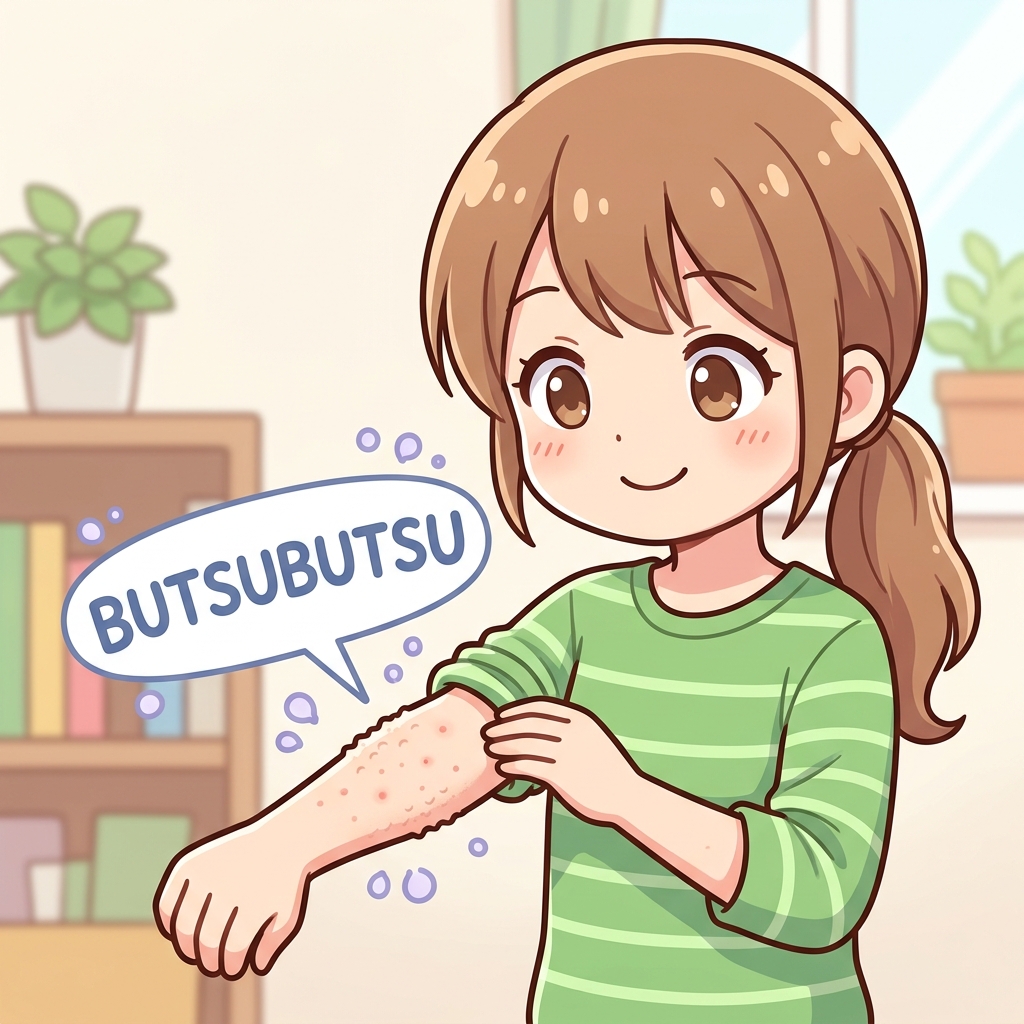
One of the primary uses of ぶつぶつ (butsubutsu) describes small, raised bumps or spots on a surface, most commonly the skin. Think of those moments when your skin isn't perfectly smooth. This could be anything from a temporary reaction to a more persistent condition.
For instance, when you get goosebumps (鳥肌, torihada) because of cold or fear, the sensation and appearance of those tiny bumps are perfectly captured by ぶつぶつ (butsubutsu). It can also describe a minor rash, small pimples, or any unevenness that makes the skin feel or look rough.
The Scene Behind the Word: Gently Boiling Liquids
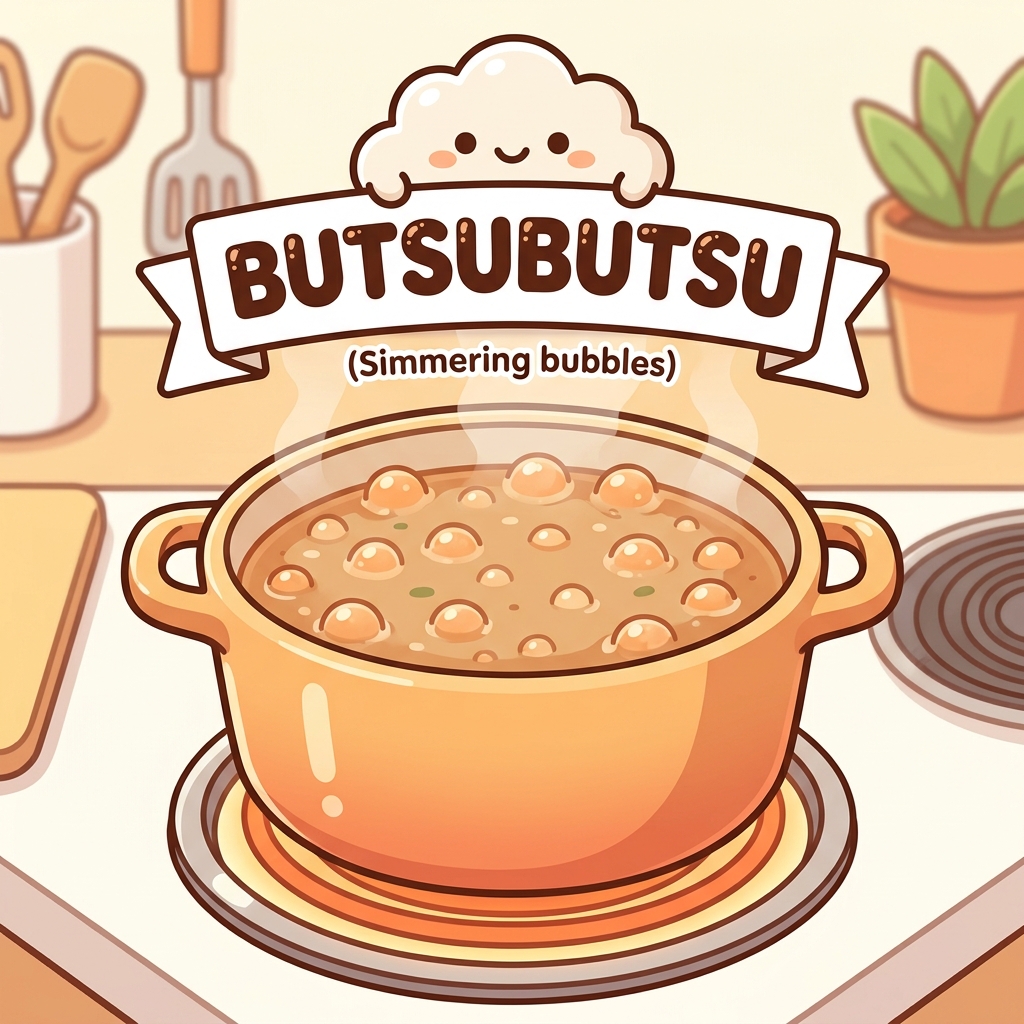
Beyond skin textures, ぶつぶつ (butsubutsu) also vividly describes the gentle, continuous bubbling of a liquid that is simmering or just beginning to boil. Imagine a pot of soup or stew on the stove, not at a rolling boil, but with small, consistent bubbles breaking the surface. This is the exact scene ぶつぶつ (butsubutsu) evokes.
This meaning highlights the sound and visual of small bubbles forming and popping, suggesting a controlled, steady heat rather than an aggressive boil. It's a key distinction for describing cooking processes accurately in Japanese.
When Japanese Speakers Use It
The versatility of ぶつぶつ (butsubutsu) makes it incredibly useful in daily life. You might hear it when someone is complaining about a skin irritation, like a heat rash in summer, or when they're describing the texture of a fruit that isn't perfectly smooth. For example, if a peach has tiny imperfections on its skin, you might hear it described using ぶつぶつ (butsubutsu).
In the kitchen, it's indispensable for describing the ideal state of simmering a dish. If you're following a recipe, instructions might tell you to let something simmer ぶつぶつ (butsubutsu)と, ensuring you don't overcook or undercook it. Learning to accurately describe skin conditions or cooking processes without confusion leads to more natural conversations and a deeper understanding of the language.
Try Saying ぶつぶつ (butsubutsu) Naturally
Play the audio and listen to how the examples sound in Japanese.
Japanese: 寒いと鳥肌がぶつぶつと立つ。
English: When it's cold, goosebumps appear on my skin.
Japanese: 鍋のスープがぶつぶつと煮立っている。
English: The soup in the pot is simmering with small bubbles.
Skin Bumps or Simmering? Read the Surrounding Noun
Context separates the two uses of 'ぶつぶつ' (butsubutsu): with skin, it describes a rough or uneven surface; with a pot or liquid, it describes small, continuous bubbling. Check the surrounding noun and the overall scene before choosing the meaning. For example, '肌がぶつぶつ' (hada ga butsubutsu) points to skin, while '鍋がぶつぶつ' (nabe ga butsubutsu) points to the contents of a pot simmering.
Common Pitfalls
A common pitfall for learners is applying ぶつぶつ (butsubutsu) to large, violent boiling. Remember, it's for small, gentle bubbles, not a rolling boil (which might be described by ぐつぐつ, gutsugutsu). Similarly, don't confuse it with general roughness like a sandpaper texture (ざらざら, zarazara); ぶつぶつ (butsubutsu) specifically implies distinct, small raised points.
Related Expressions
Here are a few related expressions that describe textures and boiling:
| Japanese | Romaji | Meaning |
|---|---|---|
| ざらざら | zarazara | Rough, gritty texture |
| つるつる | tsurutsuru | Smooth, slippery texture |
| ぐつぐつ | gutsugutsu | Vigorous simmering or boiling |
| ぷつぷつ | putsuputsu | Small, intermittent popping sounds/bubbles (similar to ぶつぶつ but often lighter) |
Frequently Asked Questions
Can ぶつぶつ (butsubutsu) be used for any kind of boil?
No, ぶつぶつ (butsubutsu) specifically refers to small, gentle, continuous bubbling, like simmering. It is not used for a vigorous, rolling boil, which would typically be described by ぐつぐつ (gutsugutsu).
Is ぶつぶつ (butsubutsu) always negative when describing skin?
Not necessarily. While it can describe negative conditions like rashes or pimples, it also describes goosebumps (鳥肌, torihada), which are a natural bodily reaction and not inherently negative. The context will clarify the nuance.
Understanding both uses of ぶつぶつ (butsubutsu) helps you describe everyday scenes more precisely. Check whether the sentence points to skin texture or gentle bubbling so you can choose the right meaning without misreading the scene.