
Unlocking the Appeal of ぷりっ / ぷりっと (puritto): Describing Perfect Textures in Japanese
Imagine you are at a sushi restaurant in Japan, and a plate of beautifully prepared shrimp nigiri is placed in front of you. You take a bite, and the shrimp has that satisfying firmness and bounce. How do you describe that specific texture in Japanese? This is where ぷりっ / ぷりっと (puritto) becomes useful.
ぷりっ is the short, crisp form, while ぷりっと is often easier to use in a sentence. Both describe a texture or appearance that feels firm, plump, elastic, and pleasantly fresh. It is especially common when talking about seafood, meat, and other foods with a nice bouncy bite.
The Core Meaning: Elasticity, Firmness, and Plumpness
ぷりっ / ぷりっと (puritto) describes something that feels elastic, firm, and plump. It often suggests that something has a fresh, juicy, or healthy-looking quality. Think of shrimp that springs slightly when you bite it, a sausage with a firm and juicy inside, or a piece of food that looks full and lively rather than flat or dry.
A simple translation might be “bouncy” or “plump,” but ぷりっと has a more specific nuance. It is not just soft. It suggests a pleasant firmness and a little resistance. In food contexts, this often gives a feeling of freshness and good texture.
The Scene Behind the Word: Celebrating Food Textures
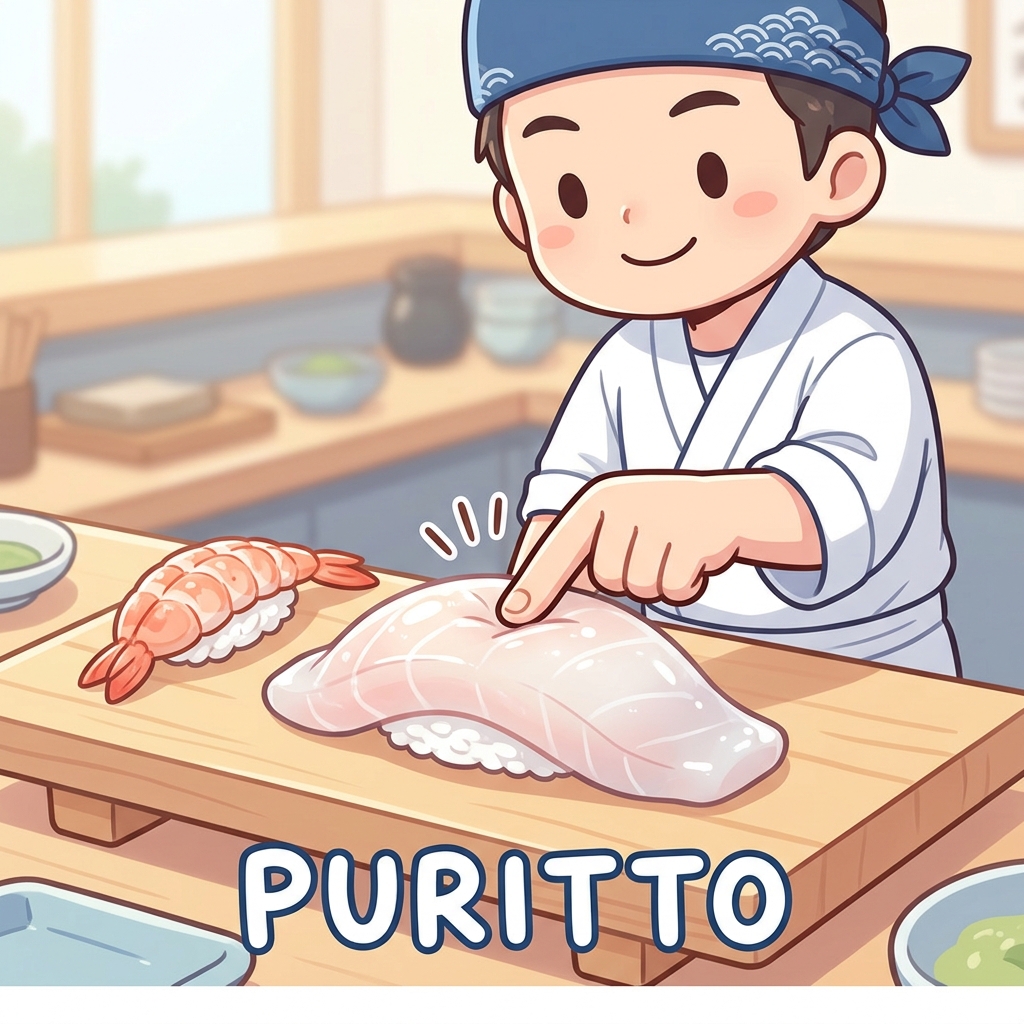
The most common use of ぷりっ / ぷりっと (puritto) is for food texture. Shrimp, scallops, certain fish, sausages, and some types of meat can be described this way when they have a firm, fresh, and bouncy bite.
For example, when someone says エビがぷりっとしている, they are not simply saying the shrimp is soft. They are praising the texture: firm, juicy, and pleasantly elastic. In Japanese food culture, texture, or 食感 (shokkan), is very important, so this word helps you express appreciation more precisely.
When Japanese Speakers Use It
You will often encounter ぷりっ / ぷりっと (puritto) in food reviews, cooking shows, restaurant conversations, and casual comments about meals. It is usually positive when used for food, because it suggests freshness, juiciness, and a satisfying bite.
It can also be used outside food contexts, but learners should be a little careful. For cheeks, skin, or a plump appearance, ぷりっと can sound natural in some cases, but ぷりぷり, ぷくぷく, or ふっくら may sound softer or more common depending on the situation.
Practice ぷりっ (puritto) with Audio
Play the audio and listen to how the examples sound in Japanese.
Japanese: このエビ、ぷりっとしていて新鮮でおいしいね。
English: This shrimp is firm and bouncy, fresh and delicious, isn't it?
Japanese: 焼きたてのソーセージは皮がパリッと、中身がぷりっとしていて最高だ。
English: Freshly grilled sausage is best with a crispy skin and a plump, bouncy inside.
A Native-Sounding Tip: ぷりっと vs. ぷりぷり
ぷりっと often describes one clear impression of firmness, plumpness, or bounce. ぷりぷり can feel more repeated, lively, or strongly textured. For example, both エビがぷりっとしている and エビがぷりぷりしている can sound natural, but ぷりぷり gives a stronger sense of bouncy texture. For learners, ぷりっと is useful when you want a neat, single description of a fresh, firm bite.
Common Pitfall: Not Just “Soft”
A common mistake is to understand ぷりっ / ぷりっと (puritto) simply as “soft” or “bouncy.” It does include a sense of bounce, but it also needs firmness, elasticity, and fullness. Something that is only soft may be better described as ふわふわ (fuwafuwa), ぷにぷに (punipuni), or 柔らかい (yawarakai). ぷりっと suggests a desirable resistance, not just softness.
Similar Expressions and Related Concepts
Understanding ぷりっ / ぷりっと (puritto) becomes easier when you compare it with other texture words:
| Expression | Meaning/Nuance |
|---|---|
| ぷりぷり (puripuri) | Firm, plump, and bouncy, often with a stronger or repeated texture impression than ぷりっと. |
| もちもち (mochimochi) | Chewy, springy, and resilient, like mochi, fresh bread, or certain noodles. |
| つるつる (tsurutsuru) | Smooth and slippery, like noodles, polished surfaces, or smooth skin. |
| ふわふわ (fuwafuwa) | Fluffy, airy, and soft, like clouds, cotton candy, or soft bread. |
| シャキシャキ (shakishaki) | Crisp and fresh, often for vegetables or fruit with a clean bite. |
Frequently Asked Questions
What kind of texture does ぷりっ / ぷりっと (puritto) describe?
ぷりっ / ぷりっと (puritto) describes a texture or appearance that is firm, elastic, plump, and pleasantly full. In food contexts, it is often used for fresh shrimp, scallops, sausages, or other foods that have a satisfying bouncy bite.
Can ぷりっ / ぷりっと (puritto) be used for non-food items?
Yes, but food is one of the easiest and most common contexts for learners. Outside food, ぷりっと can describe a firm, plump, healthy-looking appearance, such as cheeks, skin, or fruit. However, depending on the nuance, words like ぷりぷり, ぷくぷく, or ふっくら may sometimes sound more natural or softer.
By adding ぷりっ / ぷりっと (puritto) to your vocabulary, you gain a more precise way to describe appealing firmness, bounce, and plumpness in Japanese. It is especially useful for talking about seafood and other foods where texture matters as much as taste.