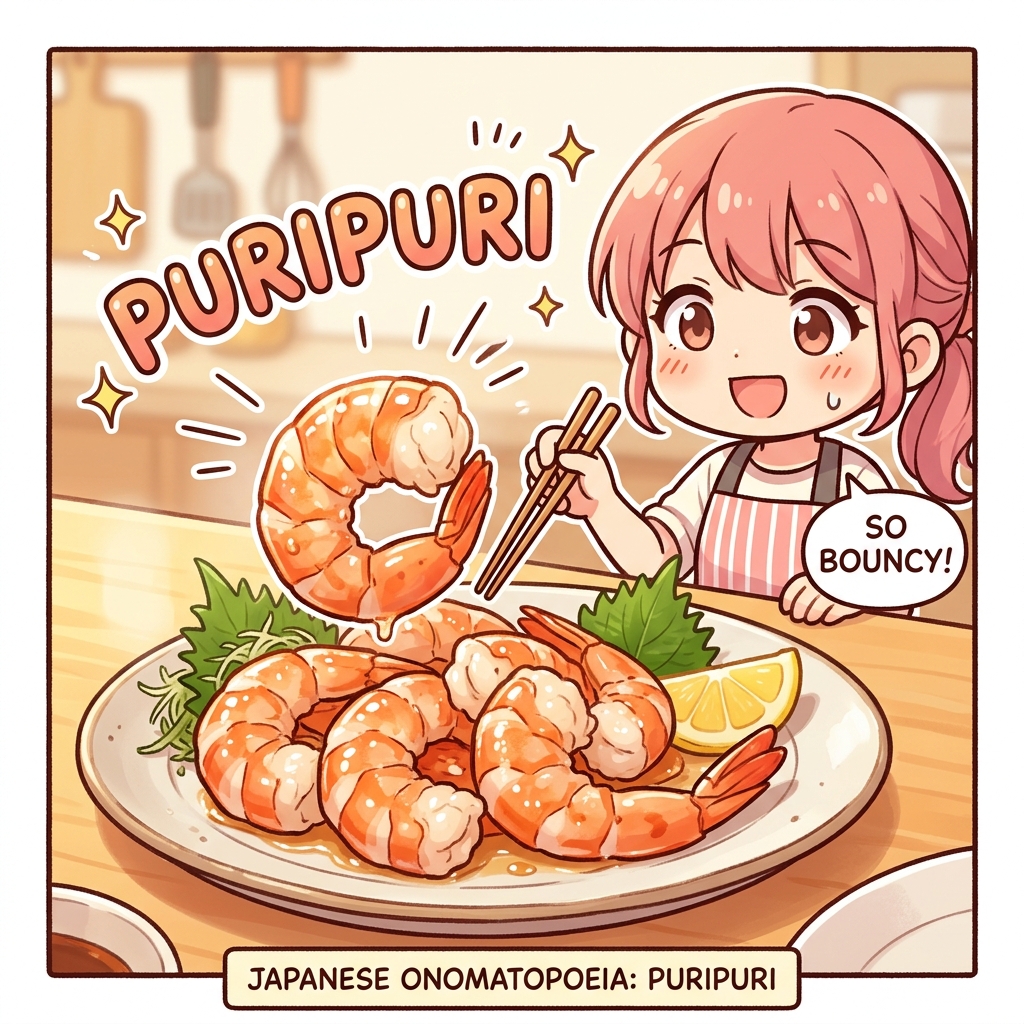
Unlock a deeper appreciation for Japanese food by learning how ぷりぷり (puripuri) describes a satisfying, bouncy texture often found in fresh seafood and other springy ingredients. Instead of simply saying “delicious,” this word helps you describe the mouthfeel of food more precisely. For example, when shrimp is fresh, firm, and pleasantly elastic, Japanese speakers often describe it as ぷりぷり. It is a small word, but it can make your food descriptions sound much more natural.
What This Word Really Feels Like
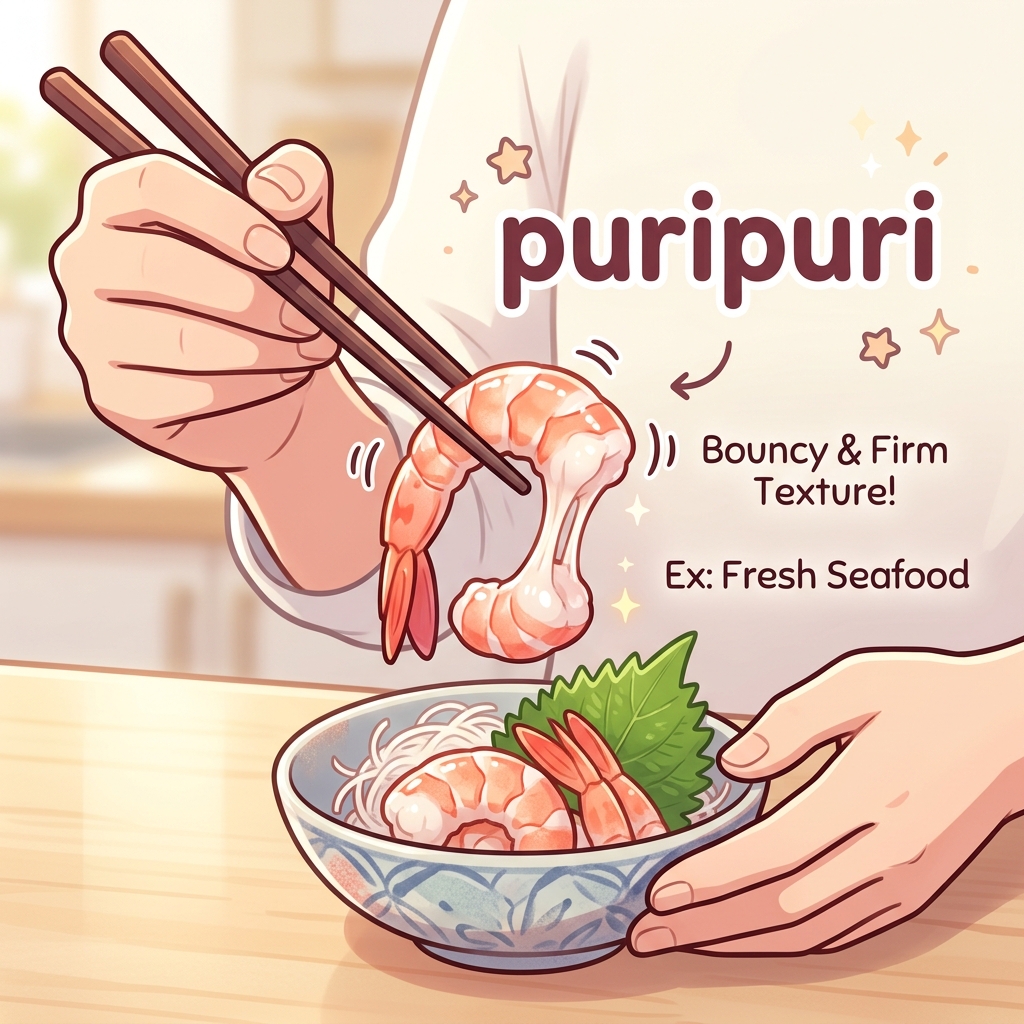
The Japanese onomatopoeia ぷりぷり (puripuri) is often used to describe a pleasant texture that feels firm, plump, and springy. Think of something that gives a little resistance when you bite into it, but still feels fresh and lively rather than tough. It is not just “chewy.” It is a specific kind of bouncy, elastic chewiness that is usually positive when talking about food.
ぷりぷり is especially common for ingredients like shrimp (エビ), squid (イカ), and some types of meat or fish cake. It suggests that the food has a good bite and a fresh, plump texture. When used well, it helps describe not only the taste of a dish, but also the satisfying feeling in your mouth.
How It Works in Context
When used for food, ぷりぷり (puripuri) focuses on texture rather than flavor. If you say エビがぷりぷりしている (ebi ga puripuri shite iru), you mean the shrimp has a firm, bouncy, fresh-feeling texture. It is often used together with words like 新鮮 (shinsen - fresh) or おいしい (oishii - delicious), because the texture itself is part of what makes the food enjoyable.
This word is useful because おいしい alone does not explain why something is enjoyable. ぷりぷり tells the listener that the food has a plump, springy mouthfeel. It is the difference between saying “this is good” and saying “this has a wonderfully fresh, bouncy texture.”
Natural Usage Scenes
You will often hear ぷりぷり (puripuri) in conversations about food, especially seafood and dishes where texture matters. Here are a few natural situations:
- Complimenting a dish: When you eat perfectly cooked shrimp tempura, fresh squid, or a seafood dish with a firm and bouncy bite, ぷりぷり is a very natural word to use.
- Describing ingredients: At markets, restaurants, or in food reviews, people may describe shrimp, squid, or similar ingredients as ぷりぷり to emphasize their freshness and pleasant texture.
- In recipes or food reviews: Chefs and reviewers often use this word to describe the ideal texture of seafood or other springy ingredients. It helps readers imagine the mouthfeel before tasting the dish.
Texture First: ぷりぷり Is Not a Taste Word
When you eat something with a fresh, bouncy texture, you can say このエビ、ぷりぷりでおいしい! (Kono ebi, puripuri de oishii!) This sounds natural because ぷりぷり describes the texture, while おいしい describes your overall enjoyment.
A Common Learner Mistake
Mistake to Avoid
A common mistake is to use ぷりぷり (puripuri) as a general synonym for “delicious” or “fresh.” In food contexts, it specifically describes a firm, plump, bouncy texture. You would not normally use it for a soft cake, a crispy chip, or a watery soup. It works best for foods that have a pleasant springy bite, especially seafood such as shrimp or squid.
Try Saying ぷりぷり (puripuri) Naturally
Play the audio and listen to how the examples sound in Japanese.
Japanese: このエビ、新鮮でぷりぷりしていて美味しいね!
English: This shrimp is fresh, bouncy, and delicious!
Japanese: イカの刺身は、歯ごたえがぷりぷりしているのが特徴です。
English: Squid sashimi is known for its firm, bouncy texture.
How to Remember It
To remember ぷりぷり (puripuri), picture a fresh shrimp that looks plump and gives a satisfying bounce when you bite into it. The repeated sound ぷりぷり can feel lively and springy, which matches the texture it describes. The more you notice this kind of mouthfeel in Japanese food, the easier it will be to use the word naturally.
Frequently Asked Questions
Can ぷりぷり (puripuri) be used for non-food items?
Yes, but the meaning changes depending on context. In food contexts, ぷりぷり usually describes a firm, plump, bouncy texture. However, ぷりぷり怒る can also mean that someone is visibly angry or irritated, similar to “fuming” or “being in a huff.” For learners, the food meaning is the easiest and safest place to start, but it is good to know that the word is not limited only to food.
Is ぷりぷり (puripuri) always a positive description?
In food contexts, ぷりぷり is usually positive because it suggests freshness and a pleasant bouncy texture. However, in expressions related to anger, such as ぷりぷり怒る, it is not positive; it describes someone being irritated or upset. Always check the context: food usually means “bouncy and fresh,” while emotion-related usage usually points to anger or annoyance.