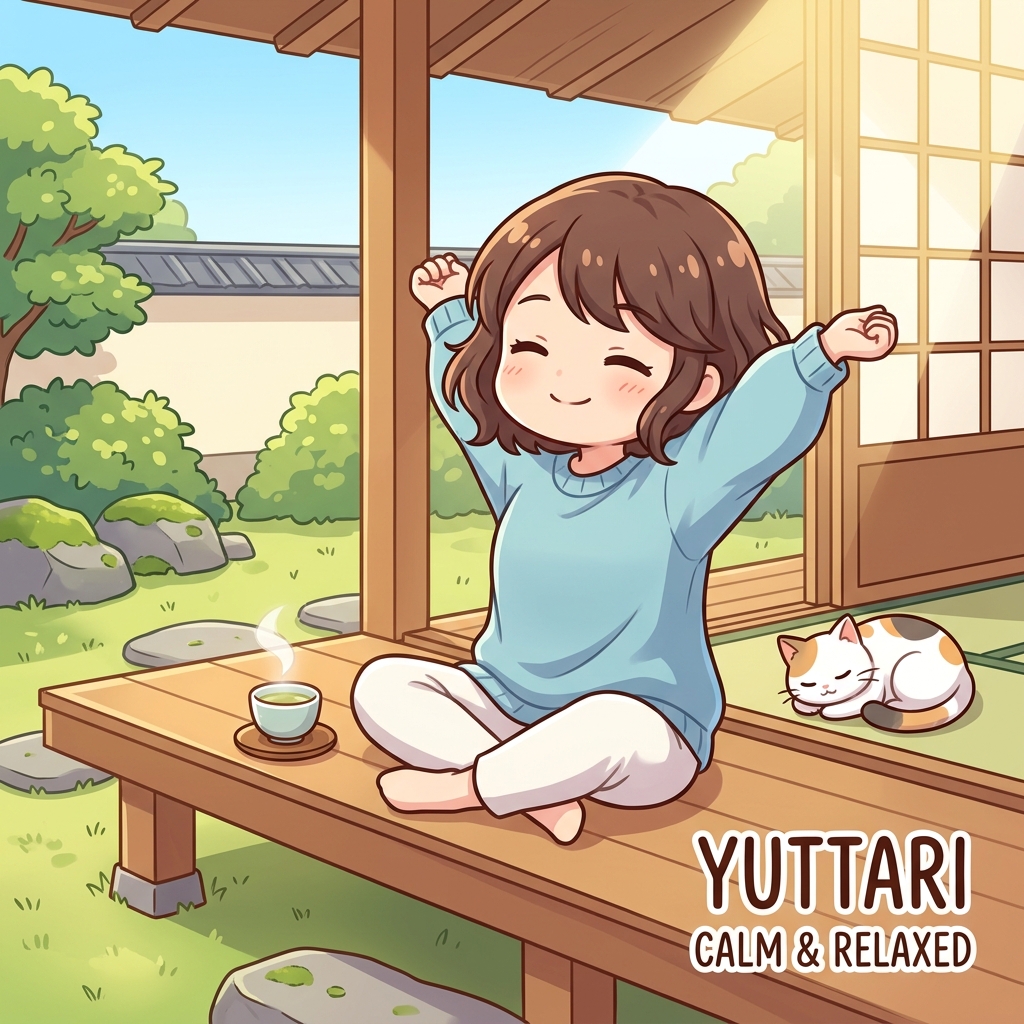
Ever felt a deep, unhurried peace that 'relaxed' just doesn't quite capture? In Japanese, the onomatopoeia ゆったり (yuttari) perfectly describes a state of mind and body that is profoundly relaxed, calm, and spacious. It's a term that goes beyond simple relaxation, conveying a sense of ease, comfort, and ample room – both physically and mentally.
ゆったり (yuttari) describes a feeling of calm, but it also touches upon physical sensations, emphasizing an internal tranquility free from haste or tension. It's about experiencing a gentle, unhurried comfort that allows one to feel completely at ease.
More Than a Simple Emotion
ゆったり (yuttari) isn't just about being 'relaxed' in a generic sense. It carries a unique nuance of spaciousness and tranquility, a feeling of having 'room to breathe.' This could be the mental space to think clearly without pressure, or the physical space to move freely without constraint. Unlike a quick moment of relief, ゆったり (yuttari) often implies a sustained, gentle state of comfort and unhurriedness.
Think of it as the opposite of feeling rushed, cramped, or stressed. It's the feeling of a slow, peaceful flow, where everything feels just right and there's no need to hurry. This makes it a powerful word for expressing deeper levels of contentment and serenity in Japanese.
The Face, Mood, and Situation
ゆったり (yuttari) paints a picture of quiet moments and serene environments. Imagine a person with a soft, calm expression, moving with unhurried grace. Typical scenes are moments of peaceful solitude or gentle companionship – a quiet afternoon reading, a leisurely stroll through a park, or enjoying a cup of tea on a spacious veranda. The feeling blends an emotional state with a physical sensation: the inner calm of a tranquil mind combined with the pleasant feeling of physical ease.
It's the mood of a long, peaceful holiday, or the comfort of wearing loose, soft clothing on a lazy day. This onomatopoeia beautifully captures that specific, profound sense of unhurried peace and spaciousness, helping you express deeper levels of relaxation in Japanese.
Anime, Manga, and Everyday Nuance
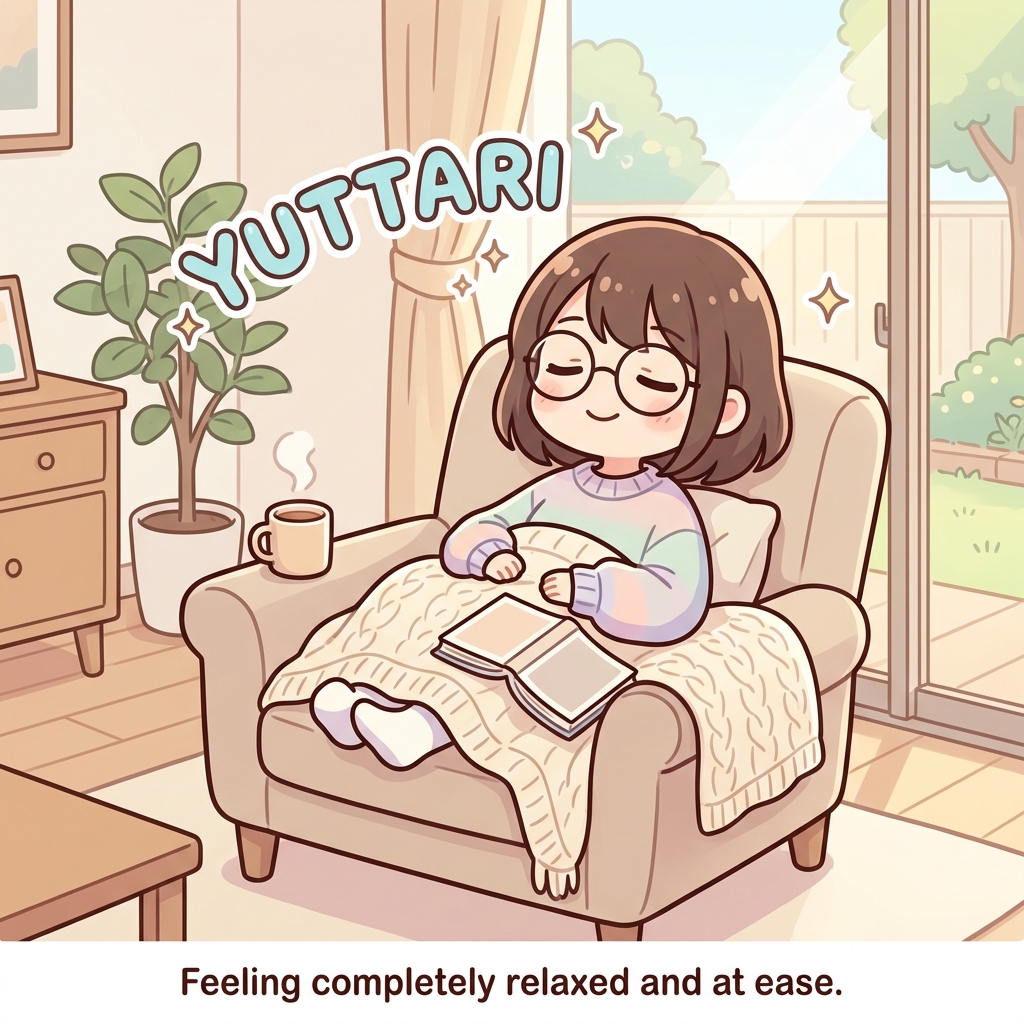
In anime and manga, characters experiencing ゆったり (yuttari) might be drawn with soft lines, a gentle smile, or in a pose that suggests complete ease, perhaps lounging on a sofa or gazing out a window. Their movements would be slow and deliberate, never rushed. In everyday Japanese, you'll hear ゆったり (yuttari) used to describe a 'slow life' (ゆったりとした生活), a comfortable, spacious room (ゆったりとした部屋), or even clothing that is loose-fitting and comfortable (ゆったりとした服).
It emphasizes the feeling of having ample space and time, free from the constraints of urgency. This makes it a versatile term for describing not just internal states but also external conditions that contribute to that feeling of ease.
A Natural Way to Use It
Imagine you've had a wonderfully slow, peaceful weekend. Simply saying 'relaxed' might not convey the full depth of that unhurried bliss. This is where ゆったり (yuttari) shines. A learner might initially use a generic 'relaxed' term, but then discovers ゆったり (yuttari) to perfectly describe a slow, peaceful weekend, achieving a more nuanced expression. Successfully using ゆったり (yuttari) to convey a truly serene and unhurried experience will make your Japanese sound more natural and emotionally resonant.
Look for Room, Time, and an Unhurried Pace
ゆったり (yuttari) can describe a leisurely pace of life, comfortable clothing, or a spacious room, emphasizing the feeling of 'room to breathe' both physically and mentally. It's a go-to word for conveying a sense of unhurried comfort.
What Learners Should Watch Out For
While ゆったり (yuttari) is about relaxation, it's important to distinguish it from other forms. It's not typically used for the energetic relaxation of playing sports or the sudden relief after a stressful event. ゆったり (yuttari) implies a gentle, sustained, and often passive state of comfort and ease. Don't use it if the situation involves any sense of urgency, rush, or high energy.
Common Pitfall
Avoid using ゆったり (yuttari) to describe a quick break or a sudden burst of energy. It's meant for situations where there's a sustained sense of calm, spaciousness, and an unhurried pace. Misusing it might make your description sound unnatural.
Related Expressions
| Japanese | Romaji | Nuance | |
|---|---|---|---|
| のんびり | nonbiri | Leisurely, carefree, taking it easy. Similar to ゆったり but often implies more idleness. | |
| 穏やか | odayaka | Calm, gentle, mild (often for weather, personality, or atmosphere). More about peacefulness. | |
| 落ち着く | ochitsuku | To calm down, settle down, feel at ease (often after being agitated). Focuses on regaining composure. |
Try Saying ゆったり (yuttari) Naturally
Play the audio and listen to how the examples sound in Japanese.
Japanese: 週末は家でゆったりと過ごしました。
English: I spent the weekend relaxing comfortably at home.
Japanese: この服はゆったりしていて、とても着心地が良いです。
English: These clothes are loose-fitting and very comfortable to wear.
Frequently Asked Questions
Is ゆったり (yuttari) only for emotions?
No, ゆったり (yuttari) is versatile. While it certainly describes emotional states of calm and peace, it's also frequently used to describe physical attributes like spacious rooms, loose-fitting clothes, or a leisurely pace of life, all of which contribute to a feeling of comfort and ease.
Can I use ゆったり (yuttari) for energetic activities?
ゆったり (yuttari) is generally not suitable for energetic activities. It implies a slow, unhurried, and relaxed pace or state. For energetic relaxation or activities, other expressions would be more appropriate. Think of ゆったり (yuttari) as the opposite of rushed or intense.