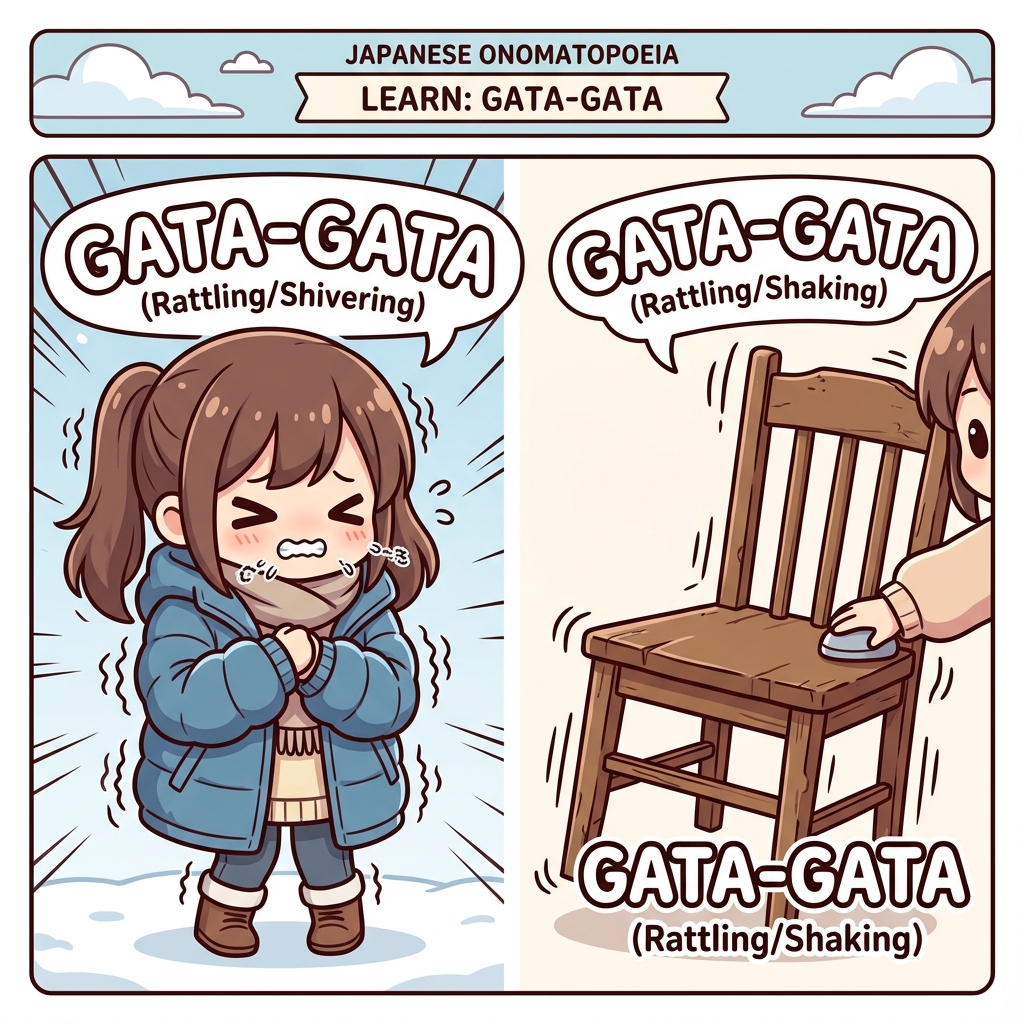
Learning Japanese onomatopoeia is a fantastic way to add color and precision to your language skills. Today, we're diving deep into がたがた (gatagata), a versatile expression that goes far beyond a simple 'shake.' Master がたがた (gatagata) to express not just 'shaking,' but the specific feeling of instability, cold shivers, or fear-driven trembling, making your Japanese sound more natural and expressive. Imagine trying to describe a rickety bridge or the feeling of being truly scared, but only knowing a generic word for 'shake.' がたがた (gatagata) allows you to paint a vivid picture, conveying nuanced sensations that generic terms simply can't.
What This Word Really Feels Like
がたがた (gatagata) is a highly evocative onomatopoeia that captures a distinct sensory and emotional experience. It primarily describes a state of instability or uncontrolled, often rapid, movement, frequently accompanied by a rattling or creaking sound. Think of it as the feeling of something being loose, wobbly, or even on the verge of collapsing. This word is deeply rooted in tactile sensation – the feeling of vibration and trembling.
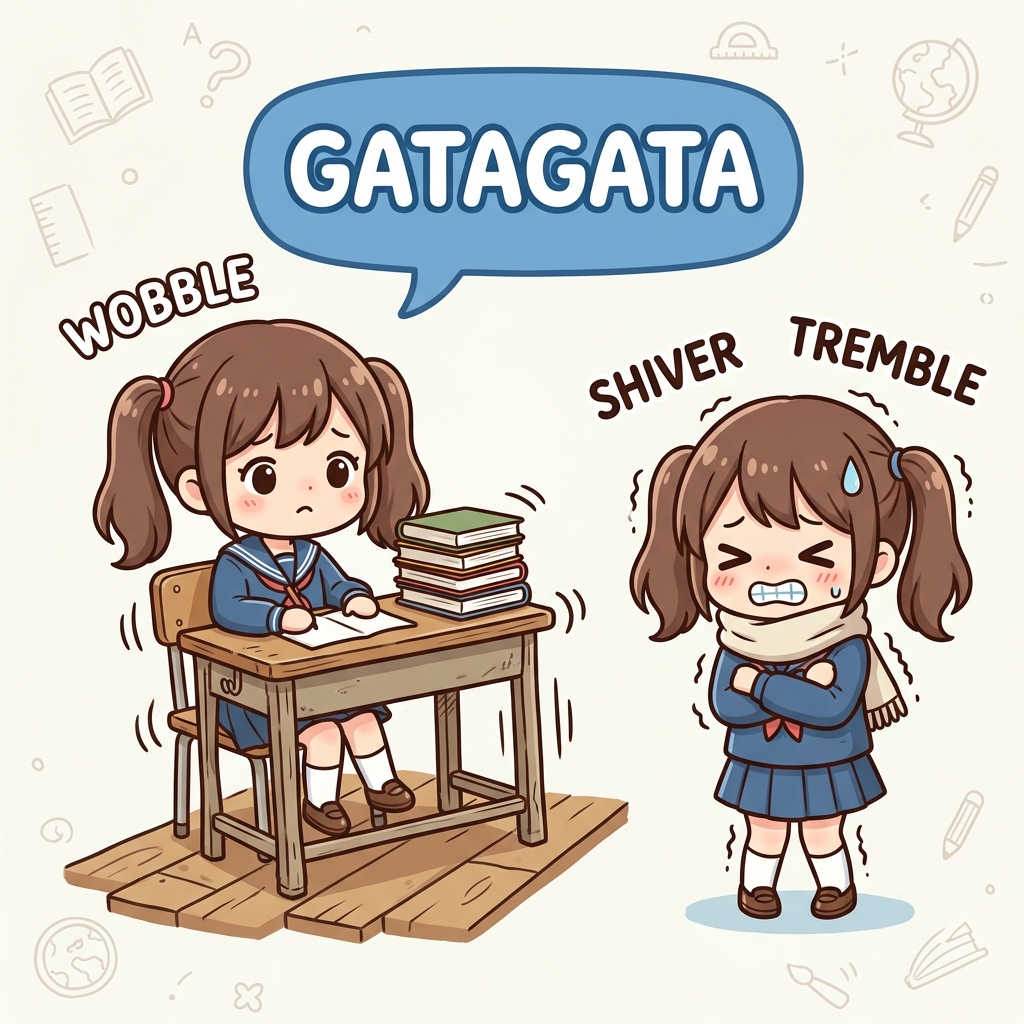
- Physical Instability and Rattling: This is perhaps its most common application. がたがた (gatagata) vividly portrays objects that are old, poorly constructed, or simply not firm. An old, worn-out desk might がたがた (gatagata) when you try to write on it, producing a distinct rattling sound. A loose window pane might がたがた (gatagata) in a strong wind, suggesting a precariousness or lack of solidity. It's the sound and feel of things that aren't quite stable.
- Cold-Induced Trembling: When your body shivers uncontrollably from the cold, がたがた (gatagata) perfectly describes this sensation. Your teeth might がたがた (gatagata) (chatter) from the chill, and your whole body might がたがた (gatagata) (tremble or shiver). This usage highlights the involuntary, rapid shaking caused by low temperatures, emphasizing the discomfort.
- Fear-Induced Shaking: In moments of intense fear, anxiety, or shock, your body can also がたがた (gatagata) (tremble). This conveys the uncontrollable physical manifestation of strong emotion, such as 'shaking in your boots' or having 'knees knocking' from fright. It's a powerful way to express deep-seated apprehension.
How It Works in Context
がたがた (gatagata) primarily functions as an adverb, adding specific detail about the manner of movement to verbs. It's most commonly paired with verbs like 揺れる (yureru - to shake/sway), 震える (furueru - to tremble/shiver), or used in the versatile form がたがたする (gatagata suru - to rattle/tremble). The 'suru' form is particularly common and convenient, allowing がたがた (gatagata) to act almost as a verb itself, describing the action of rattling or trembling directly. For instance, you might say 机ががたがたする (tsukue ga gatagata suru - the desk rattles) or 体ががたがたする (karada ga gatagata suru - my body is trembling).
Natural Usage Scenes
Let's paint a picture: Imagine a chilly morning in an old, rickety house. The wind howls outside, making the loose window panes がたがた (gatagata) rattle with a distinct, unsettling sound. You're so cold that your teeth start to がたがた (gatagata) chatter uncontrollably, and you pull your blanket tighter, feeling your whole body がたがた (gatagata) tremble. Later, a sudden, loud noise makes you jump, and for a moment, you feel your knees がたがた (gatagata) shake from fright. Or consider an old, wooden bridge: as you cautiously step onto it, you feel the planks がたがた (gatagata) sway and creak beneath your weight, instilling a sense of unease. In all these vivid scenarios, がたがた (gatagata) perfectly captures the specific, often involuntary, movement and sensation, making your descriptions far more impactful.
Tip for Learners:
Identify What Is Rattling or Trembling Pay close attention to the context – is it an inanimate object rattling, your body shivering from cold, or trembling from fear? がたがた (gatagata) often implies a somewhat uncontrollable or unstable movement, making it distinct from a simple, generic 'shake.' It adds sensory detail by showing both the movement and its unstable, involuntary quality.
Try Saying がたがた (gatagata) Naturally
Play the audio and listen to how the examples sound in Japanese.
Japanese: 古い木製の橋を渡ると、足元ががたがた揺れた。
English: When I crossed the old wooden bridge, the ground beneath my feet rattled and shook.
Japanese: 寒さで歯ががたがた鳴り、体もがたがた震えていた。
English: My teeth were chattering from the cold, and my body was trembling.
A Common Learner Mistake
A frequent error among learners is to use a generic verb like 揺れる (yureru - to shake) or 震える (furueru - to tremble) when がたがた (gatagata) would provide much more specific and natural nuance. While these verbs correctly mean 'to shake' or 'to tremble,' they lack the descriptive power of がたがた (gatagata). がたがた (gatagata) adds the crucial detail of the *manner* of shaking – that it's unstable, rattling, chattering, or a rapid, involuntary tremor. Omitting がたがた (gatagata) can make your description less vivid and less precise, failing to convey the specific feeling of discomfort, instability, or intense emotion that the situation demands. Always consider if がたがた (gatagata) can elevate your expression.
How to Remember It
To effectively remember がたがた (gatagata), try to associate its distinct sound with the physical sensation it describes. Think of the 'gata-gata' sound an old, loose object makes as it rattles or the chattering sound your teeth make when you're freezing. The repetitive 'gata' sound itself inherently evokes a sense of repeated, somewhat jerky, and unstable movement. Visualizing a rickety old cart がたがた (gatagata) rolling down a bumpy road, or a person がたがた (gatagata) shivering from extreme cold, can create strong mental anchors to solidify its meaning and usage in your mind.
Related Expressions
| Expression | Meaning | Nuance with がたがた (gatagata) |
|---|---|---|
| ぐらぐら (guragura) | Wobbly, unsteady (often for a single object) | Similar to がたがた (gatagata) for physical instability, but がたがた (gatagata) often implies a more rapid, rattling movement or sound, especially for multiple parts or a general instability. ぐらぐら (guragura) can be slower, like a loose tooth or a wobbly table leg. |
| ぶるぶる (buruburu) | Shivering, trembling (often from cold or fear) | Very similar to がたがた (gatagata) when describing body trembling from cold or fear. ぶるぶる (buruburu) might emphasize the whole body shaking more broadly and intensely, while がたがた (gatagata) can also imply a rattling sound (e.g., teeth chattering) or a more 'jerky' tremor. |
Frequently Asked Questions
Is がたがた (gatagata) always negative?
Generally, yes, がたがた (gatagata) carries connotations of instability, discomfort, or fear, which are typically negative. It describes something that is not firm, is suffering from cold, or is experiencing distress. It's rarely used in a positive or neutral context.
Can がたがた (gatagata) be used for emotions other than fear?
While fear is a very common emotion associated with がたがた (gatagata), it can also describe physical reactions to extreme cold or even intense nervousness or anxiety that manifests physically. However, its core meaning remains rooted in involuntary, unstable movement, so it wouldn't typically be used for purely joyful or calm emotional states.