
Unlock the subtle power of ぷっ / ぷっと (putto) to describe a small burst of air, a light pop, or a quick laugh that slips out suddenly. Japanese onomatopoeia like this can be difficult for learners because the meaning is not one fixed English word. Instead, ぷっ gives the feeling of a short, light sound, while ぷっと is often used adverbially to describe something happening suddenly, lightly, and only for a moment.
This expression is useful when you want to describe a small action that happens in an instant. It can suggest a tiny puff, a soft pop, or a brief laugh someone could not hold back.
What This Word Really Feels Like
At its core, ぷっ / ぷっと (putto) conveys something small, sudden, and momentary. It is not used for a heavy impact or a long, continuous sound. Instead, imagine a tiny puff of air, a small soft pop, or a quick sound that escapes in an instant. The feeling is light, brief, and slightly sudden.
- For Air and Light Objects: It can describe a quick, soft release of air, such as a small puff of smoke, a short breath, or a tiny amount of powder or dust being blown away. The important nuance is that the action is light and quick.
- For Puffing Up: ぷっと can also describe someone quickly puffing up their cheeks, especially in a sulk, as in ぷっとふくれる.
- For Suppressed Laughter: This is one of the most useful everyday meanings. ぷっと笑う or ぷっと吹き出す describes a quick laugh that comes out suddenly, often when someone was trying not to laugh. It is not a loud, full laugh, but a short burst of amusement.
How It Works in Context
ぷっと (putto) usually works as an adverb with verbs such as ふくれる (fukureru - to puff up or sulk), 吹く (fuku - to blow), 笑う (warau - to laugh), and 吹き出す (fukidasu - to burst out laughing). When used with these verbs, it adds the nuance that the action happens suddenly, lightly, and only for a short moment.
For example, ぷっと吹き出した means someone suddenly let out a small laugh, not that they laughed loudly for a long time. In the same way, ぷっとふくれた describes someone puffing up their cheeks, usually in a sulk.
Natural Usage Scenes
Here are some common situations where ぷっ / ぷっと (putto) feels natural:
- Sulking: When someone is told off or does not get their way, they might ぷっとふくれる (putto fukureru), puffing up their cheeks in a sulk.
- Subtle Puffs of Air: You might use ぷっと when a small puff of smoke appears, or when someone blows air softly and briefly.
- The Suppressed Laugh: This is a very natural use. Imagine someone trying to stay serious, but they suddenly lets out a small laugh. In that case, 彼は思わずぷっと吹き出した sounds natural and vivid.
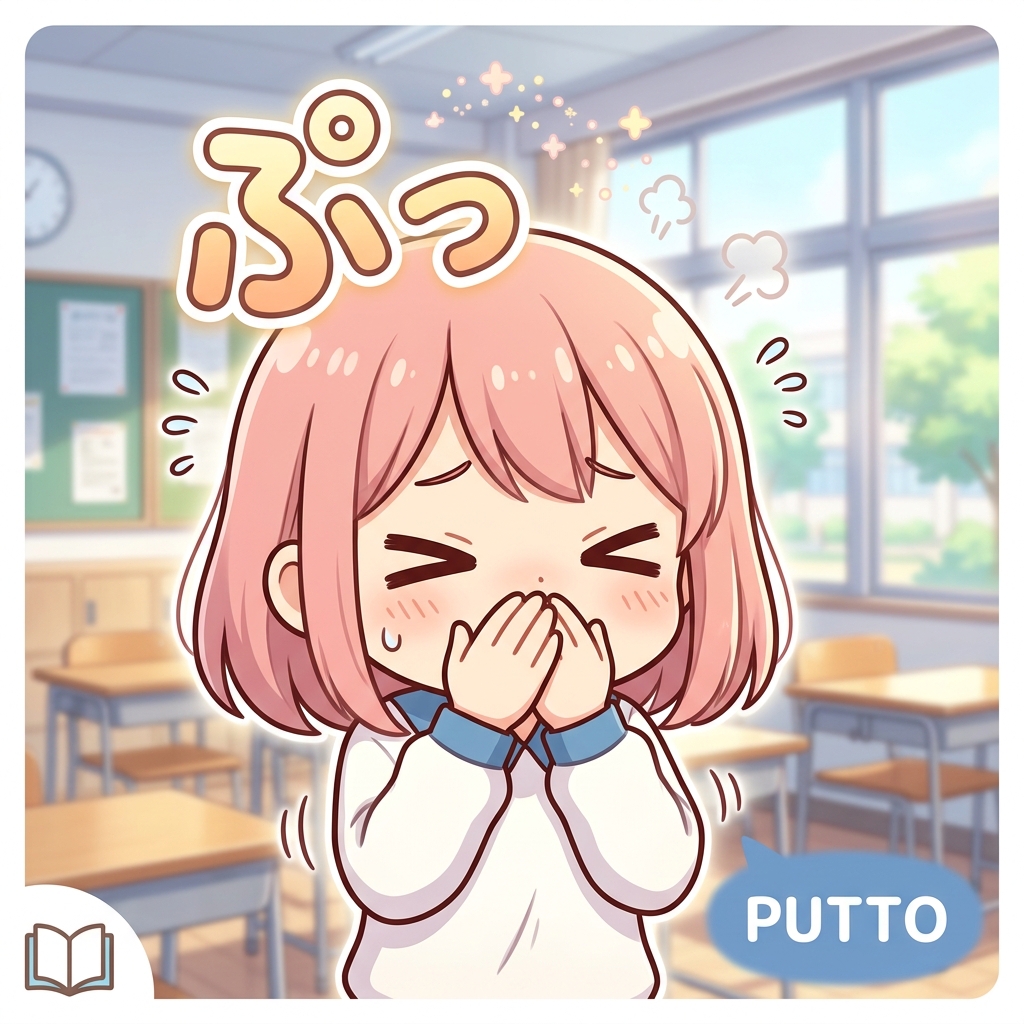
Understanding these uses will help you avoid translating ぷっと too literally. It is less about one fixed English word and more about the feeling of a small, sudden, light action.
Listen to ぷっ / ぷっと (putto) in Real Sentences
Play the audio and listen to how the examples sound in Japanese.
Japanese: 注意されて、妹はぷっとふくれた。
English: When she was told off, my little sister puffed up her cheeks in a sulk.
Japanese: 彼は思わずぷっと吹き出した。
English: He suddenly let out a small laugh.
A Common Learner Mistake
Don't use ぷっ / ぷっと (putto) for loud or heavy sounds.
A common mistake is to use ぷっと for a big explosion, a loud crash, or a long burst of laughter. In most cases, ぷっと is better for something small, light, sudden, and brief. For laughter, it suggests a quick laugh that slips out, not a loud and uncontrolled laugh.
How to Remember It
To remember ぷっ / ぷっと (putto), connect it with a tiny action that happens in an instant: a small puff, a soft pop, or a quick laugh. The word often points to a moment that appears suddenly and disappears almost immediately.
Usage Tip:
Think of ぷっと as small, sudden, and brief. For laughter, it is closer to a quick laugh escaping than a full “haha.” For air or popping sounds, it feels light rather than loud or dramatic.
Frequently Asked Questions
Is ぷっ / ぷっと (putto) only used for laughter?
No. It is often used for a small laugh that suddenly comes out, but it can also describe a light puff of air, a small soft pop, or another brief and delicate action. The shared feeling is that something happens suddenly, lightly, and for only a moment.
Can ぷっ / ぷっと (putto) be used for loud explosions or big pops?
Usually, no. ぷっと is not the best choice for loud, forceful, or dramatic sounds. It is better for small and light actions. For explosions, crashes, or large impacts, Japanese has stronger onomatopoeia that sound more natural.