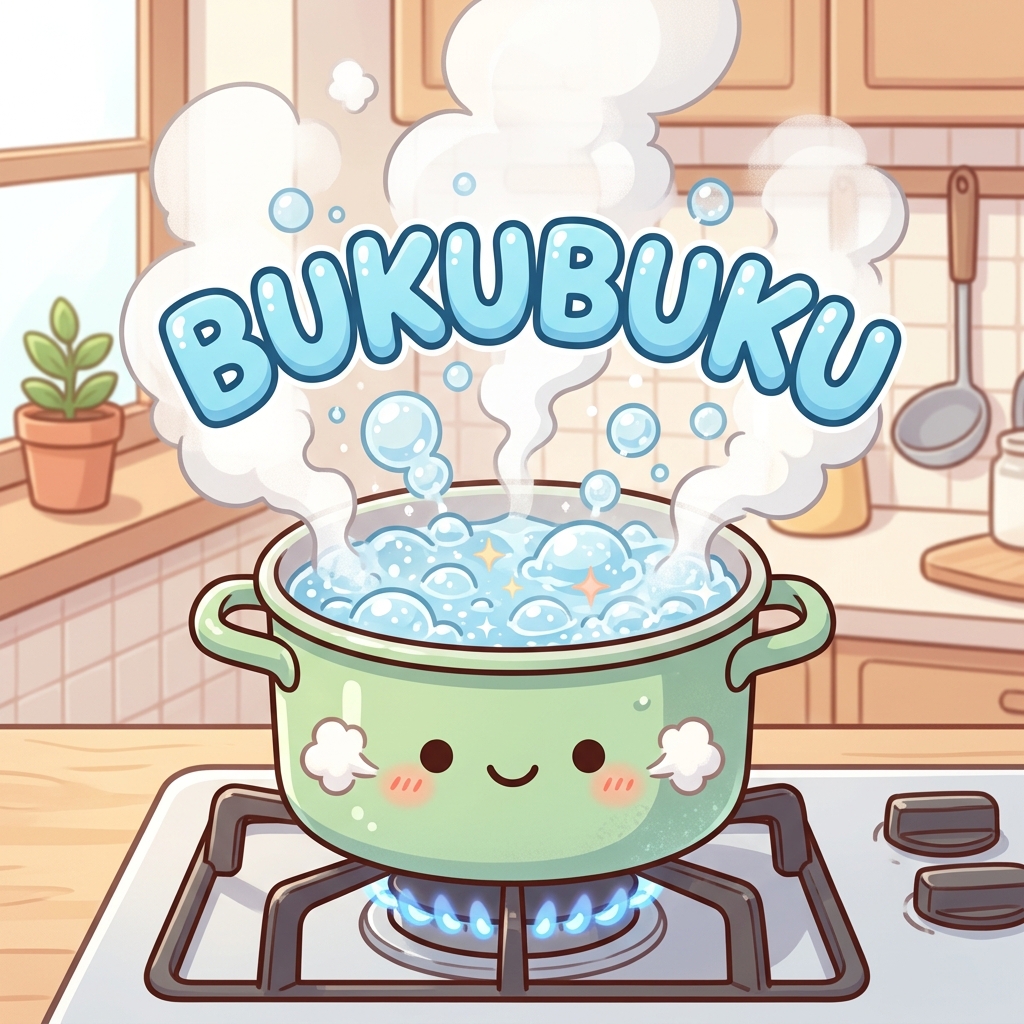
Learning Japanese onomatopoeia can feel like unlocking a more natural layer of the language. One useful word is ぶくぶく (bukubuku). Many learners first connect it with boiling water or bubbles, but it can also describe something becoming puffy or plump in a noticeable way.
The important point is that ぶくぶく often gives the image of bubbles rising, swelling, or something becoming larger and rounder. Depending on the context, it can sound neutral, vivid, humorous, or even a little negative.
What This Word Really Feels Like
At its core, ぶくぶく (bukubuku) describes bubbles rising, forming, or bursting repeatedly. Think of water boiling strongly, air bubbles coming up underwater, or something bubbling on the surface. It gives a lively visual and sound impression.
From that bubbling image, ぶくぶく can also describe something becoming puffy, swollen-looking, or noticeably plump. However, this use needs care. When used for weight gain, especially with adults, it can sound teasing, rude, or negative. For babies or pets, it may sound playful in some contexts, but words like ぷくぷく or ふっくら can sometimes sound softer and more affectionate.

How It Works in Context
ぶくぶく (bukubuku) is often used with verbs such as 沸く (waku - to boil), 沸騰する (futtou suru - to boil), 泡が出る (awa ga deru - bubbles come out), or 太る (futoru - to gain weight).
When used with boiling or bubbles, it describes continuous bubbling. When used with weight gain, as in ぶくぶく太る, it suggests becoming noticeably plump or gaining weight in a way that may sound negative or critical. This is why learners should be careful when using it to describe people.
Listen to ぶくぶく (bukubuku) in Real Sentences
Play the audio and listen to how the examples sound in Japanese.
Japanese: お湯がぶくぶく沸騰している。
English: The water is boiling vigorously with bubbles rising.
Japanese: 最近、うちの犬がぶくぶく太ってきた。
English: Lately, our dog has been getting noticeably chubby.
Natural Usage Scenes
Here are some common situations where ぶくぶく (bukubuku) sounds natural:
- Boiling water: A pot of water boiling strongly, with many bubbles rising to the surface.
- Underwater bubbles: Air bubbles coming up from a fish tank, hot spring, swamp, or underwater scene.
- Foam or bubbling liquid: A liquid bubbling repeatedly or foam appearing on the surface.
- Noticeable weight gain: ぶくぶく太る can describe someone or something becoming visibly plump, but it often sounds negative or teasing.
For boiling and bubbles, ぶくぶく is very natural and vivid. For weight gain, be careful. ぶくぶく太る can sound critical or humorous rather than purely affectionate. If you want a softer positive word for a baby, pet, or food, ぷくぷく or ふっくら may sound gentler depending on the situation.
A Common Learner Mistake
A common mistake is thinking ぶくぶく only means “boiling.” That is an important use, but the word can also describe bubbles underwater or a puffy, swollen, or plump appearance.
Another mistake is using ぶくぶく for any kind of swelling. For example, a swollen ankle from an injury is not usually described as ぶくぶく. In that case, 腫れる (hareru - to swell) is more appropriate. ぶくぶく is better for bubbles, puffiness, or noticeable plumpness, not medical swelling.
Do not use ぶくぶく for a swollen ankle, painful injury, or serious medical swelling. Also avoid using ぶくぶく太る for adults unless you are sure the relationship and context make it acceptable, because it can sound rude.
How to Remember It
To remember ぶくぶく (bukubuku), start with the image of bubbles. Imagine water boiling strongly, with bubbles rising again and again. The repeated sound ぶくぶく matches that continuous bubbling feeling.
Then connect that image to something becoming rounder or puffier. Just remember that the weight-gain meaning can carry a negative or teasing tone, so it should be used carefully.
Related Expressions
| Japanese | Romaji | Meaning |
|---|---|---|
| ぐつぐつ | gutsugutsu | Simmering or boiling steadily, often for soups, stews, or food being cooked. |
| ぷくぷく | pukupuku | Puffy, plump, or small bubbles; often softer and cuter than ぶくぶく. |
| ふっくら | fukkura | Soft and plump in a pleasant way, often for bread, rice, cheeks, or a gentle appearance. |
Frequently Asked Questions
Can ぶくぶく (bukubuku) be used for human weight gain?
Yes, but it should be used very carefully. ぶくぶく太る can sound negative, teasing, or rude when used for a person. It suggests noticeable weight gain in a way that is not very flattering. For babies or pets, it may sound playful in some contexts, but softer expressions like ぷくぷく or ふっくら may be safer if you want a warm and affectionate tone.
What's the difference between ぶくぶく (bukubuku) and ぐつぐつ (gutsugutsu)?
Both can describe boiling, but the focus is different. ぶくぶく emphasizes bubbles rising or appearing repeatedly, often with a lively bubbling image. ぐつぐつ is often used for food simmering or boiling steadily, such as soup, stew, or curry cooking in a pot. In simple terms, ぶくぶく feels more bubble-focused, while ぐつぐつ feels more cooking- or simmering-focused.