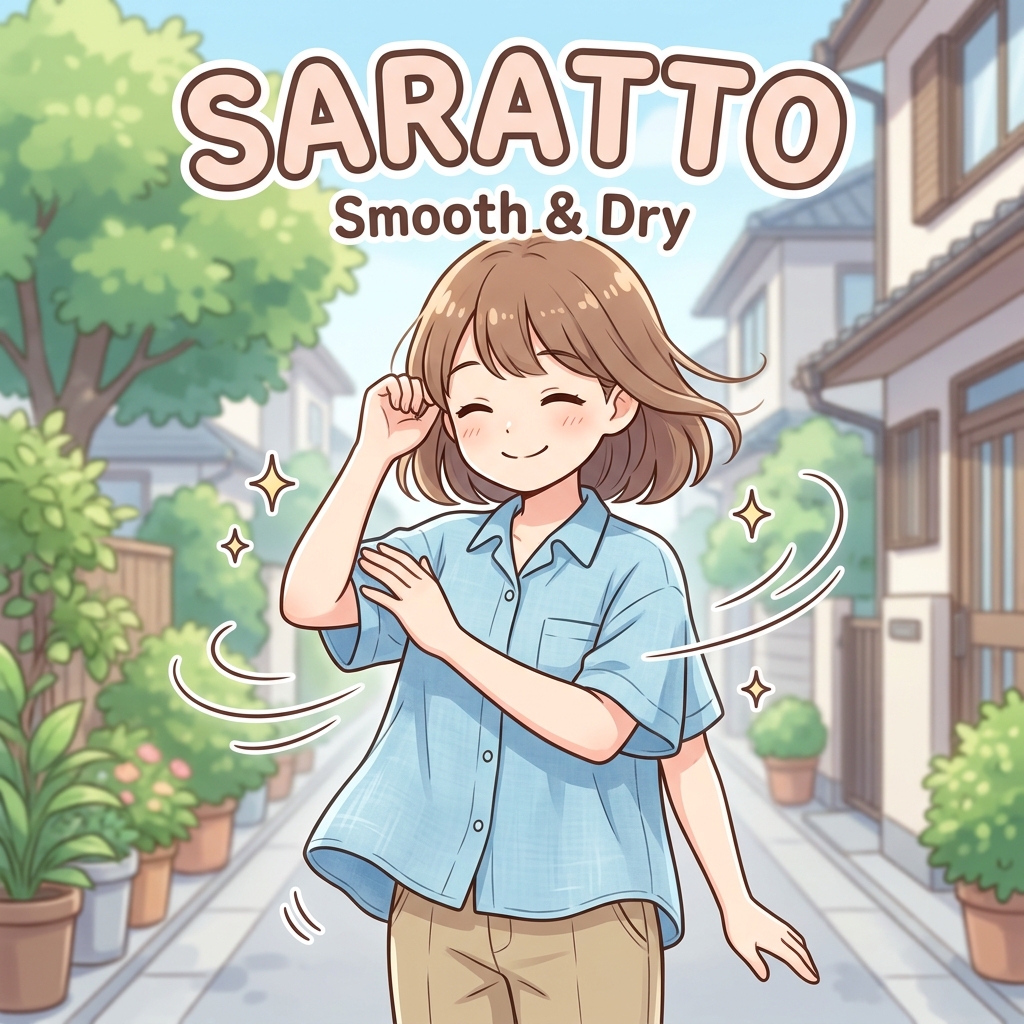
Learning Japanese onomatopoeia can feel like unlocking a more natural layer of the language. Dictionaries may give you basic meanings, but words like さらっと (saratto) are best understood through real situations. This word can describe a smooth, dry texture, a light feeling, or an action that is done easily and without heaviness.
In this article, you will learn how さらっと (saratto) works in everyday Japanese, from comfortable clothing and clean skin to meetings, tasks, and casual personality descriptions.
What さらっと (saratto) Really Means
At its core, さらっと (saratto) describes something that feels smooth, light, dry, and non-sticky. It often gives a pleasant impression: a shirt that does not cling to your skin, hair that feels clean after washing, or a sauce that is light rather than heavy or greasy.
It can also be used metaphorically. For example, a task may be completed さらっと if it is done quickly and smoothly. A person may be described as さらっとしている if they are light, straightforward, or not emotionally clingy. The key feeling is “light and smooth, without heaviness or stickiness.”
Beyond the Dictionary: The Feeling of さらっと (saratto)
The beauty of さらっと (saratto) is that it connects physical texture with emotional or situational lightness. It can describe a pleasant touch, an easy flow, or a clean and simple feeling. The word often appears in contexts related to comfort, freshness, and ease.
However, it is not just a general word for “good.” The specific image is important. さらっと suggests that something does not feel sticky, heavy, complicated, or overly intense. That is why it works well for fabric, skin, hair, food texture, quick actions, and smooth progress.
Mastering さらっと (saratto) in Daily Life
To understand さらっと (saratto), it helps to look at common real-life situations:
- Smooth, dry fabric: A shirt or fabric that feels cool, light, and non-sticky against the skin.
- Clean skin or hair: Skin or hair that feels fresh, dry, and free from oiliness or stickiness.
- Light food texture: Food or sauce that feels light, clean, and not heavy or greasy.
- Smooth progress: A meeting, task, or conversation that finishes easily without getting stuck.
- Quick, light actions: Doing something casually or without making a big deal out of it.
By understanding these patterns, you can use さらっと naturally instead of treating it as just one English word.
Listen to さらっと (saratto) in Real Sentences
Play the audio and listen to how the examples sound in Japanese.
Japanese: このシャツは肌触りがさらっとしていて、夏でも快適です。
English: This shirt feels smooth and dry on the skin, so it is comfortable even in summer.
Japanese: 会議はさらっと終わって、次の予定に間に合った。
English: The meeting ended smoothly and quickly, so I made it to my next appointment on time.
Usage Insight: The Light Feeling of さらっと (saratto)
さらっと (saratto) often gives a feeling of lightness, dryness, smoothness, or ease. It can be physical, like a non-sticky shirt, or metaphorical, like a meeting that ends without trouble. The word usually feels positive or neutral, but the exact nuance depends on context.
Avoiding Awkward Usage: Common Pitfalls
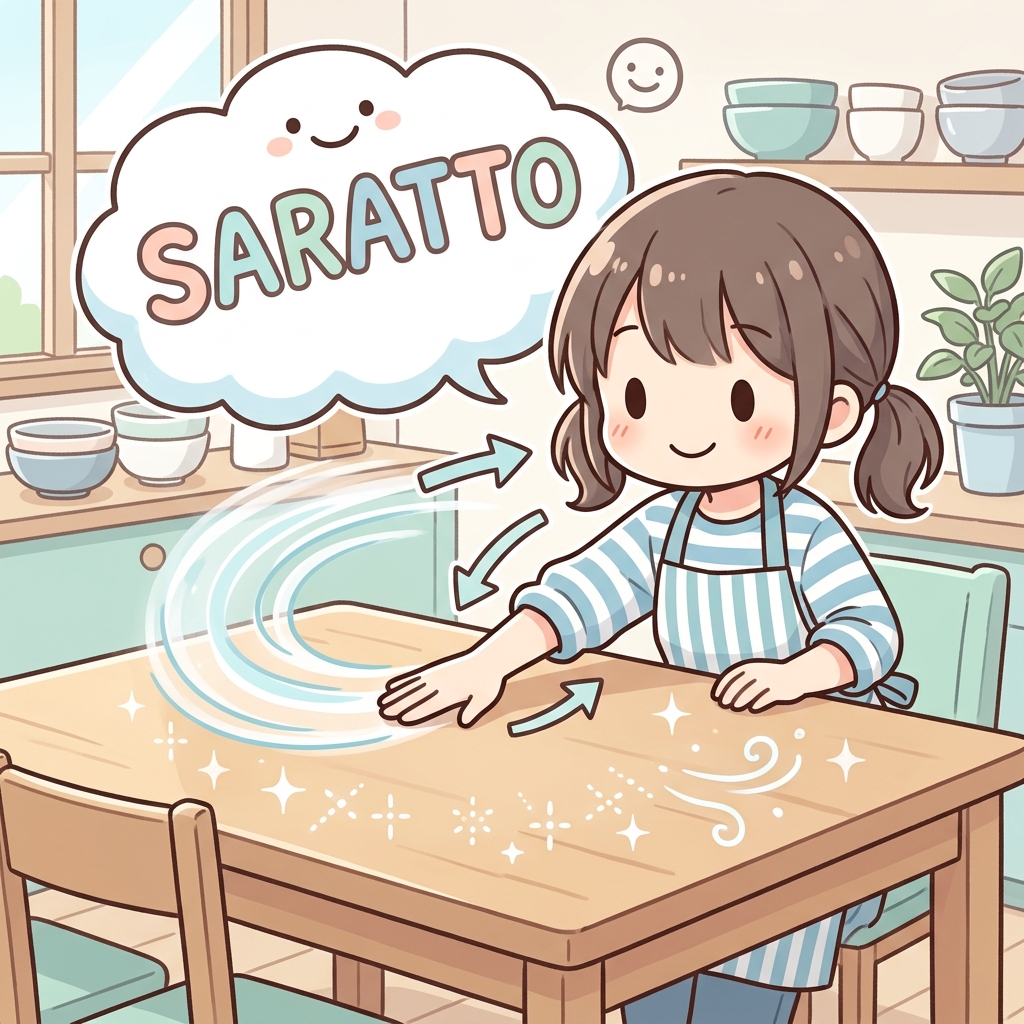
Do not use さらっと (saratto) for anything that is simply “dry” in a neutral or negative sense. For example, dry land, a dry cough, or dry academic writing would usually need different words. さらっと is better when the dryness or lightness feels smooth, clean, easy, or non-sticky.
Related Expressions
Here are a few expressions that overlap with さらっと (saratto), but have different focuses:
| Japanese | Romaji | Meaning |
|---|---|---|
| すらすら | surasura | Smoothly and fluently, often for speaking, reading, writing, or solving problems. |
| つるつる | tsurutsuru | Smooth and slippery, often for polished surfaces, skin, or noodles. |
| さっぱり | sappari | Refreshing, clean, light, or not heavy, often for feelings, taste, or appearance. |
Frequently Asked Questions
Can さらっと (saratto) be used for people's personalities?
Yes. さらっとした人 (saratto shita hito) can describe someone who is light, straightforward, and not emotionally clingy. It can be positive when it means the person is easygoing and does not make things heavy. However, depending on context, it may also sound a little detached or淡泊, meaning emotionally light or not overly involved.
Is さらっと (saratto) always positive?
Not always, but it is often positive or neutral. For textures, it usually suggests comfort, smoothness, dryness, or cleanliness. For actions, it can mean something is done smoothly and easily. However, in some contexts, さらっと言う can mean saying something casually, even if the content is serious or surprising. As always, context decides the final nuance.
By adding さらっと (saratto) to your vocabulary, you gain a natural way to express comfort, lightness, smoothness, and ease in Japanese. Practice it with physical textures first, then gradually notice how native speakers use it for actions, situations, and even personalities.