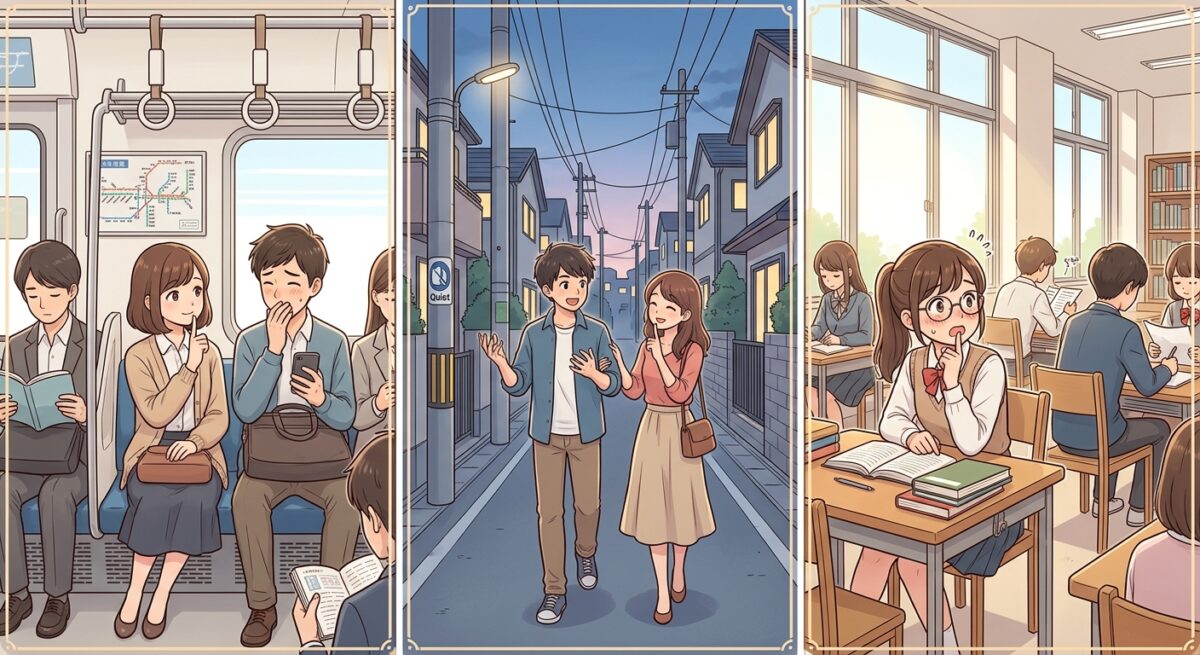
Japan is often described as a quiet country, but that is too simple. Cities can be lively, restaurants can be noisy, festivals can be loud, and friends talk normally when the setting allows it.
What visitors often notice is that people adjust their volume depending on the place. Trains, hotels, apartment buildings, temples, shrines, elevators, and late-night streets tend to be quieter. Izakaya, family restaurants, parks, events, and tourist areas may feel much more relaxed.
Reviewed by: Why Japan Editorial Team
Last updated: May 2026
Quick Answer
You do not need to stay silent everywhere in Japan. The key is to lower your voice in shared spaces where people cannot easily move away, such as trains, buses, hotels, apartment buildings, elevators, clinics, temples, shrines, and late-night residential streets. In casual restaurants, cafes, tourist areas, parks, and social settings, normal conversation is usually fine.
Why Quietness Matters in Japan
Quiet behavior in Japan is often connected to shared space. In crowded cities, people spend a lot of time close to strangers on trains, in apartments, in hotels, and in narrow streets. Lowering noise is one way to reduce stress for everyone.
This does not mean people expect visitors to be silent. It means that loud voices, phone calls, speaker audio, or late-night noise can stand out more than travelers expect.
The important question is not “Can I talk?” but “How much sound is appropriate here?”
A Note from Japan
In Japan, people may not directly tell you that you are being too loud. They may look away, move seats, or simply tolerate it. That can make it hard for visitors to know when they are causing discomfort. If the space is enclosed, quiet, religious, residential, or full of people who cannot easily move away, lowering your voice is usually the safest choice.
Places Where You Should Be Quieter
Trains and Buses
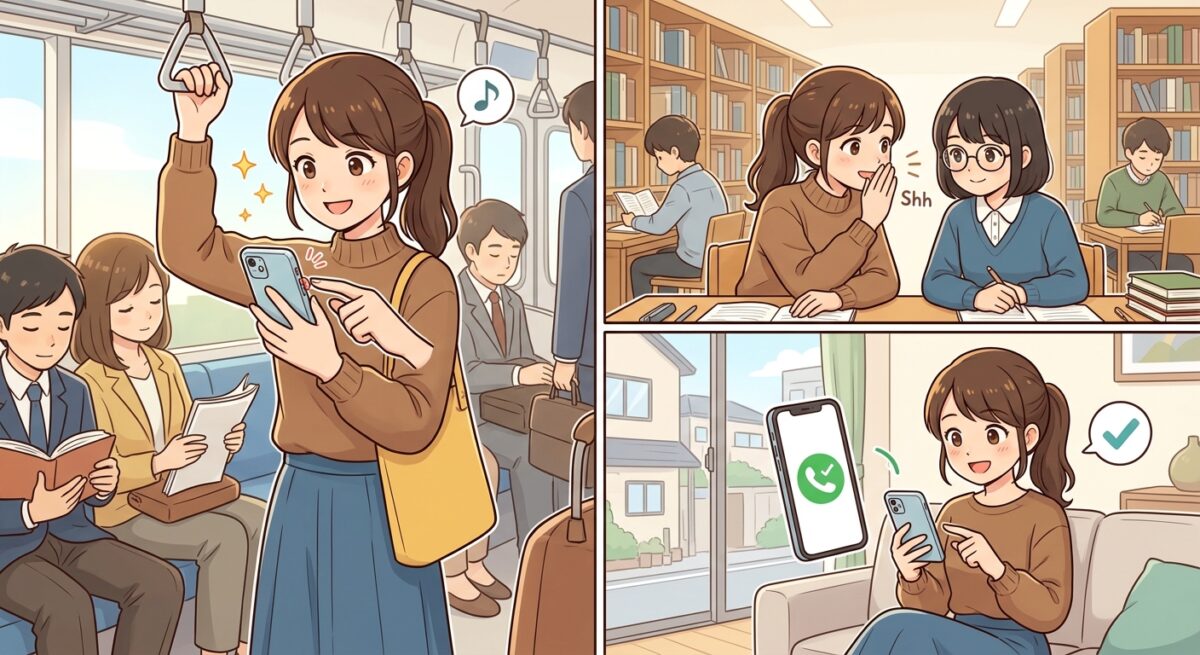
On trains and buses, quiet conversation is usually fine, but loud group talk and phone calls are often considered disruptive. Many passengers are commuting, resting, reading, or using the time quietly.
Set your phone to silent mode, avoid speakerphone, and use headphones for audio. If you need to take an urgent call, speak briefly and quietly, or wait until you get off when possible.
Hotels and Ryokan
Hotels and traditional inns often have thin walls or quiet hallways. Keep your voice low in corridors, elevators, shared baths, and late at night. This is especially important after 9 or 10 p.m., depending on the property.
If you return late, avoid loud conversations near room doors. In a ryokan, quiet behavior may be expected in dining rooms, baths, and tatami areas.
Apartment Buildings and Shared Housing
For new residents, noise in apartments is one of the most important daily-life issues. Footsteps, washing machines, vacuum cleaners, music, calls, parties, and moving furniture can bother neighbors, especially at night or early morning.
Rules vary by building, but it is wise to keep noise low after evening hours. Check your rental agreement or building notices for quiet hours, garbage rules, and shared-space rules.
Elevators
Elevators are small shared spaces. Short, quiet conversation is usually okay, but loud phone calls, videos, or group noise can feel uncomfortable because others cannot move away.
Temples and Shrines
Temples and shrines may be tourist destinations, but they are also religious spaces. Speak quietly near prayer areas, halls, graves, rituals, and people worshipping.
Outdoor grounds can be more relaxed, especially at festivals, but signs, staff guidance, and the atmosphere of the place matter.
Late-Night Streets
Residential streets can become very quiet at night. Loud talking after dinner, drinking, or karaoke may carry into homes. Be especially careful near apartments, houses, hotels, and convenience stores late at night.
What to Avoid
Avoid assuming that “public” means “anything is fine.” Hotel corridors, apartment hallways, elevators, trains, temples, and quiet streets are shared spaces where sound can feel more personal than visitors expect.
Places Where Normal Conversation Is Usually Fine
Casual Restaurants and Izakaya
Many casual restaurants and izakaya are lively. Normal conversation is fine, and some places are naturally noisy. Still, avoid shouting across the table or playing audio from your phone.
Cafes
Cafes vary widely. A busy chain cafe may allow normal conversation, while a small independent cafe may feel calm and quiet. If most customers are reading or working silently, lower your voice.
Tourist Areas and Parks
Outdoor tourist areas, parks, markets, and festivals are usually more relaxed. Even so, avoid blocking paths, shouting near homes, or using loud speakers.
Family-Friendly Places
Shopping malls, family restaurants, amusement facilities, and some museums may be more tolerant of children and group conversation. Follow posted rules and staff guidance.
Japan vs Other Countries
In some countries, public conversation is more open and energetic. In Japan, the expected volume often depends strongly on the setting. A lively izakaya and a commuter train may both be public spaces, but the sound expectations can be very different.
Phone Calls and Video Audio
Phone manners are a common source of confusion. On public transportation, phone calls are generally avoided. In waiting rooms, museums, quiet cafes, hotel lobbies, and temples, calls should be brief and quiet or taken outside.
Videos, games, music, and social media audio should be muted or played with headphones. Speaker audio in trains, hotel corridors, restaurants, and shared rooms can feel intrusive even if the volume seems low to you.
If you are using translation apps, maps, or audio guides, keep the volume low or use earphones when possible.
Traveling with Children
Children are children, and most people understand that they cannot be silent all the time. Still, parents and guardians are generally expected to manage noise in shared spaces.
Bring quiet activities for trains, restaurants, and waiting areas. If a child becomes very upset in a quiet restaurant, hotel hallway, museum, or temple area, stepping outside for a moment can help.
Choose family-friendly restaurants, parks, or attractions when possible. Some places are more relaxed than others.
When You Are in a Group
Groups can become louder without noticing. This is especially common after dinner, during sightseeing, or when walking between stations and hotels.
In Japan, a group speaking loudly in a narrow train car, quiet cafe, or late-night residential street can stand out quickly. One person in the group can help by checking the surroundings and lowering the overall volume.
What You Should Do
- Match your voice level to the people around you.
- Use headphones for videos, games, music, and calls.
- Avoid phone calls on trains and buses unless urgent.
- Keep hotel corridors, elevators, and apartment shared spaces quiet.
- Lower your voice at temples, shrines, museums, clinics, and quiet cafes.
- Be extra careful late at night in residential areas.
- Check building or hotel rules if you are staying longer.
What to Avoid
- Do not assume every public place is suitable for loud conversation.
- Do not use speakerphone in trains, buses, elevators, cafes, or hotel corridors.
- Do not play videos or music aloud in shared spaces.
- Do not hold loud group conversations near homes or hotel rooms late at night.
- Do not ignore signs asking for quiet behavior.
- Do not expect every restaurant or cafe to have the same atmosphere.
Avoid This
Avoid using your phone speaker in trains, hotel corridors, apartment hallways, cafes, elevators, or quiet waiting areas. Even a short video or call can feel very noticeable in those spaces.
Frequently Asked Questions
Do I need to be silent everywhere in Japan?
No. Normal conversation is fine in many places. The important point is to lower your volume in shared, quiet, enclosed, or residential spaces.
Can I talk on the train?
Quiet conversation is sometimes fine, especially outside rush hour. Phone calls and loud group conversations are usually avoided on regular trains and buses.
Are restaurants quiet in Japan?
It depends on the restaurant. Izakaya and family restaurants can be lively, while small cafes, fine dining restaurants, and hotel dining rooms may be much quieter.
What should I do if my child is noisy?
Do not panic. Try to calm the child, use quiet activities, and step outside briefly if the space is very quiet or enclosed.
Is it rude to play videos on my phone?
In shared spaces, yes, it can be disruptive. Use headphones or mute the audio, especially on trains, in hotel corridors, cafes, elevators, and waiting rooms.
How This Article Was Reviewed
This article was reviewed by the Why Japan Editorial Team in May 2026. We checked the guidance for practical usefulness, visitor clarity, and cultural balance. Quietness expectations can vary by place, time of day, facility, region, crowd level, and situation, so this guide focuses on common decision points rather than one fixed rule for all of Japan.
Final Thoughts: Match the Space
Japan is not silent, and you do not need to be silent to enjoy your trip or daily life. You just need to notice where sound carries and where people expect a calmer atmosphere.
Speak normally in relaxed places, lower your voice in shared or quiet spaces, and keep phone and video audio under control. Those small habits make trains, hotels, restaurants, neighborhoods, and sightseeing areas more comfortable for everyone.
Key Takeaways
- Japan is not always quiet, but many shared spaces expect lower voices.
- Trains, buses, hotels, apartments, elevators, temples, shrines, and nighttime residential areas need extra care.
- Phone calls on trains and buses are usually avoided.
- Video and game audio should be muted or played with headphones.
- Restaurants and cafes vary: some are lively, while others are very quiet.
- Children are understood, but parents are expected to manage noise when possible.
- When unsure, match the volume of the people around you.
