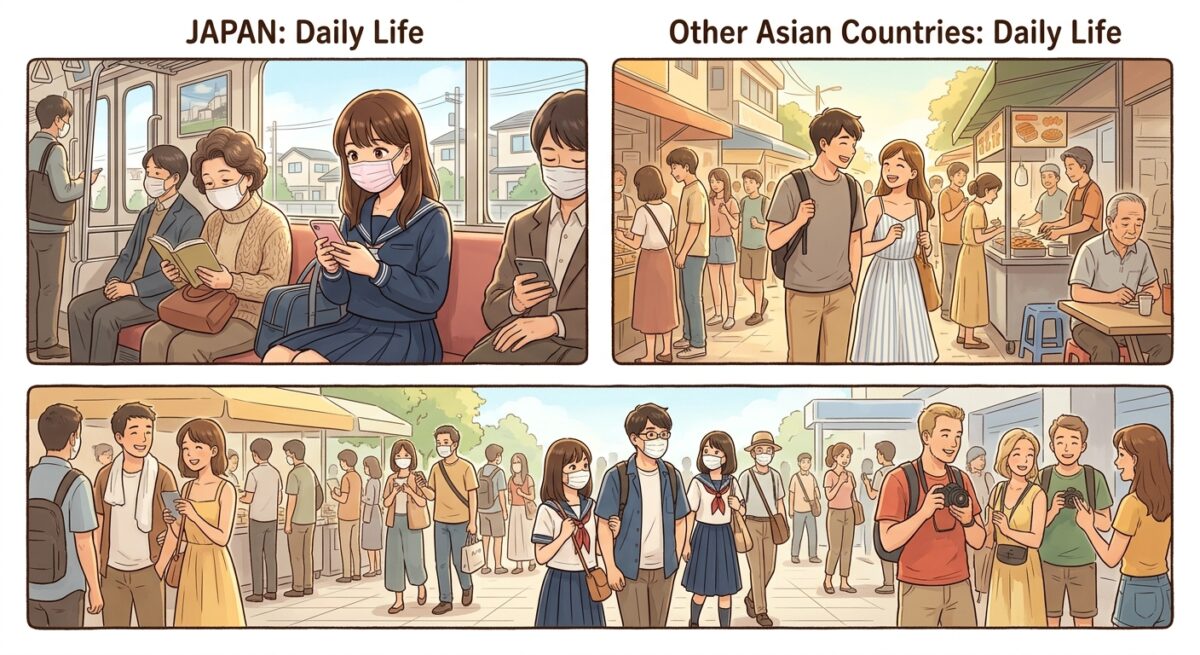
You do not need to wear a mask everywhere in Japan. Since March 13, 2023, the national government's basic position has been that mask use is an individual decision. That does not mean every setting is identical: the government recommends masks in certain higher-risk situations, and a hospital, care facility, workplace, event, or other operator may set its own request.
The practical rule for travelers is: check the place first, then consider your symptoms and the crowding. Do not rely only on what people around you are doing.
The current rule in one sentence
There is no blanket national requirement to wear a mask in ordinary daily life, but masks are nationally recommended in specified settings and may be requested by an individual facility.
| Level | What it means for a visitor | Typical example |
|---|---|---|
| Posted or staff request | Follow the condition for that place, ask staff, or choose not to enter. | A clinic or care facility asks visitors to wear masks. |
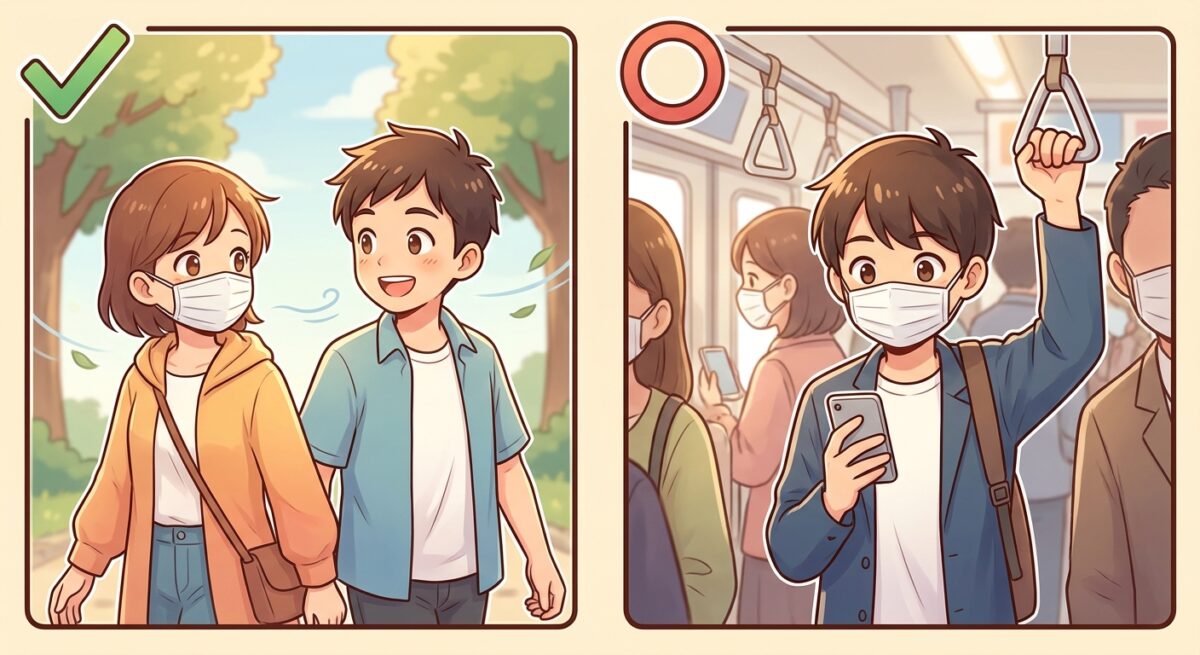
| Nationally recommended | Wearing one is advised even though this is not a blanket rule for all public spaces. | Visiting a medical institution or care facility; riding a crowded commuter train or bus. |
| Situational courtesy | Consider a mask and reduce close contact, especially if you have respiratory symptoms. | You must go out while coughing or sneezing. |
| Personal choice | Decide based on comfort, health, crowding, and the people you are with. | Outdoor sightseeing or an uncrowded shop with no request. |
A 30-second decision order
- Look for a sign or listen to staff. A local request is more specific than a general travel article.
- Check your symptoms. If you are unwell, avoid unnecessary outings. If you must go out for care or another essential reason, avoid crowds where possible and consider a mask.
- Identify the setting. Medical and elder-care environments deserve more caution than an open-air attraction.
- Check crowding. A packed rush-hour carriage is different from a nearly empty train.
- Check heat and individual needs. Do not ignore physical discomfort or pressure a child or another person to wear a mask.
What to do by setting
Hospitals, clinics, and elder-care facilities
Bring a mask and check the entrance before you go in. The Ministry of Health, Labour and Welfare recommends mask use when receiving medical care and when visiting facilities where people at higher risk may be present. A facility may have a specific entry procedure, so call ahead if you are unsure.
A retail pharmacy is not automatically the same as a hospital. Follow its signs, especially near consultation counters or attached clinics, rather than assuming one national rule applies to every drugstore.
Trains and buses
There is no general mask requirement simply because you board public transport. National guidance recommends masks on crowded commuter trains and buses, such as during rush hour. The guidance distinguishes services where nearly everyone can be seated, including the Shinkansen, highway buses, and reserved commuter services, from packed commuter conditions.
If the carriage is quiet and uncrowded and you feel well, not wearing a mask is generally consistent with personal choice. For other behavior on board, read our guide to train etiquette in Japan.
Airports and stations
An airport or station does not create a nationwide mask requirement by itself. Check signs for a lounge, clinic, security area, event, or transport service. Crowding and your symptoms may change the sensible choice.
Shops, restaurants, hotels, and tourist sites
Mask use is commonly left to the visitor unless the operator posts a request. Staff may wear masks without asking customers to do the same. In restaurants and cafés, masks are removed to eat and drink; do not treat that ordinary action as a violation. Museums, performance venues, and events may set their own conditions, so check the booking page and entrance notice.
Schools and workplaces
Japan's education ministry has said that, as a basic approach since April 2023, schools should not require masks during normal school activities. It also says students who wish to wear one should not be forced to remove it. A school visitor should still follow the school's current instructions, because a local health situation or a particular activity may affect the arrangement.
Workplaces can also have their own policies for employees and visitors. Ask your host or reception desk instead of assuming that a practice in one office applies nationwide.
Outdoor sightseeing
At parks, streets, shrine approaches, and other open-air places with no posted request, mask use is generally a personal choice. In hot or humid weather, pay attention to how you feel, take breaks, use shade or air conditioning, and seek help if you develop signs of heat illness. This article cannot assess an individual's medical needs.
Symptoms, pollen, children, and personal needs
If you have respiratory symptoms
Official guidance asks people with symptoms to avoid going out where possible. If you must leave for medical care or another essential reason, avoid crowds and wear a mask if you can do so safely. Contact the medical facility before visiting when its instructions require it. This is infection-control guidance, not a diagnosis.
If you have seasonal allergies
Masks are also commonly worn during pollen season, so do not assume that a masked person is infectious. If you want advice about allergy symptoms or products, ask a qualified healthcare professional or pharmacist; travel etiquette cannot determine the right treatment.
Children and people who cannot comfortably mask
Do not force a child who is unwell or having difficulty to keep a mask on. Parents and guardians should monitor the child's condition and follow current facility guidance. Adults may also have health, disability, sensory, or other reasons that are not visible. Respectful mask etiquette includes not demanding an explanation.
For more context about the different reasons people make different choices, see why mask use remains visible in Japan.
If a staff member asks
A short question is more useful than a long explanation. These phrases are neutral and do not claim that the rule applies elsewhere.
| Japanese | Romanization | English |
|---|---|---|
| マスクは必要ですか? | Masuku wa hitsuyō desu ka? | Do I need a mask? |
| マスクを持っていません。 | Masuku o motte imasen. | I do not have a mask. |
| どこで買えますか? | Doko de kaemasu ka? | Where can I buy one? |
If a place requires a mask and you cannot or prefer not to wear one, ask whether there is an alternative. If there is not, leaving politely is safer than arguing at the entrance.
Before you enter: a practical check
- Is there a mask sign or an instruction in your booking message?
- Are you entering a medical or elder-care setting?
- Do you have symptoms, or is the space very crowded?
- Can you wear a mask safely and comfortably in the current heat and activity?
- If the answer is unclear, can you ask staff rather than guess?
Official references
- Ministry of Health, Labour and Welfare: Mask-wearing guidance
- Ministry of Health, Labour and Welfare: COVID-19 information in English
- Ministry of Education, Culture, Sports, Science and Technology: school mask FAQ
- Japan National Tourism Organization: Japanese customs and etiquette
- Ministry of Health, Labour and Welfare: heatstroke information
Guidance checked on July 20, 2026. National guidance and individual facility policies can change. Current signs, booking notices, and staff instructions take priority for the place you are visiting.
