Sukiyaki is one of Japan’s best-known hot pot dishes. It is made with thinly sliced beef, vegetables, tofu, and shirataki noodles cooked in a sweet and savory soy sauce-based sauce. For many people in Japan, sukiyaki feels like a special meal to share with family or guests, especially in colder seasons.
Global Japanese Words
A specific shared-pan dish, not a hot-pot category
すき焼き (Sukiyaki)
Sukiyaki is a Japanese one-pot dish often enjoyed at the table. The ingredients are cooked together in a sweet-salty sauce, and each person takes pieces from the pot as the meal continues.
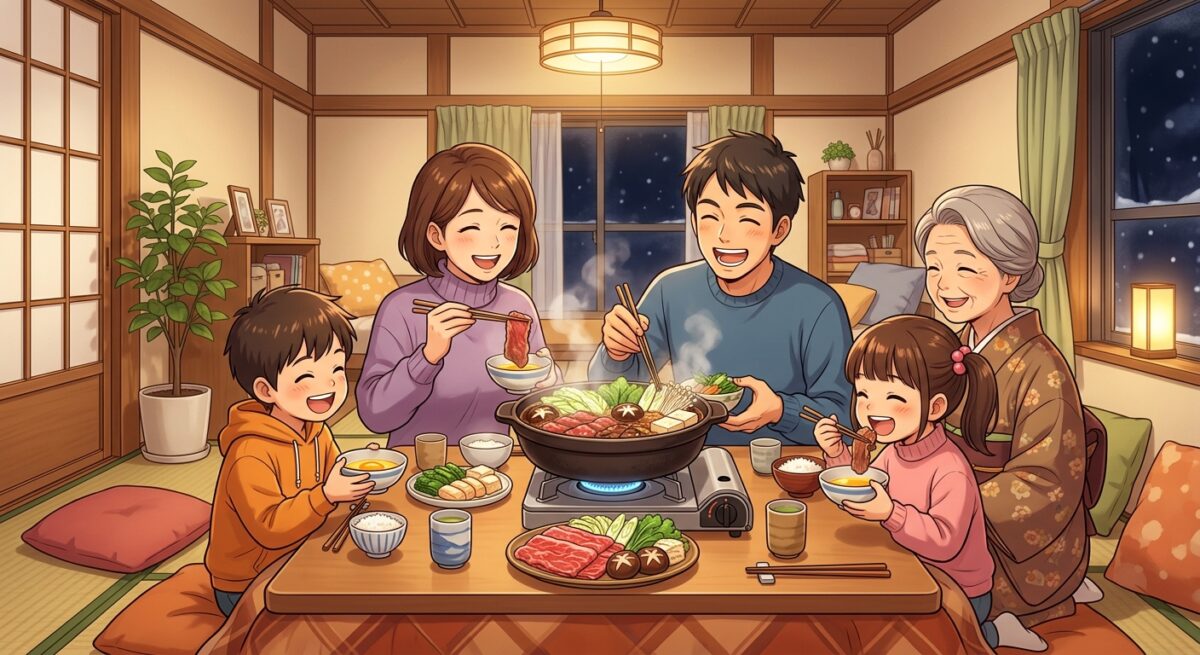
すき焼き names a dish, not every hot pot
- Japanese
- すき焼き
- Romaji
- Sukiyaki
- Core meaning
- A Japanese hot pot dish made with thinly sliced beef, vegetables, tofu, shirataki noodles, and a sweet-savory soy sauce-based sauce.
- Quick nuance
- Sukiyaki is not just a simple beef dish. It often feels like a warm, shared meal for family gatherings, celebrations, guests, or cold-weather dinners.
- Safe usage tip
- Use the word すき焼き when talking about the dish itself, making sukiyaki at home, eating it at a restaurant, or sharing a special hot pot meal with others.
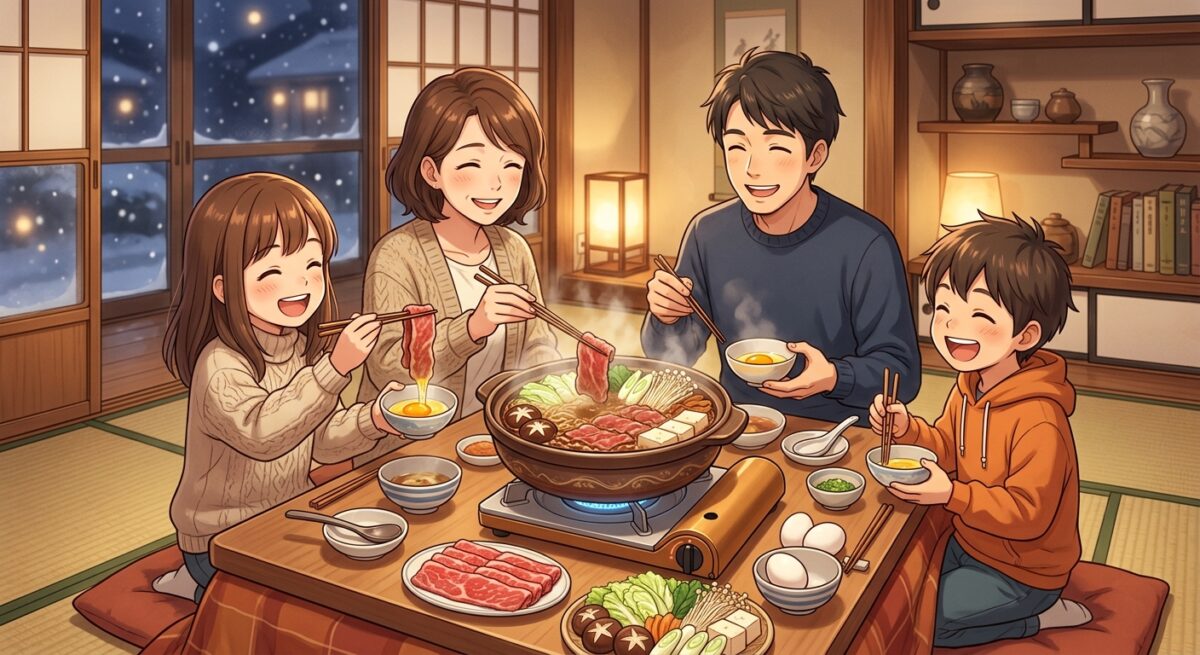
What arrives when you order すき焼き
Sukiyaki is a Japanese nabemono, or one-pot dish. It usually includes thinly sliced beef, tofu, shirataki noodles, mushrooms, green onions, and leafy vegetables such as napa cabbage or shungiku.
The ingredients are cooked in a sauce made with soy sauce, sugar, mirin, and sake. The flavor is rich, sweet, and savory.
In many homes and restaurants, sukiyaki is cooked at the table. This makes it feel social and interactive, rather than like a dish that is simply served already finished from the kitchen.
The name does not define one universal recipe
すき焼き means sukiyaki, a Japanese hot pot-style dish. It is most often associated with beef cooked in a sweet soy sauce-based sauce with vegetables, tofu, and noodles.
The word refers to the dish itself, but it also carries the feeling of a shared meal. In Japan, sukiyaki can feel a little more special than an ordinary weekday dinner.
Saying すき焼き
Romaji: Sukiyaki
Pronunciation: Soo-kee-yah-kee
Invitations, menus, and home meals
すき焼き is used as a noun. You can say すき焼きを食べる, meaning “to eat sukiyaki,” or すき焼きを作る, meaning “to make sukiyaki.”
It is a normal everyday food word, not slang or formal language. However, the dish itself often feels a bit special because it is commonly shared with family, guests, or friends.
Sukiyaki is especially popular in cooler months, but it can be eaten any time of year. It is also a good word to know when reading Japanese menus or watching food-related videos about Japan.
Hear すき焼き in a dinner invitation
Japanese: 今夜は寒いから、すき焼きを作りましょう。お祝いにもぴったりです。
English: Let's make sukiyaki tonight; it's perfect for this chilly weather and a great way to celebrate.
Regional and household choices change the meal
For many Japanese people, sukiyaki feels like a warm shared meal rather than just a recipe. It may be served when relatives gather, when guests come over, or when the family wants something a little special.
In some homes, people dip the cooked beef and vegetables into a small bowl of raw egg before eating. This is a common style in Japan, though not everyone does it.
Do not reduce すき焼き to “sweet beef hot pot”
Many learners confuse sukiyaki with shabu-shabu. Both are Japanese hot pot-style dishes, and both often use thinly sliced beef, but they are not the same.
In sukiyaki, the ingredients are cooked in a sweet and savory sauce. In shabu-shabu, thin slices of meat are usually swished briefly in hot broth and then dipped in sauce.
Decide by dish, region, and raw-egg comfort
Sukiyaki is a Japanese hot pot dish made with thinly sliced beef, tofu, vegetables, shirataki noodles, and a sweet soy sauce-based sauce.
The word is easy to translate, but the cultural feeling matters too. Sukiyaki often suggests warmth, sharing, family, guests, and a slightly special meal.
What a first-time diner needs to know
If you enjoy Japanese food words, compare すき焼き with しゃぶしゃぶ, 鍋, and 焼肉. These words are all connected to shared meals, but each one has a different cooking style and atmosphere.
If the menu description is not enough
Ask whether the sukiyaki contains beef, what vegetables are included, and whether raw egg is served on the side. If you want meat cooked briefly in plain broth instead, check whether the restaurant offers shabu-shabu; it is a different dish, not an alternative name for sukiyaki.