You may have seen ネタバレ (netabare) online, in anime discussions, movie reviews, or game communities. It is the Japanese word for a spoiler — information that reveals an important part of a story before someone has experienced it.
Global Japanese Words
ネタバレ (Netabare)
ネタバレ (netabare) means a spoiler. It refers to revealing key story details, plot twists, endings, or outcomes before someone has watched, read, or played the work themselves.
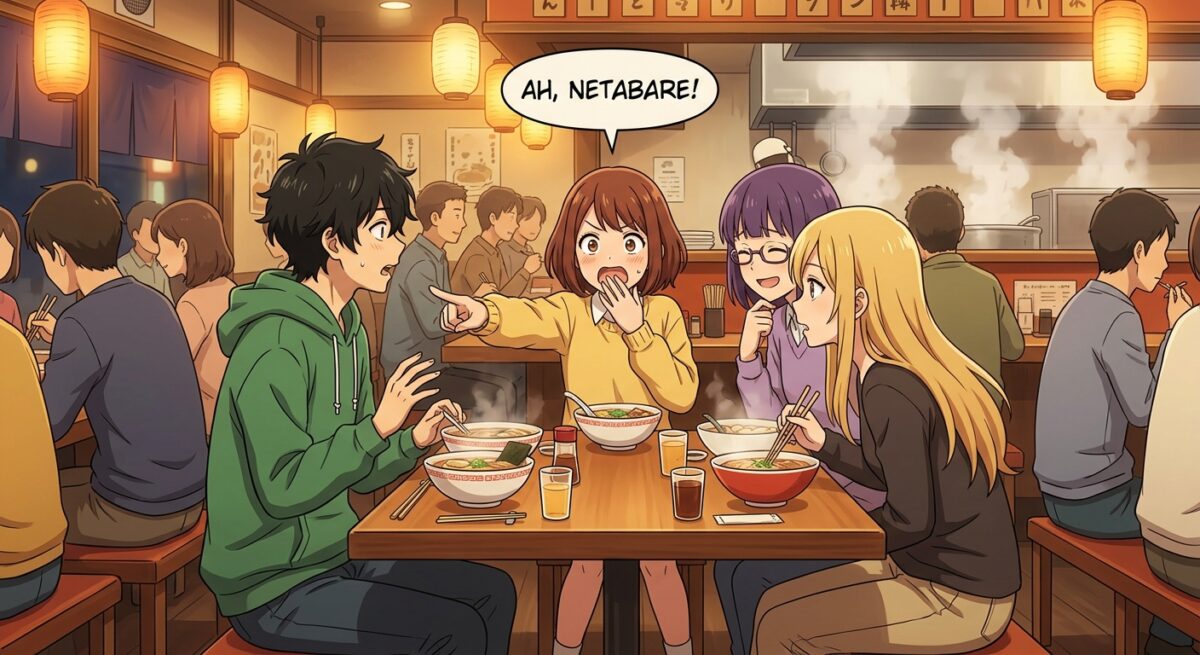
ネタバレ means revealing story information
- Japanese
- ネタバレ
- Romaji
- Netabare
- Core meaning
- A spoiler; information that reveals an important part of a story, plot, ending, twist, or outcome.
- Quick nuance
- ネタバレ is commonly used in entertainment contexts such as anime, manga, movies, dramas, novels, and games. It often has a negative nuance because it can ruin the surprise for someone who has not experienced the work yet.
- Safe usage tip
- Use ネタバレ when warning people about spoilers, asking someone not to reveal story details, or describing content that includes major plot information.
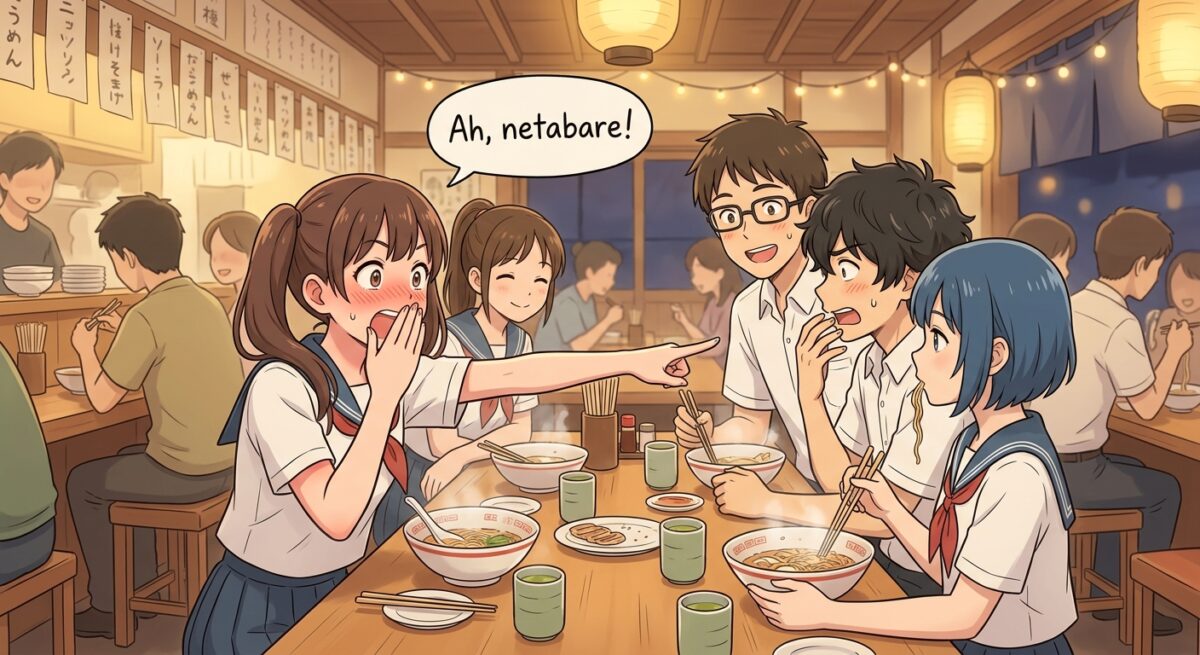
ネタバレ names revealed plot information
ネタバレ (netabare) means a spoiler. It refers to information that reveals a key part of a story, plot, ending, mystery, or outcome before someone has experienced it themselves.
The word comes from ネタ (neta), meaning material, story material, or content, and バレ, from バレる (bareru), meaning “to be exposed” or “to be revealed.” So the image is that important story material has been revealed too early.
Saying ネタバレ
Romaji: Netabare
Pronunciation guide: NEH-tah-bah-reh
Place the warning before the reveal
ネタバレ is most commonly used as a noun. It appears often in phrases like ネタバレ注意 (spoiler alert), ネタバレあり (contains spoilers), and ネタバレなし (no spoilers).
You can also use it with する, as in ネタバレする, meaning “to spoil something” or “to reveal a spoiler.” For example, ネタバレしないで means “Don’t spoil it.”
This word is especially common when talking about movies, anime, manga, novels, games, dramas, and review content. It is usually not the best word for general secrets, private information, or confidential business information. In those cases, words like 秘密 (secret), 機密情報 (confidential information), or 暴露 (exposure/revelation) may be more appropriate depending on context.
Hear ネタバレ in a review discussion
Japanese: その映画、ネタバレしないでね!
English: Please don't spoil the movie for me!
Warnings and consent matter more than formality
For many Japanese fans, ネタバレ is not only about revealing information. It is also about respecting the timing of someone’s first experience. That is why people often add spoiler warnings before discussing major plot points online.
ネタバレ注意 is a warning, not the spoiler itself
A common misunderstanding is thinking that ネタバレ can be used for any kind of secret. In natural Japanese, it is mainly used for entertainment or story-related information, especially when revealing that information would reduce someone’s enjoyment.
Warn first, then separate the spoiler
ネタバレ (netabare) means a spoiler. It is used when important story information is revealed before someone has watched, read, or played the work themselves.
The word is especially common in online discussions, reviews, social media posts, anime and manga communities, game communities, and movie conversations. If you see ネタバレ注意, it means you should expect spoilers ahead.
How to warn before discussing plot details
Try reading the Japanese example aloud, then compare it with the English meaning before using the word yourself.
If you reveal something by mistake
Do not continue with more plot details. Apologize briefly, add a spoiler warning before any follow-up, and move the rest behind a link, fold, or clearly separated section. ネタバレ注意 helps only when readers see it before the reveal.