You may have seen ノマド (nomado) online, in business articles, or in conversations about flexible work. In modern Japanese, this loanword is often connected with remote work, laptop-based work, and the digital nomad lifestyle. However, its nuance is slightly different from the broad English word “nomad.”
Global Japanese Words
ノマド (Nomado)
ノマド (nomado) is a Japanese loanword from “nomad.” In everyday modern Japanese, it is often used to talk about people who work flexibly from different places, especially remote workers, freelancers, and digital nomads.
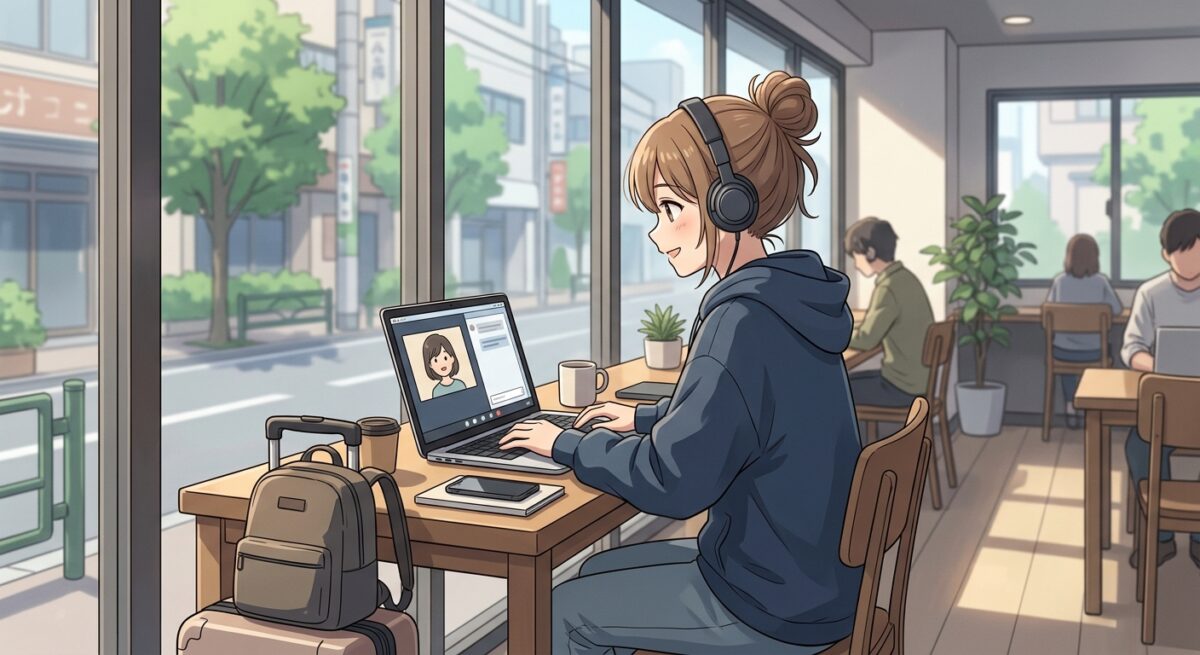
ノマド often points to laptop-based work
- Japanese
- ノマド
- Romaji
- Nomado
- Core meaning
- A person who works flexibly from different places, often using a laptop or online tools; commonly understood as a digital nomad or nomad worker.
- Quick nuance
- In Japanese, ノマド usually does not refer to traditional nomadic peoples in everyday conversation. It is more often used in modern work-related contexts, such as ノマドワーカー (nomad worker), remote work, freelancing, coworking spaces, and location-independent work.
- Safe usage tip
- Use ノマド when talking about modern flexible work styles, especially people who work online while moving between places. Avoid using it casually for traditional nomadic cultures or for someone who is simply traveling for vacation.
ノマド usually means working away from a fixed office
ノマド (nomado) comes from the English word “nomad,” but in Japanese it is often used in a modern work-related sense. It commonly refers to someone who works remotely or independently from different places, often using a laptop, smartphone, internet connection, and online tools.
The related expression ノマドワーカー (nomado waakaa) means “nomad worker” and is especially common when describing people who work from cafés, coworking spaces, hotels, or travel destinations instead of a fixed office.
Why travel alone is not enough
In Japanese, ノマド often has a positive or stylish image connected with freedom, flexibility, independence, and modern work. It can suggest someone who is not tied to one office or one fixed routine.
However, the word can also sound a little trendy or business-media-like, depending on the context. In casual conversation, people may use more specific phrases such as リモートワーク (remote work), フリーランス (freelance), or 在宅勤務 (working from home), depending on what they mean.
Saying ノマド and ノマドワーカー
Romaji: Nomado
Pronunciation guide: Noh-mah-doh
Hear ノマド in a work-style discussion
Japanese: 彼女はノマドとして、オンラインビジネスを運営しながら世界中を旅している。
English: She works as a digital nomad, traveling the world while running her online business.
The Japanese loanword is narrower than English “nomad”
When Japanese people say ノマド in a modern work context, they often picture someone working on a laptop in a café, coworking space, or travel destination. The word is strongly connected with tech-enabled freedom and flexible work, rather than traditional nomadic life.
Do not use ノマド for every traveller
English speakers may assume ノマド simply means any wandering person or any traditional nomadic group. In modern Japanese lifestyle and business contexts, however, ノマド is usually closer to “digital nomad,” “nomad worker,” or “location-independent worker.”
Distinguishing ノマド from remote work and travel
If this word felt useful, keep it as a small cultural note for the next time you hear Japanese in business, lifestyle, or travel-related contexts.