If you see chawanmushi on a Japanese menu, do not expect a sweet custard dessert. 茶碗蒸し is a warm, savory steamed egg dish made with dashi. It is soft, smooth, and often served in a small cup as part of a Japanese meal.
Global Japanese Words
Read the menu name without expecting dessert
茶碗蒸し (Chawanmushi)
Chawanmushi is a Japanese savory steamed egg custard. It usually contains dashi, egg, and small ingredients such as chicken, shrimp, mushrooms, or ginkgo nuts. The texture is soft and silky, closer to a gentle steamed custard than an omelet.
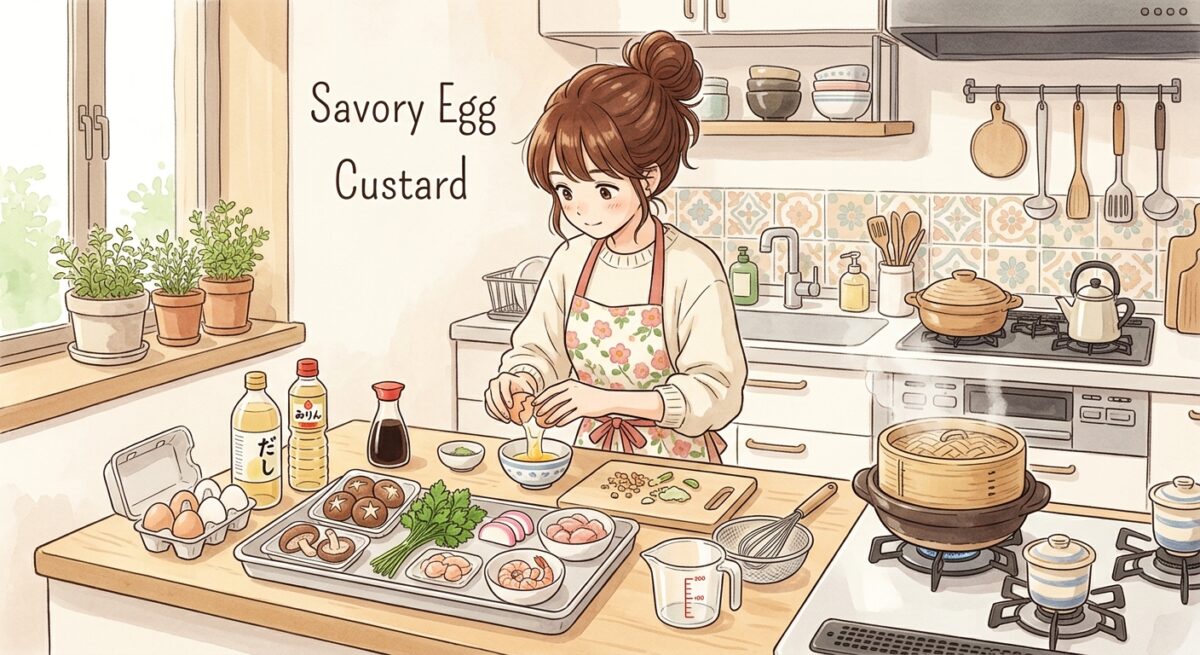
茶碗蒸し is savory, not dessert
- Japanese
- 茶碗蒸し
- Romaji
- Chawanmushi
- Core meaning
- A savory Japanese steamed egg custard, usually served warm in a small cup.
- Quick nuance
- It is soft, smooth, and lightly flavored with dashi. Although the English word “custard” may sound sweet, chawanmushi is a savory dish.
- Safe usage tip
- Use the word when talking about Japanese food, restaurant menus, set meals, kaiseki meals, or home-style dishes.

Why “custard” predicts the wrong flavor
The biggest misunderstanding is the word “custard.” In English, custard often sounds like something sweet. Chawanmushi, however, is not a dessert. It is a savory dish made with egg and dashi, so the flavor is mild, warm, and slightly umami-rich.
What 茶碗蒸し literally names
Chawanmushi literally refers to something steamed in a small bowl or cup. In practice, it means a Japanese steamed egg custard made with beaten egg and dashi. Small ingredients are usually placed inside the cup before steaming.
Common ingredients include chicken, shrimp, shiitake mushrooms, kamaboko fish cake, and ginkgo nuts. The exact ingredients can change depending on the restaurant, season, or household.
Dashi and texture define the dish
Chawanmushi is a good example of how Japanese food can be quiet and simple, but still carefully prepared. The flavor is not strong, so the texture, temperature, and dashi matter a lot. If it is steamed well, it feels smooth and delicate when eaten with a spoon.
It is also useful to know because it appears in many different settings. You may see it at a sushi restaurant, in a Japanese set meal, at a family gathering, or as one small dish in a traditional course meal.
Hear 茶碗蒸し in a restaurant order
Japanese: 軽くて満足感のある前菜として、和食レストランではよく茶碗蒸しを注文します。
English: For a light yet satisfying appetizer, I often order chawanmushi at Japanese restaurants.
Where it appears in a Japanese meal
Chawanmushi is often served as a small dish rather than a main course. It can appear at the beginning of a meal, alongside other dishes, or as part of a more formal Japanese course menu.
The dish is also popular because it is easy to eat. Its soft texture makes it comfortable for children, older people, or anyone who wants something light. At the same time, when it is made carefully, it can feel refined enough for a special meal.
In Japan, the ingredients inside chawanmushi may change by season or restaurant style. This is one reason it can feel slightly different each time you order it.
How to eat it and check the fillings
Chawanmushi is a good choice when you want something warm, light, and gentle. It works well as a small appetizer or side dish, especially if the rest of the meal includes rice, fish, sushi, tempura, or other Japanese dishes.
It may not be the best choice if you are looking for something bold, spicy, crunchy, or filling as a main dish. Its appeal is in its soft texture and quiet dashi flavor.
The English word “custard” creates the wrong expectation
Many English speakers might expect chawanmushi to be sweet, like a Western custard or pudding. In reality, it is savory and usually flavored with dashi. Think of it as a soft, steamed Japanese egg dish rather than a dessert.
What to expect when 茶碗蒸し reaches the table
Food words like chawanmushi are easier to remember when you connect the translation with the actual dining experience. In this case, remember three points: egg, dashi, and a small steamed cup.