Scope: This page is specifically about the shortened お疲れ in texts, SNS, and peer conversation. For workplace forms such as お疲れ様です and お疲れ様でした, use the separate Otsukaresama guide.
You saw this phrase in a Japanese text or SNS message. But what does otsukare really mean? お疲れ (otsukare) is a casual way to acknowledge someone’s effort, work, practice, or long day. It can feel warm and friendly with close friends, classmates, teammates, or casual coworkers, but it is too casual for formal situations.
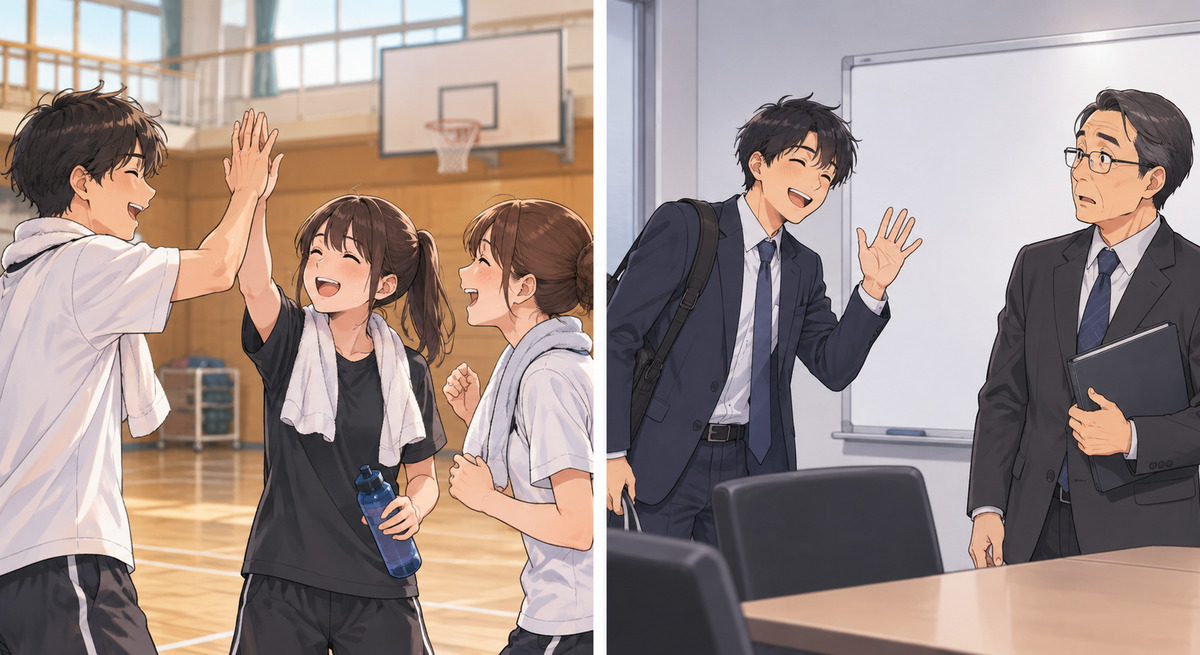
The short form belongs to peer-level messages
Otsukare (お疲れ) is a casual Japanese phrase used to say something like “good work,” “thanks for your effort,” “you worked hard,” or “see you after a task.” It is especially common in texts, SNS, school, part-time jobs, clubs, and friendly conversations.
The important point is politeness. お疲れ is casual. If you are talking to a teacher, manager, client, customer, or someone you do not know well, お疲れ様です or another polite phrase is usually safer.

Why shortening the phrase changes the relationship
A foreign learner sees otsukare online and thinks it is just a simple English equivalent of “good job.” Then they use お疲れ with a teacher, manager, or customer.
The listener may understand the meaning, but the tone can feel too casual because お疲れ is a shortened, friendly form.
Safer: Use お疲れ様です in polite workplace or school situations, and use お疲れ mainly with people you are close to.
What お疲れ acknowledges in a message
お疲れ is a shortened, casual form related to お疲れ様. It is used to acknowledge that someone has worked, helped, practiced, studied, finished a task, or gone through a long day.
It does not literally mean only “you are tired.” In real conversation, it often carries a warm feeling of “good work,” “thanks for today,” “you did well,” or “see you after that effort.”
Messages after work, practice, and plans
Here are natural conversation-style examples to help you understand how this kind of expression feels in real situations.
- After a friend’s shift (LINE): A: バイト終わった〜 (Baito owatta~ — “Finally done with my shift.”) B: お疲れ!ゆっくり休んでね。 (Otsukare! Yukkuri yasunde ne. — “Nice work! Get some rest.”)
- Group chat after an event: みんなお疲れ〜!楽しかった! (Minna otsukare~! Tanoshikatta! — “Great job, everyone! That was fun!”)
- Replying to a senior: お疲れ様です!承知しました。 (Otsukaresama desu! Shōchi shimashita. — “Thanks for your hard work! Understood.”) Switch from お疲れ to お疲れ様です when the other person is above you.
Where the short form stops being safe
These expressions are related, but the politeness level changes.
- お疲れ: Very casual. Best for friends, classmates, teammates, close coworkers, or relaxed chats.
- お疲れ様: Friendly but a little fuller than お疲れ. Often used with people you know well.
- お疲れ様です: Polite and very common in workplaces or group settings.
- お疲れ様でした: Polite and often used after something has finished, such as a shift, meeting, class, event, or practice.
Close peers with shared context
お疲れ sounds natural when there is effort, completion, shared work, practice, a part-time job, a school activity, or a long day involved. It is common in casual messages after someone finishes a task or when friends encourage each other.
It also works well in friendly online conversations, especially when the speaker wants to sound relaxed and supportive.
Teachers, managers, clients, and unfamiliar people
Because お疲れ is casual, it can sound too familiar if you use it with someone who expects polite distance. Be careful with teachers, managers, customers, clients, strangers, or anyone much older or higher in status.
In those cases, use お疲れ様です, お疲れ様でした, ありがとうございます, or another polite phrase depending on the situation.
Hear casual お疲れ in context
Text: バイトお疲れ、また明日ね。
English: Good job at your part-time work, see you tomorrow.
Text: 大変だったけど、今日もお疲れ!
English: It was tough, but good job today too!
LINE messages with and without shared effort
Situation: Two friends finish a part-time job shift.
Japanese: 今日もバイトお疲れ。明日は休み?
English: Good work at your part-time job today. Are you off tomorrow?
Why it works: The speakers are close, the setting is casual, and the phrase acknowledges shared effort.
Situation: Classmates finish club practice.
Japanese: 練習きつかったね。お疲れ!
English: Practice was tough, wasn’t it? Nice work!
Why it works: Both people shared the activity, and the casual tone fits classmates or teammates.
Risky situation: A learner says お疲れ to a teacher or manager after a formal meeting.
Why it may sound risky: The phrase itself is friendly, but the shortened form can sound too casual. お疲れ様でした would usually be safer.
Do not copy the short form from a group chat blindly
Do not use お疲れ everywhere. It is friendly and casual, but it can sound too familiar with strangers, superiors, clients, teachers, customers, or in formal writing.
The safest choice depends on relationship, tone, and setting.
Use the polite form—or say what you are thanking them for
- お疲れ様です: Use this with coworkers or people in the same group when you want a polite everyday phrase.
- お疲れ様でした: Use this after a meeting, class, shift, event, practice, or task has finished.
- ありがとうございます: Use this when you simply want to thank someone.
- ありがとうございました: Use this after receiving help, service, or support.
- お世話になっております: Use this in business emails or formal communication with people outside your company.