Why Japan


2026/10/15
Compare casual マジ with neutral 本当 and polite 本当ですか, using relationship and purpose—not intensity alone—to choose “really?” in Japanese.

2026/10/15
Use 推し活 naturally in fan and friend contexts, explain it when the audience may not know the term, and choose neutral hobby wording in formal settings.

2026/10/15
Use the shortened お疲れ with peers after a shared task; switch to お疲れ様です or a direct thank-you when distance or hierarchy makes it too casual.

2026/10/15
See what 陰キャ implies about social image, who uses it, and how to describe a quiet person without attaching a rude label.
2026/10/15
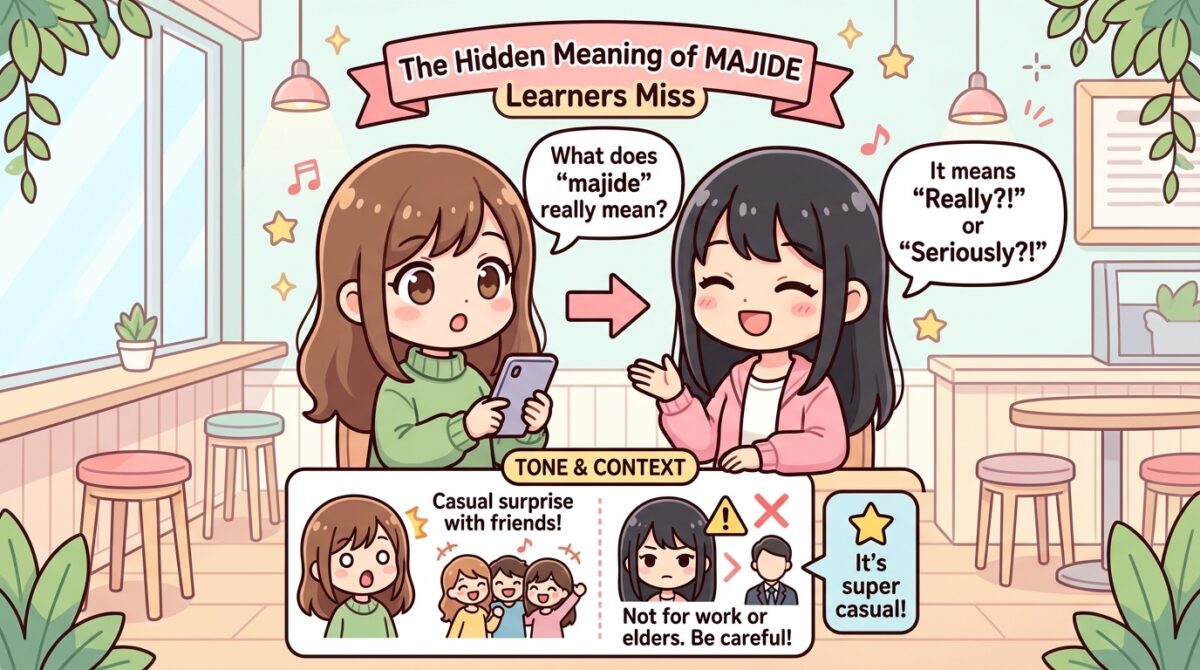
Use マジで for surprise or emphasis with close peers, and switch to 本当ですか or a precise confirmation question when politeness matters.

2026/10/15
School caste describes an informal student hierarchy; habatsu means a faction. Compare their scope and choose neutral wording when labels would be harmful.

2026/10/15
Choose between お疲れ様, お疲れ様です, and お疲れ様でした by relationship and timing, and know when a simple thank-you is clearer.