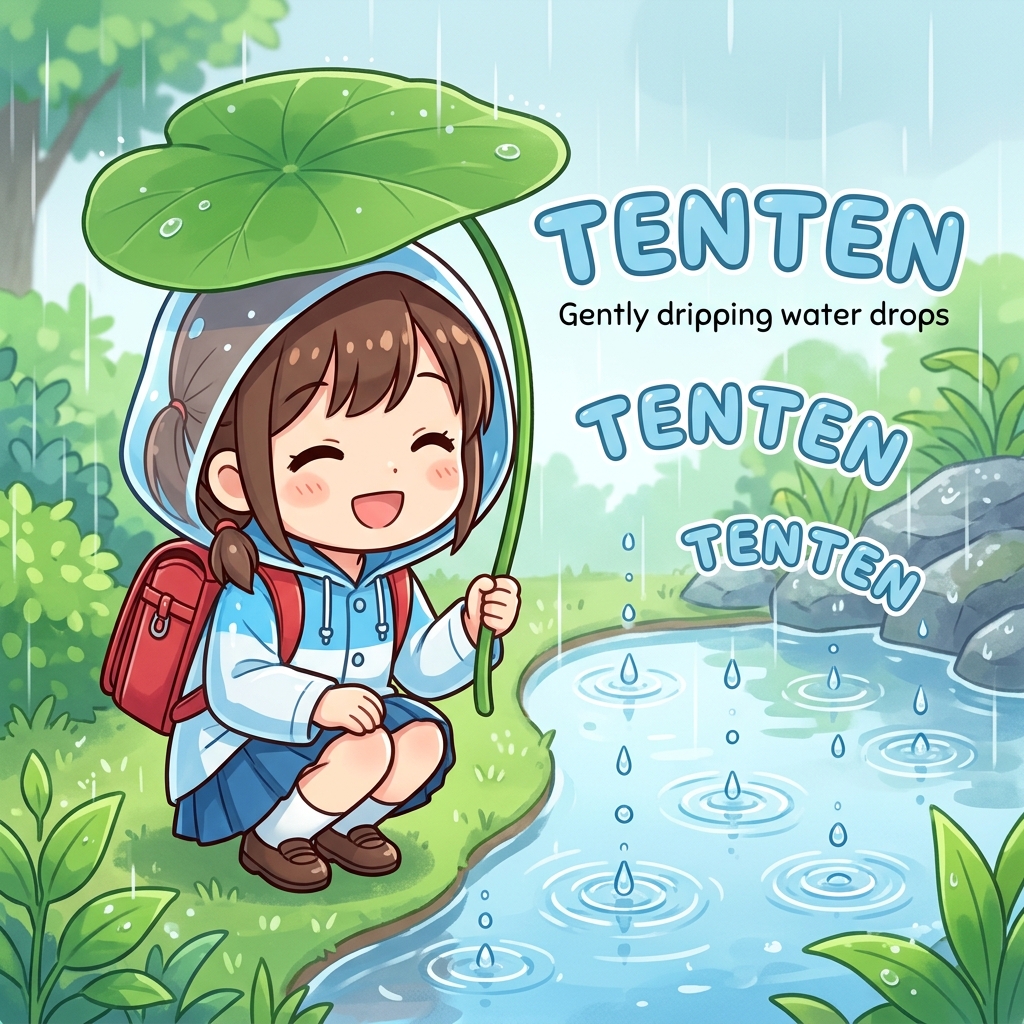
てんてん (tenten) is a small but useful Japanese expression for describing things that appear or happen in separate little points. It often gives the feeling of small marks, small drops, or light repeated touches appearing one after another.
For learners, the important point is this: てんてん is not usually a word for a loud sound or a strong movement. It feels small, light, scattered, and repeated.
You may see or hear it in descriptions of tiny drops, dots, marks, or gentle repeated contact. In some contexts, it can describe drops falling lightly, but for a stronger “drip-drip” sound, Japanese often uses words like ぽたぽた (potapota) or ぽつぽつ (potsupotsu).
What てんてん Really Feels Like
The feeling of てんてん (tenten) is close to “little by little in separate points.” Imagine small dots appearing on a page, light drops falling one by one, or tiny marks spread across a surface.
It does not feel heavy or dramatic. It is more delicate. The image is usually something small repeating or appearing in separate places.
This is why てんてん can be connected to both visual and sound-like descriptions. It may suggest small drops or tiny taps, but the core feeling is not volume. The core feeling is smallness, lightness, repetition, and separation.
How It Works in Context
When てんてん is used in a sentence, it often works with と, as in てんてんと. This form can describe how something appears, falls, or continues in small separate points.
For example, if water drops fall lightly from a roof or leaves, てんてんと can give the image of small drops falling one after another. If small marks are spread across paper, てんてんと can also describe that dotted appearance.
However, it is important not to overuse it. If you simply want to describe ordinary rain, てんてん may not be the most natural choice. For light rain starting to fall, ぽつぽつ is often easier and more common. For quiet continuous rain, しとしと is usually more natural.
Hear てんてん (tenten) in Context
Play the audio and listen to how the examples sound in Japanese.
Japanese: 雨上がりの軒先から、しずくがてんてんと落ちていた。
English: From the eaves after the rain, droplets were falling tenten (pitter-patter).
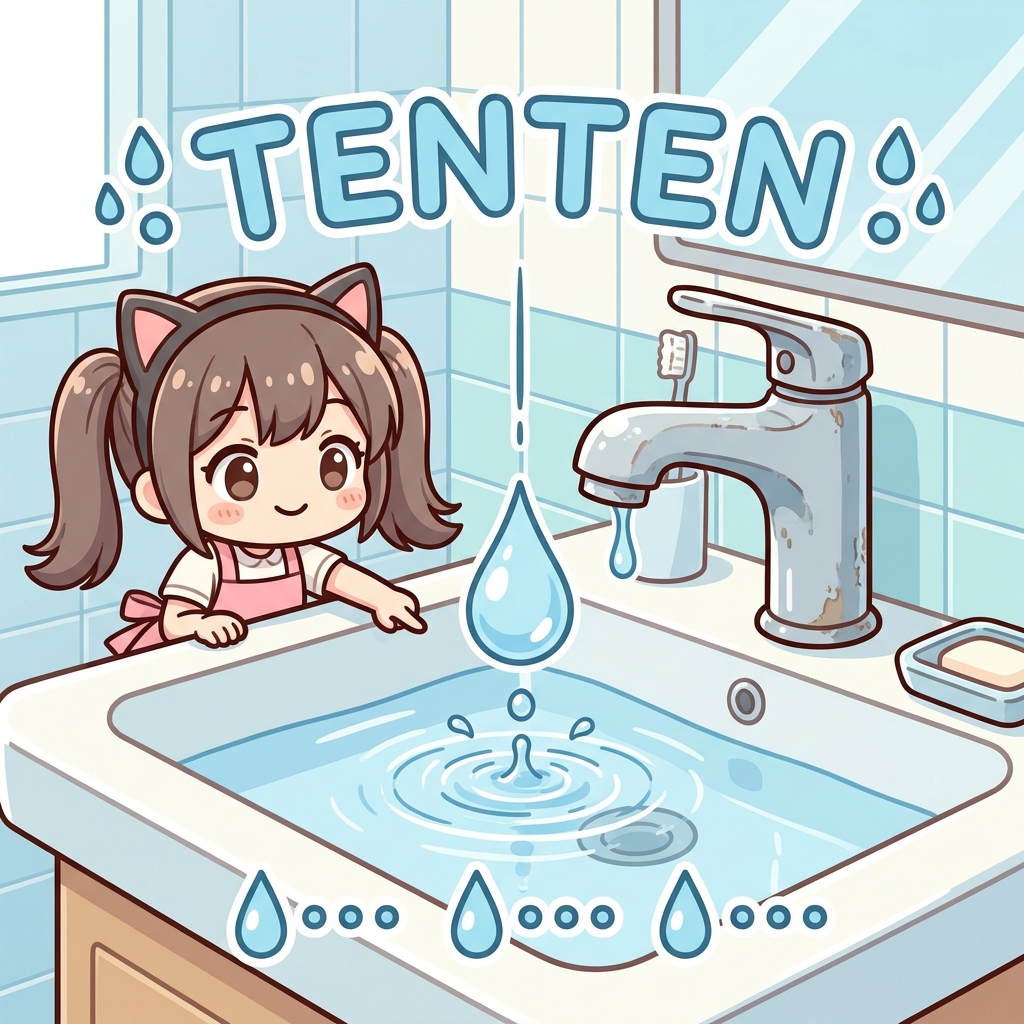
Japanese: 水道の蛇口から水がてんてんと漏れている。
English: Water is leaking tenten (drop by drop) from the faucet.
Natural Usage Scenes
You may encounter てんてん in descriptions where something small appears repeatedly or separately. It is especially useful when the scene feels quiet, light, or visually dotted.
- Small drops: Tiny drops falling or appearing one by one after rain.
- Dotted marks: Small points, spots, or marks spread across a surface.
- Light repeated contact: Gentle tapping or tiny touches, depending on the context.
- Scattered appearance: Something appearing here and there, rather than in one solid mass.
Think of てんてん as a word for small separate points. If the image feels heavy, loud, fast, or continuous, another onomatopoeia may be more natural.
A Common Learner Mistake
A common mistake is to use てんてん for any rain or any tapping sound. This can sound unnatural because てんてん is not a general word for rain, water, or noise.
For example, if it is raining heavily, てんてん does not fit. Heavy rain is too strong and continuous. In that case, words like ざあざあ (zaazaa) are more natural.
If water is dripping clearly from a faucet, ぽたぽた (potapota) is often more common than てんてん. てんてん can work better when you want to emphasize small, separate, light drops rather than a strong dripping sound.
Native Speaker Tip:
Use てんてん (tenten) when the image feels small, light, and dotted. For heavy rain, use ざあざあ. For clear dripping sounds, ぽたぽた or ぽつぽつ may sound more natural.
So, instead of memorizing てんてん as simply “pitter-patter,” it is better to remember it as “small points or small drops appearing one by one.” That will help you avoid using it in the wrong situation.
How to Remember It
A simple way to remember てんてん is to connect it with 点 (ten), meaning “point” or “dot.” The repeated sound, ten-ten, feels like dots appearing one after another.
Imagine placing small dots on paper: ten, ten, ten. Or imagine tiny drops appearing one by one after rain. That image matches the feeling of てんてん well.
The word is not about force. It is about small repeated points.
Related Expressions
These expressions are close, but they are not the same. Comparing them will help you choose a more natural word.
| Japanese | Romaji | Meaning/Usage |
|---|---|---|
| ぽつぽつ | potsupotsu | Light drops, scattered spots, or rain beginning to fall little by little. |
| しとしと | shitoshito | Quiet, gentle, continuous rain. |
| ぱらぱら | parapara | Light scattered rain or small things falling quickly and separately. |
| ぽたぽた | potapota | A clearer drip-drip sound, often from water drops or a faucet. |
Frequently Asked Questions
Can てんてん (tenten) be used for sounds other than water or rain?
Yes, but it depends on the context. てんてん can describe small, light, repeated touches or points. However, if the sound is strong, loud, or clearly dripping, another onomatopoeia may be more natural.
Is てんてん (tenten) common in everyday Japanese conversation?
It is understandable, but it is more specific than common rain words like ぽつぽつ or しとしと. Learners should use it carefully when the image is small, light, dotted, or separated.
What is the difference between てんてん and ぽつぽつ?
てんてん feels more connected to small points or dotted appearance. ぽつぽつ is more commonly used for light rain beginning to fall, scattered drops, or things happening little by little.
Can I use てんてん for heavy rain?
No. Heavy rain does not match the small, light feeling of てんてん. For heavy rain, ざあざあ is much more natural.