
Mastering Japanese Laughs: おほほ (ohoho) vs fufufu
In Japanese, onomatopoeia isn't just for animal sounds or actions; it's also crucial for expressing emotions and character. When it comes to female laughter, two sounds, おほほ (ohoho) and fufufu, might seem similar at first glance. Both represent a soft, often internal laugh, but their underlying nuances are worlds apart. Mastering these subtle differences is key to truly understanding character personalities and emotions, especially in anime, manga, and other Japanese media.
Two Similar Sounds, Different Impressions
Let's dive into the distinct flavors of these two stylized laugh expressions.
- おほほ (ohoho): This onomatopoeia describes a refined, often theatrical laugh. It's the quintessential laugh of an 'ojou-sama' (a young lady of high status or a princess-like character). When a character laughs with おほほ (ohoho), they often cover their mouth with a hand, conveying an air of elegance, yet frequently accompanied by a haughty or condescending attitude. It's a laugh that subtly, or not so subtly, implies superiority or a 'looking down' on others.
- fufufu: In contrast, fufufu is a quieter, more internal, or knowing laugh. It's often used to express gentle amusement, a hidden secret, or a mischievous thought. Unlike おほほ (ohoho), fufufu rarely carries a sense of arrogance or superiority. It's more about personal amusement, a shared understanding, or a lighthearted tease.
The Scene Behind Each Expression
The context in which these laughs appear tells us a lot about the character and the situation.
- おほほ (ohoho) in action: Imagine a wealthy 'ojou-sama' character in an anime, elegantly sipping tea and laughing おほほ (ohoho) as she dismisses a rival's efforts. Or a villainess who has just outsmarted her opponents, letting out an elegant but haughty おほほ (ohoho) to show her triumph. It's a laugh that demands attention and asserts dominance, often with a touch of condescension.
- fufufu in action: Picture a character who has just heard a funny secret, laughing fufufu quietly to herself. Or two friends sharing an inside joke, exchanging knowing fufufu laughs. It can also be used by a character who is planning something mischievous but not malicious, or simply finding quiet amusement in a situation. It's a more intimate and less outwardly expressive laugh.
How Japanese Speakers Choose Between Them
The choice between おほほ (ohoho) and fufufu hinges entirely on the speaker's intent and the desired impression. おほほ (ohoho) projects an image of refined arrogance or elegant superiority. It's a performance, a statement. On the other hand, fufufu is chosen when the laugh is more internal, subtle, or when conveying a knowing or mischievous sentiment without the overt display of power or judgment. It's about the feeling, not the show.
Small Nuance, Big Difference
Understanding this subtle but crucial difference is vital for accurately interpreting and portraying characters. A learner might try to express a character's sophisticated laugh but use the wrong onomatopoeia, leading to a misunderstanding of the character's true personality. For instance, using 'fufufu' when you meant to convey a haughty 'ohoho' for an elegant but arrogant character would make the character seem merely mischievous instead of superior, completely altering their persona.
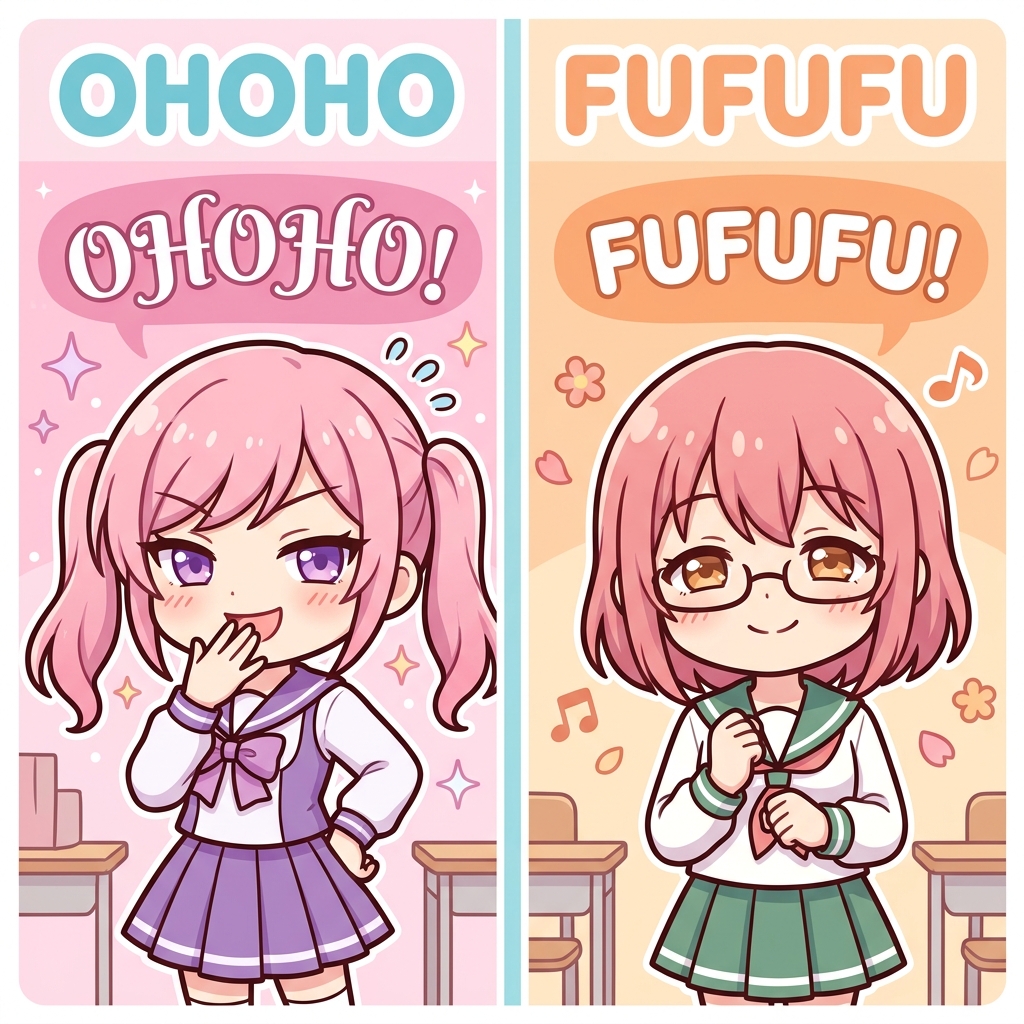
Superiority Changes the Character’s Laugh
While both are female laughs, remember 'おほほ (ohoho)' often carries a nuance of superiority or a 'looking down' attitude, common with 'ojou-sama' characters. 'fufufu' is usually gentler, suggesting a knowing or mischievous amusement without the haughty undertone.
Common Pitfall
A common mistake is using 'fufufu' when you intend to convey a haughty 'おほほ (ohoho)' for an elegant but arrogant character. This can make the character seem merely mischievous or gently amused instead of superior or condescending, fundamentally misrepresenting their personality.
Quick Practice with Real Context
Compare the Sound and Feeling
Play the audio and listen to how the examples sound in Japanese.
Japanese: 「あら、こんなことも知らないの?おほほ。」
English: “Oh my, you don't even know this? ohoho.” (Implying condescension)
Japanese: 「ふふふ、実はね、私も同じこと考えてたんだ。」
English: “fufufu, actually, I was thinking the same thing.” (Implying shared secret or knowing amusement)
Related Expressions
Here are a few other Japanese onomatopoeia related to laughter and smiles:
| Japanese | Romaji | Meaning |
|---|---|---|
| くすくす | kusukusu | Giggling, stifled laugh |
| うふふ | ufufu | Soft, slightly seductive or knowing laugh (similar to fufufu) |
| にこにこ | nikoniko | Smiling cheerfully (not a laugh, but a positive facial expression) |
| げらげら | geragera | Boisterous, loud laugh |
Frequently Asked Questions
What's the main difference between おほほ (ohoho) and fufufu?
The main difference lies in the nuance of superiority. おほほ (ohoho) often implies a haughty, elegant, or condescending laugh, typically associated with 'ojou-sama' characters. fufufu, on the other hand, is a gentler, more internal, knowing, or mischievous laugh, without the element of looking down on others.
Are おほほ (ohoho) and fufufu tied to gender?
In real conversation, both expressions depend more on tone, character, and situation than on strict gender rules. おほほ (ohoho) is often used in fiction or playful speech to suggest elegant, theatrical, or upper-class laughter, while fufufu can sound quiet, knowing, or mischievous. The effect comes from context and character style, not from a fixed rule about who can use them.