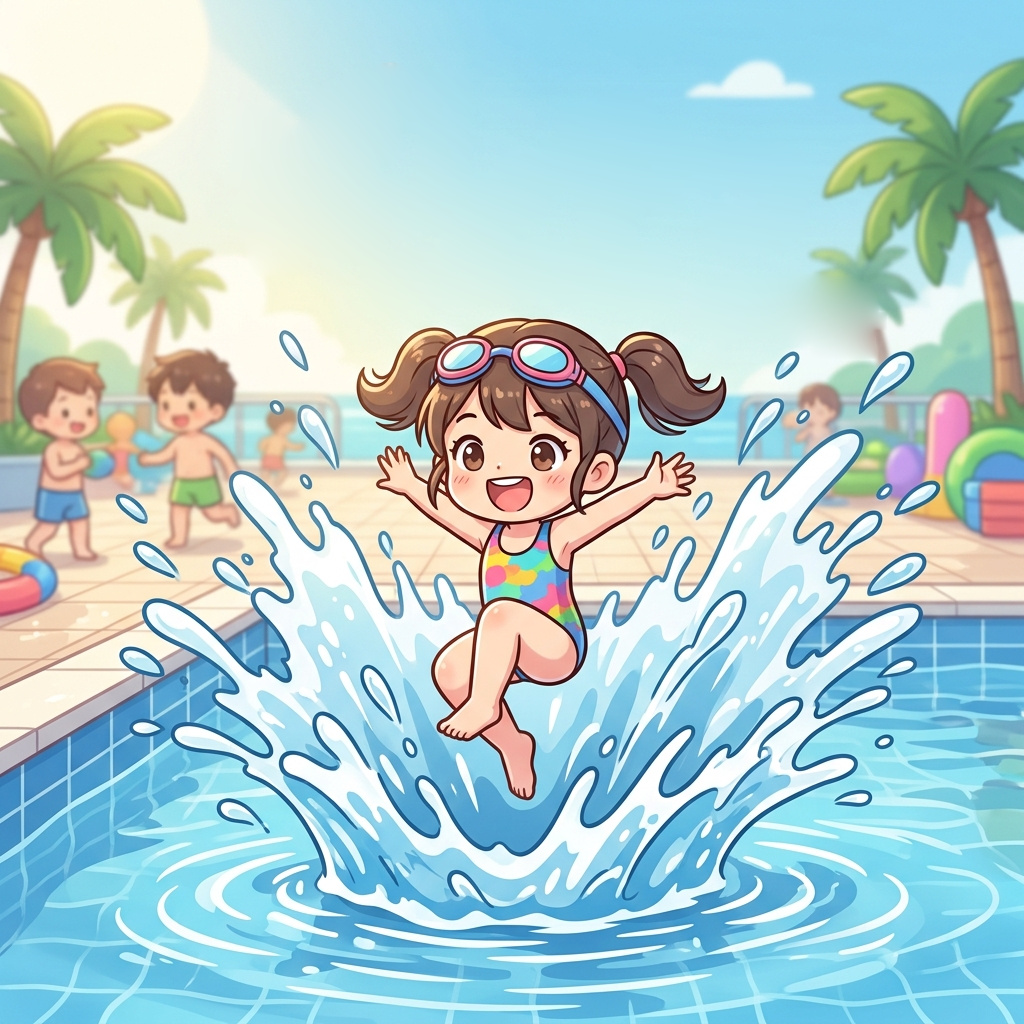
Ever found yourself struggling to describe a sudden splash in Japanese? Whether it is a child jumping into a puddle or a fish leaping out of the water, the right onomatopoeia can make the scene much more vivid. ばしゃっ / ばしゃっと (bashatto) is used for a quick, forceful splash of water or another liquid. It captures the moment when liquid scatters suddenly with noticeable energy.
The Core Meaning: A Sudden, Strong Splash
ばしゃっ (basha) expresses the sound or image of water scattering suddenly and strongly. In actual sentences, you will often see the adverbial form ばしゃっと (bashatto), as in ばしゃっと飛び込む or ばしゃっと跳ねる. The feeling is a single, clear splash rather than a long, continuous water sound.
This expression is useful when something hits water, jumps into water, or causes liquid to scatter at once. It suggests force, suddenness, and a visible splash. A small gentle drop would usually need a different expression, but a child jumping into a puddle or a fish splashing at the surface can naturally be described with ばしゃっと.
The Scene Behind the Word: Visualizing the Impact
ばしゃっ / ばしゃっと (bashatto) paints a dynamic picture. Imagine a child deliberately stepping into a deep puddle and sending water flying, or a large fish suddenly breaking the surface of a pond. The word is both auditory and visual: you can hear the splash and see the water scatter.
The core feeling is abruptness and energy. It is not a quiet ripple, a slow drip, or a gentle trickle. It is the moment when water is suddenly disturbed and splashes outward.

When Japanese Speakers Use It
Japanese speakers use ばしゃっ / ばしゃっと (bashatto) when there is a clear, sudden interaction with water or another liquid. It works well for scenes like these:
- Someone jumping into a puddle and creating a big splash.
- A glass of water or another liquid being spilled suddenly.
- A fish or other creature splashing at the surface of the water.
- An object dropping into water and making liquid scatter.
This word can feel playful when children are splashing in water, dramatic when a fish jumps, or surprising when a drink spills unexpectedly. The exact emotion depends on the scene, but the shared image is a sudden, noticeable splash.
A Native-Sounding Tip
Think of ばしゃっと (bashatto) as a single, energetic splash. It is stronger than a gentle plop and shorter than continuous splashing. If the water movement is small, quiet, or repeated gently, another onomatopoeia may sound more natural.
Listen to ばしゃっ / ばしゃっと (bashatto) in Real Sentences
Play the audio and listen to how the examples sound in Japanese.
Japanese: 子供が水たまりにばしゃっと飛び込んだ。
English: The child jumped into the puddle with a splash.
Japanese: 魚が水面からばしゃっと跳ね上がった。
English: A fish splashed up from the water's surface.
Common Misconception
A common mistake is using ばしゃっと (bashatto) for light, continuous water sounds like gentle rain, a small leak, or quiet dripping. ばしゃっと needs a sudden splash or forceful scattering of liquid. For soft drops, ripples, or gentle water movement, other expressions will sound more natural.
Related Expressions
While ばしゃっ / ばしゃっと (bashatto) is useful for a forceful, sudden splash, other Japanese onomatopoeia describe different water sounds and movements:
| Japanese | Romaji | Meaning |
|---|---|---|
| ちゃぷちゃぷ | chapuchapu | Gentle lapping of water or light playful splashing, such as in a bath or shallow water. |
| ざぶざぶ | zabuzabu | Vigorous splashing, washing with lots of water, or water moving heavily. |
| ぽちゃん | pochan | A small, light plop into water, such as a pebble or small object falling in. |
Frequently Asked Questions
What's the difference between ばしゃっ / ばしゃっと (bashatto) and just saying “splash” in English?
“Splash” is a good general translation, but ばしゃっ / ばしゃっと (bashatto) emphasizes a sudden and noticeable scattering of liquid. It usually describes one energetic moment rather than ongoing splashing. The word makes the scene feel more vivid, immediate, and physical.
Can ばしゃっ / ばしゃっと (bashatto) be used for liquids other than water?
Yes. It can be used for other liquids if they scatter or splash suddenly. For example, juice, paint, or sauce might be described with ばしゃっと if the movement is forceful and splash-like. The key is not the type of liquid, but the sudden scattering or splashing action.
Mastering ばしゃっ / ばしゃっと (bashatto) helps you describe sudden water and liquid movements more naturally in Japanese. Use it for a strong, single splash, such as a jump into a puddle, a fish breaking the surface, or an unexpected spill.