
Ever found yourself doing something you really did not want to do, but felt you had to? In English, we might say “reluctantly,” “grudgingly,” or “with no enthusiasm.” In Japanese, しぶしぶ (shibushibu) captures this feeling very naturally.
Learning しぶしぶ (shibushibu) is not just about memorizing a definition. It helps you describe a situation where someone accepts or does something, but only reluctantly. This makes your Japanese sound more natural when talking about work, school, family duties, or social obligations.
What This Word Really Feels Like
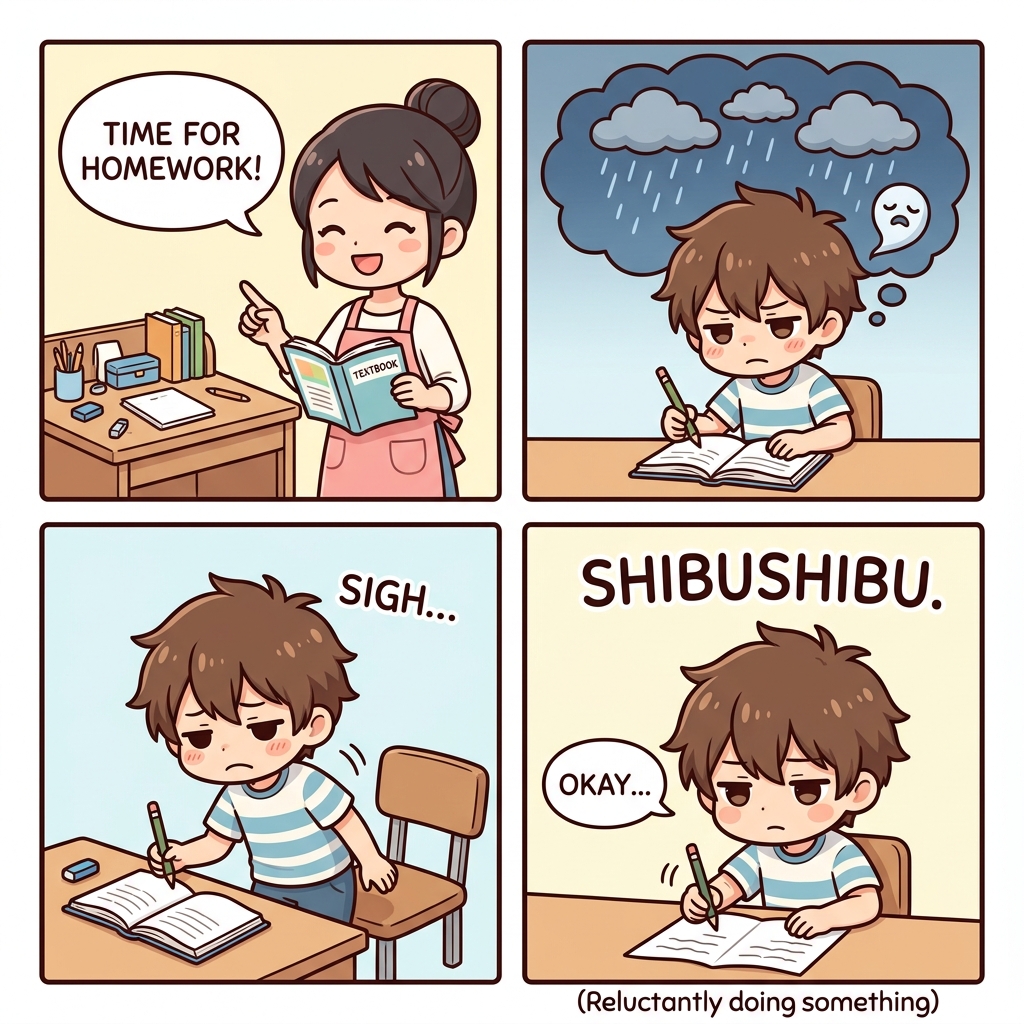
しぶしぶ (shibushibu) describes doing something with clear reluctance or unwillingness, often because there is no better choice. It is not the same as refusing. The person still does the action, but they do it without enthusiasm. Imagine a child who does not want to clean their room but finally starts after being told many times, or an adult going to a meeting they would rather avoid. That feeling of “I don’t want to, but I guess I have to” is the heart of しぶしぶ.
This word often suggests someone is mentally dragging their feet. They may not complain loudly, but their attitude shows that they are not happy about the situation. しぶしぶ is useful because it expresses this emotional state in one compact and natural word.
How It Works in Context
しぶしぶ (shibushibu) works as an adverb, modifying a verb to show how an action was done. It often appears with verbs like 始める (hajimeru - to start), 従う (shitagau - to obey/follow), 行く (iku - to go), 承諾する (shoudaku suru - to agree/consent), and 引き受ける (hikiukeru - to accept or take on).
Consider these mini-dialogues:
- A: 「会議、行くの?」 (Kaigi, iku no? - Are you going to the meeting?)
B: 「うん、しぶしぶ行くよ。」 (Un, shibushibu iku yo. - Yeah, I’m going reluctantly.) - A: 「宿題、もうやった?」 (Shukudai, mou yatta? - Have you done your homework yet?)
B: 「いや、さっきしぶしぶ始めたところ。」 (Iya, sakki shibushibu hajimeta tokoro. - No, I just started it reluctantly a little while ago.)
Notice that しぶしぶ tells us the action actually happened or is going to happen, but the person does not feel enthusiastic about it.
Natural Usage Scenes
You will hear しぶしぶ (shibushibu) in many everyday situations where someone does something even though they are not happy about it:
- Chores & Obligations: A child doing homework, cleaning a room, or running an errand after being told to do it.
- Work & School: Attending a required meeting, following a superior’s instruction, or joining an event because it is expected.
- Social Situations: Accepting an invitation, helping someone, or agreeing to a plan out of politeness or obligation.
It is especially useful when the action is not done willingly, but the person still goes along with it. This makes it different from simply saying “I don’t want to.”
A Common Learner Mistake
Don’t Confuse しぶしぶ with Simple Refusal
Many learners use phrases like 「いやいや」 (iya iya - unwillingly/reluctantly) or 「したくない」 (shitakunai - I don’t want to) to express reluctance. These can be correct, but they do not always carry the same nuance as しぶしぶ. しぶしぶ usually means the person ends up doing the action, even though they are not happy about it. In other words, it is not just refusal; it is reluctant acceptance followed by action.
Why しぶしぶ Implies Reluctant Action
Conveying Unspoken Reluctance
しぶしぶ (shibushibu) fits when someone does something because they feel they must, not because they want to. It can sound more subtle than openly saying “I didn’t want to do it.” This makes it useful for describing real-life situations where people follow rules, accept requests, or complete duties while hiding some dissatisfaction.
Related Expressions
While しぶしぶ (shibushibu) has its own nuance, these related expressions can help you understand the difference:
| Expression | Meaning | Nuance |
|---|---|---|
| いやいや (iya iya) | Unwillingly, reluctantly | Can sound more direct, emotional, or resistant depending on the context. |
| 仕方なく (shikatanaku) | Because there is no other choice | Focuses more on the lack of options than on the person’s visible reluctance. |
Listen to しぶしぶ (shibushibu) in Real Sentences
Play the audio and listen to how the examples sound in Japanese.
Japanese: 子供が宿題をしぶしぶ始めた。
English: The child reluctantly started their homework.
Japanese: 彼は上司の指示にしぶしぶ従った。
English: He reluctantly followed his boss’s instructions.
Frequently Asked Questions
Can しぶしぶ (shibushibu) be used for physical actions only?
No. しぶしぶ (shibushibu) can describe physical actions, verbal decisions, and mental acceptance. For example, someone can しぶしぶ承諾する (shibushibu shoudaku suru - reluctantly agree) to a request. The important point is not whether the action is physical, but whether the person does it reluctantly.
Is しぶしぶ (shibushibu) polite or informal?
しぶしぶ (shibushibu) itself is fairly neutral. It can be used in casual writing or conversation, and it can also appear in more formal contexts if the surrounding sentence is formal. However, when talking about your boss, customer, or someone above you, be careful: saying they did something しぶしぶ can sound like you are describing their attitude directly. In polite situations, it may be better to use it carefully or describe the situation more indirectly.