Two Similar Sounds, Different Impressions
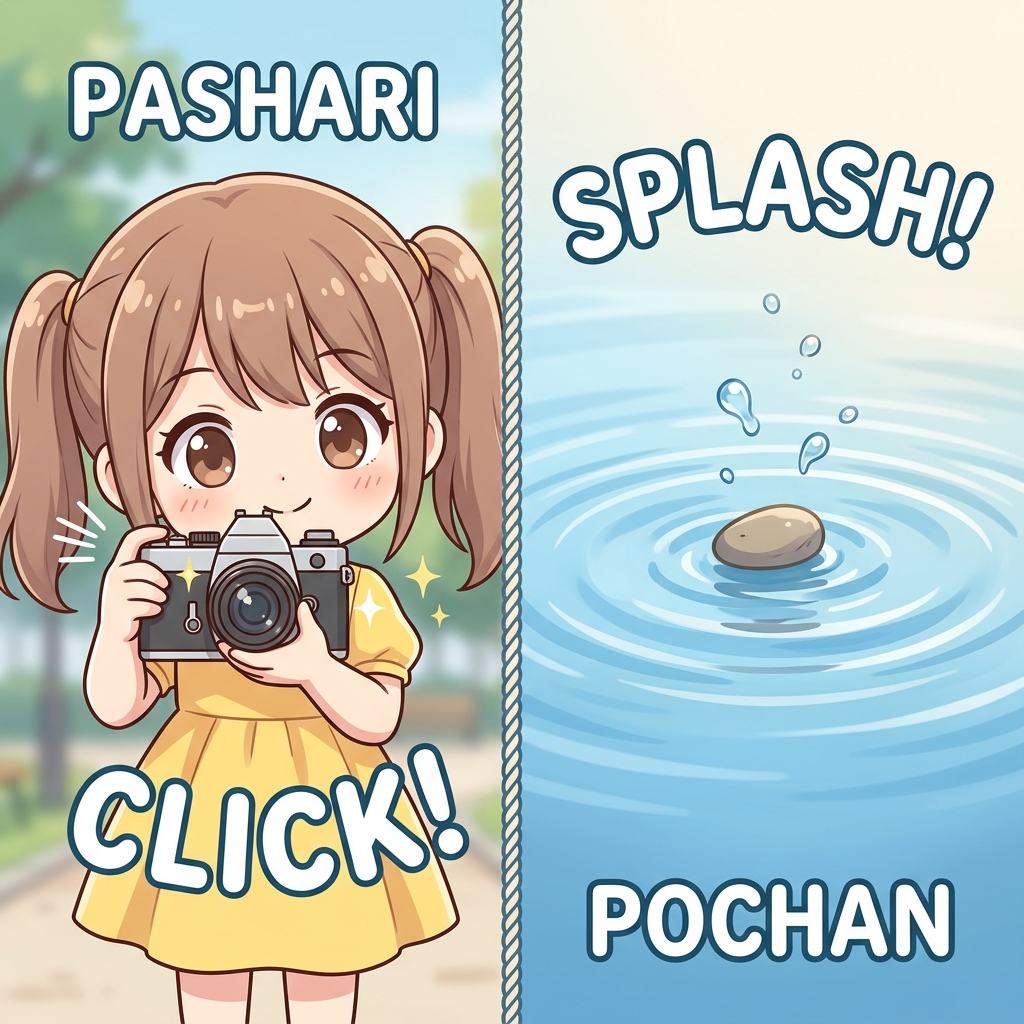
Ever wondered how Japanese distinguishes between a quick camera click and a gentle plop into water? Japanese onomatopoeia, or giongo and gitaigo, are incredibly vivid, and understanding their nuances is key to sounding natural. Today, we are looking at two expressions that may seem similar at first: ぱしゃり (pashari) and ぽちゃん (pochan). Imagine you are taking photos by a pond. You hear ぱしゃり from your camera, then ぽちゃん as a small pebble falls into the water. Learning the difference helps you describe scenes more accurately in Japanese.
Both ぱしゃり (pashari) and ぽちゃん (pochan) can describe quick, relatively small sounds, and both may appear in scenes involving water. However, their impressions are different. ぱしゃり (pashari) feels like a sharp, light, single sound, such as a camera shutter or a quick splash. ぽちゃん (pochan), on the other hand, suggests something falling into water and making a soft plop. The key difference is not simply “dry versus wet,” but rather “sharp, light snap or splash” versus “soft object-into-water plop.”
The Scene Behind Each Expression
Let's break down the specific scenarios where each term feels natural.
ぱしゃり (pashari): The Quick, Light Snap or Splash
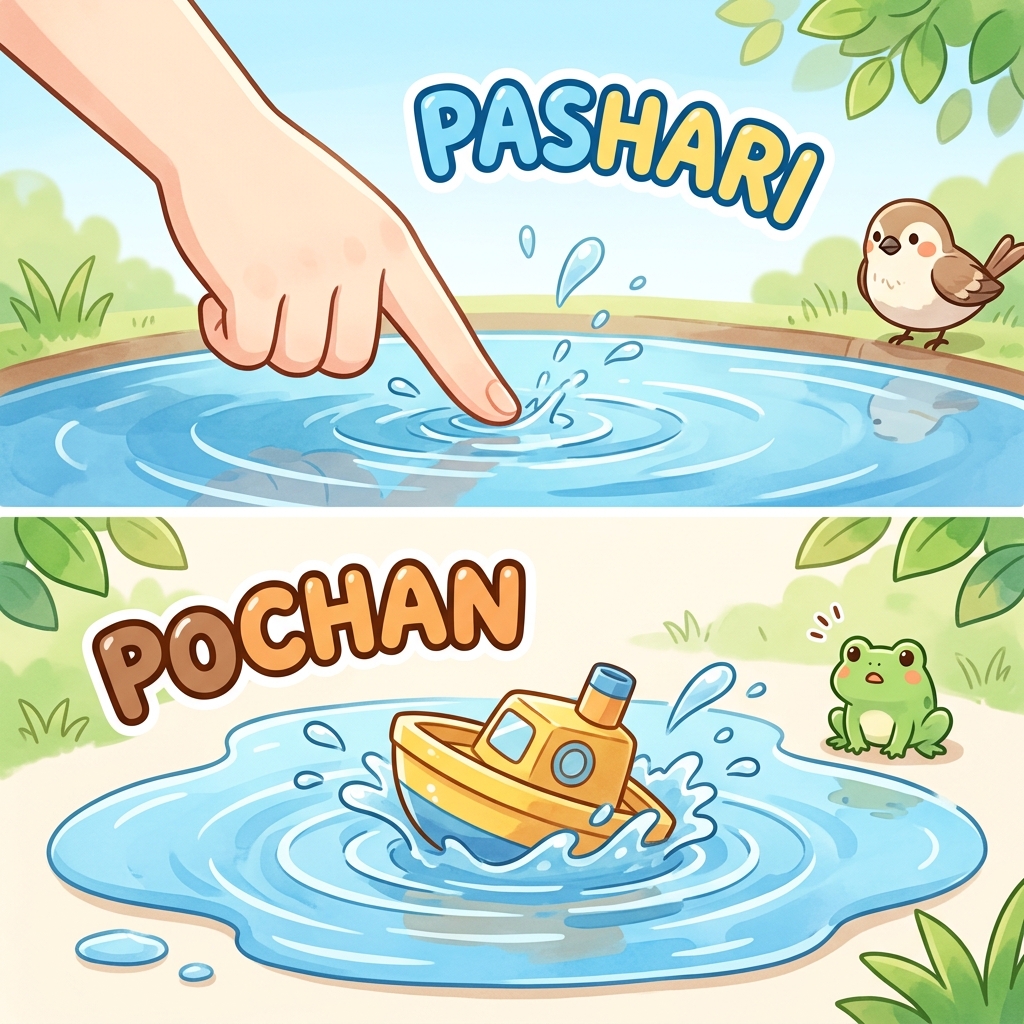
This onomatopoeia is most famously used for the camera shutter sound. It gives the feeling of a quick, clean click when someone takes a photo. Beyond photography, ぱしゃり (pashari) can also describe a very light, brief splash, such as water flicking up for an instant. The key is that the sound feels quick, sharp, and light. It is not a heavy splash or a deep plop.
ぽちゃん (pochan): The Gentle, Wet Plop
In contrast, ぽちゃん (pochan) is strongly associated with the sound of an object falling into water. A small stone, a small toy, or something light dropping into a pond or bath might make a ぽちゃん sound. It carries a sense of wetness, but more specifically, it suggests that something enters the water and creates a small, soft plop with a ripple.
How Japanese Speakers Choose Between Them
Japanese speakers choose between ぱしゃり (pashari) and ぽちゃん (pochan) by paying attention to the type of action and the quality of the sound.
- Sharpness/Crispness: ぱしゃり (pashari) is sharper, lighter, and more instant.
- Falling into water: ぽちゃん (pochan) strongly suggests something dropping into water.
- Action: ぱしゃり (pashari) often describes a quick snap, click, or light splash, while ぽちゃん (pochan) describes a small object entering water with a soft plop.
Camera Snap or Water Drop?
Think of ぱしゃり as a sharp, single sound, like a camera click or a quick light splash. Think of ぽちゃん as something small falling into water and making a soft plop. Both can be short sounds, but the scene and feeling are different.
Listen to Both Expressions in Real Sentences
Play the audio and listen to how the examples sound in Japanese.
Japanese: カメラのシャッターがぱしゃりと鳴り、美しい景色を捉えた。
English: The camera shutter clicked sharply, capturing the beautiful scenery.
Japanese: 池に小石を投げたら、ぽちゃんと小さな音がした。
English: When I threw a small stone into the pond, it made a little plop.
Small Nuance, Big Difference
Mastering the distinction between ぱしゃり (pashari) and ぽちゃん (pochan) is a great step toward more natural Japanese. Use ぱしゃり for a camera shutter or a quick, light splash. Use ぽちゃん when something small falls into water and makes a gentle plop. This small difference makes your descriptions much more vivid and accurate.
Quick Practice with Real Context
Consider these scenarios:
- You are at a pond, trying to photograph a bird. Your camera makes a quick ________ sound. (Answer: ぱしゃり)
- A small frog jumps into the pond, making a ________ sound. (Answer: ぽちゃん)
- A photographer takes a picture of a waterfall. The camera goes ________. (Answer: ぱしゃり)
- A child accidentally drops a toy boat into the bathtub. It makes a ________ sound. (Answer: ぽちゃん)
These exercises help you remember the contextual differences.
Common Pitfall
A common mistake is using ぽちゃん for a camera shutter. While both words can describe short sounds, ぽちゃん strongly suggests something falling into water. For a camera, ぱしゃり sounds much more natural. Remember: ぱしゃり is a quick click or light splash, while ぽちゃん is a soft plop into water.
Related Expressions
Japanese is rich with sound effects. Here are a couple more related to water:
| Japanese | Romaji | Meaning/Usage |
|---|---|---|
| ざぶざぶ | zabuzabu | Splashing vigorously or washing something with a lot of water. |
| ちゃぷちゃぷ | chapuchapu | Gentle repeated splashing, like a child playing in a bath or shallow water. |
Frequently Asked Questions
Can ぱしゃり (pashari) be used for anything other than a camera shutter?
Yes. While it is very commonly associated with a camera shutter, ぱしゃり (pashari) can also describe a quick, light splash or a brief flick of water. The important feeling is that the sound is sharp, light, and momentary.
Is ぽちゃん (pochan) only for small objects falling into water?
ぽちゃん (pochan) is usually used for relatively small or light things falling into water and making a gentle plop. For larger, heavier objects, or more forceful impacts, words like どぼん (dobon) or ざぶん (zabun) may sound more natural because they suggest a bigger splash or deeper impact.