What Does “Hata hata (はたはた)” Mean?
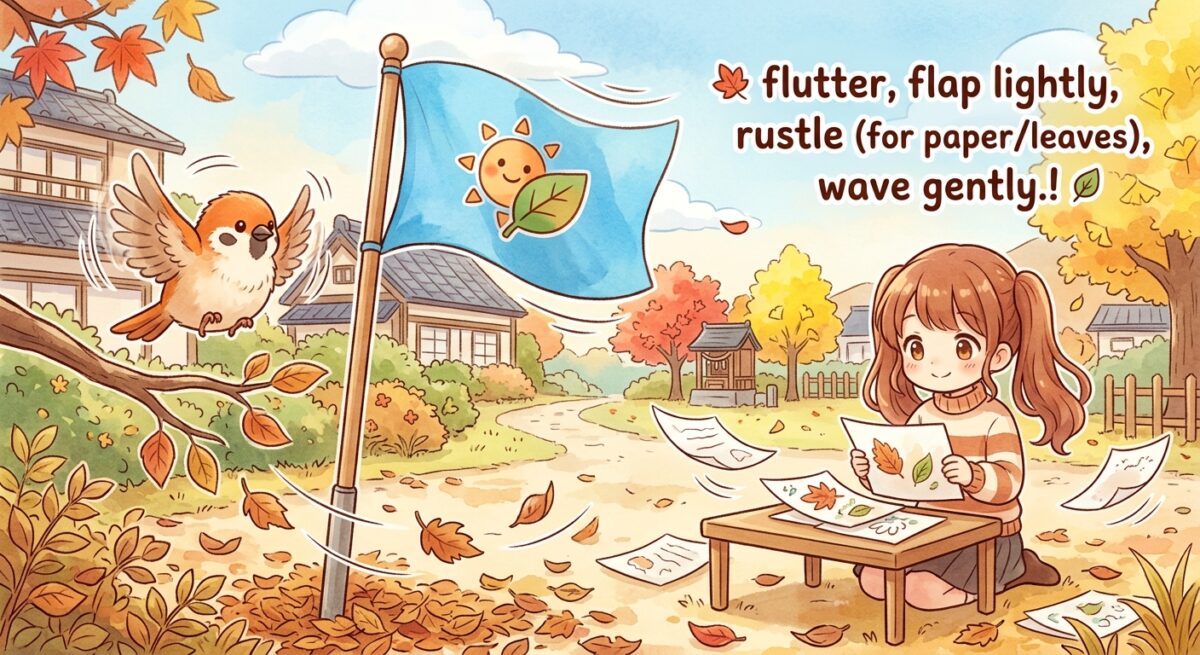
👉 Describes the light, repeated flapping or fluttering of thin objects, often accompanied by a soft, rustling sound. It suggests a continuous, gentle, and airy motion.
👉 Can also describe a light, dry, or crisp sound, similar to paper or dry leaves rustling due to wind or movement.
Nuance & Depth
Emphasizes a continuous, relatively gentle, and light motion or sound. It lacks the force, loudness, or heaviness implied by 'ばたばた' or 'どたばた'. It often conveys a sense of airiness, dryness, and repetitiveness.
Hata hata vs flutter, flap lightly, rustle (for paper/leaves), wave gently.: As a mimetic word (giongo), 'はたはた' directly represents the sound or state of light, continuous flapping. The reduplication of 'はた' emphasizes the ongoing and repetitive nature of the action or sound. The voiceless 'は' (ha) gives it a distinctly lighter, softer, and often drier feel compared to its voiced or semi-voiced counterparts.
Imagine This Situation
Example Sentences & Audio
(I saw a flag fluttering lightly (はたはた, light fluttering) in the wind.)
(A small bird flapped its wings lightly (はたはた, light flapping) and flew away.)
(The dry laundry was rustling (はたはた, rustling sound) in the wind.)
Summary
👉 'はたはた' describes a light, continuous, often dry-sounding flapping or fluttering motion, typically associated with thin objects or small, rapid movements, conveying a sense of airiness and repetition.