What Does “Botari (ぼたり)” Mean?
👉 Describes the sound and manner of a relatively heavy, soft, or viscous object falling and hitting a surface with a dull, low thud or plop.
👉 Implies the state or result of something falling in this manner, often suggesting a mess or a sudden, weighty impact.
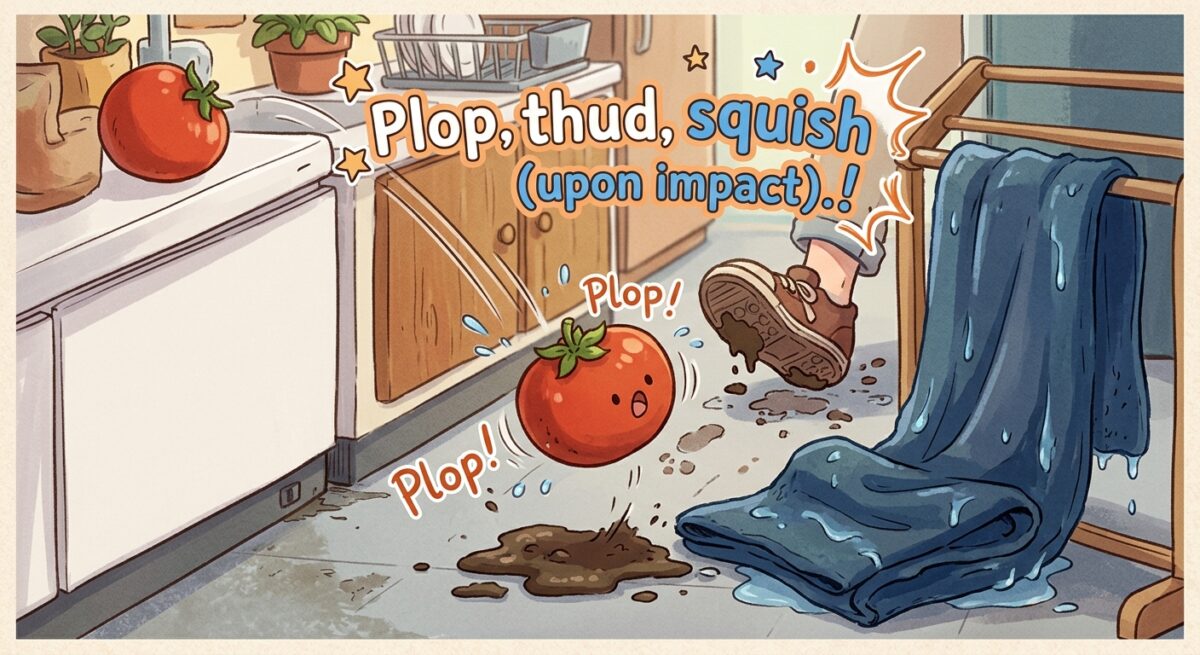
Nuance & Depth
It conveys a sense of something substantial, often soft, wet, or somewhat formless (like mud, fruit, or a heavy blob) dropping with a distinct, somewhat messy or squishy impact. The sound is duller and heavier than "ぽたり" and less sharp or clattering than "ばたり." It often implies a single, distinct drop rather than a continuous stream.
Botari vs Plop, thud, squish (upon impact).: "ぼたり" is a giongo (mimetic word for sounds) and gitaigo (mimetic word for states/manners). The 'ぼ' sound suggests dullness, heaviness, and perhaps a slight 'mushiness,' while 'たり' often indicates a sudden, singular occurrence or completion of an action.
Imagine This Situation
Example Sentences & Audio
(A ripe persimmon BOTARI(ぼたり, fell with a dull thud) from the tree.)
(Mud BOTARI(ぼたり, dropped with a soft plop) from the shoe onto the ground.)
(A heavy drop of water BOTARI(ぼたり, fell with a dull plop) from the ceiling onto the floor.)
Summary
👉 "ぼたり" describes the sound and manner of a relatively heavy, soft, or viscous object falling with a dull, somewhat messy plop or thud.